
Gems, crystals and minerals near you: maps by specimen
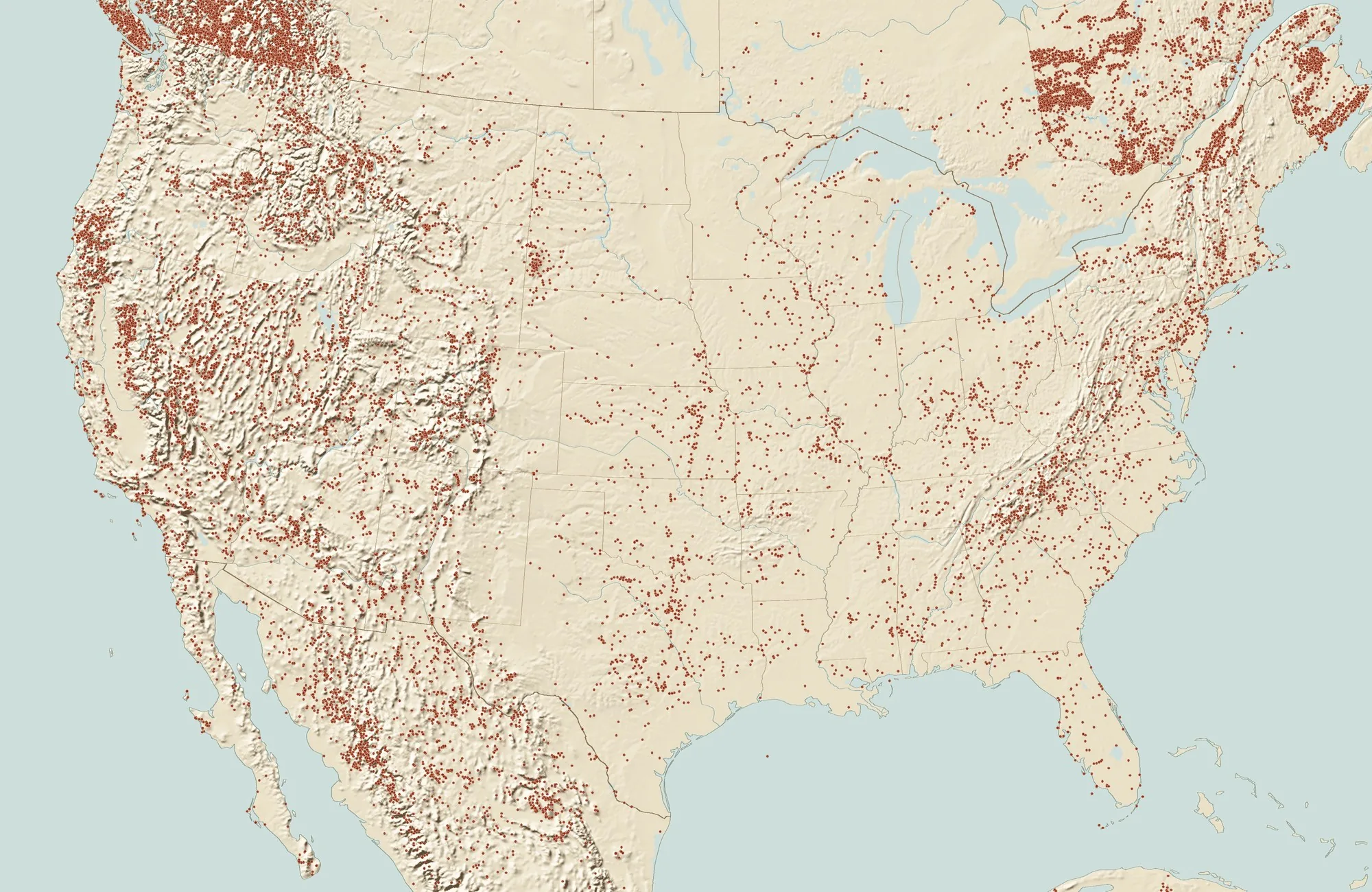
Photo credits
Photos: James St. John, CC BY 2.0 (gold from California, opal from Virgin Valley); Lech Darski (thunderegg from Oregon, CC BY-SA 3.0; Lake Superior agate from Minnesota, CC BY-SA 4.0); Astynax (geode from Keokuk County, Iowa), CC BY-SA 4.0; Montanabw (Yogo sapphire), CC BY-SA 3.0; Robert M. Lavinsky (quartz), CC BY-SA 3.0; Géry Parent (topaz), public domain. Relief: Natural Earth. The map shows up to 300 sites per stone.
Every specimen on the map
More specimens
Recorded at one or two sites (359)
Questions about specimen maps
Where can I find crystals near me?
Open a crystal’s map from this page and use its near me button.
What is the most common gem to find rockhounding?
Quartz in its many forms (clear quartz, smoky quartz, amethyst, rose quartz) is the most common, followed by agate, jasper and garnet. They occur in rocks across most US states.
Can I dig for crystals on public land?
Yes. BLM and national forest land generally allow casual collecting of reasonable amounts for personal use. On BLM land, petrified wood is limited to 25 pounds a day plus one piece. National parks allow almost no collecting, and state parks set their own rules.
What crystals are worth money?
Gem-quality pieces sell for the most: benitoite from California, Herkimer diamonds from New York, Oregon sunstone and Montana sapphires. Common minerals such as amethyst and turquoise have value when the colour, size and quality are good.
How do I identify rocks and minerals I find?
Start with four tests: hardness (what it scratches), streak (the colour of its powder on unglazed tile), luster (metallic, glassy or dull) and crystal shape.