
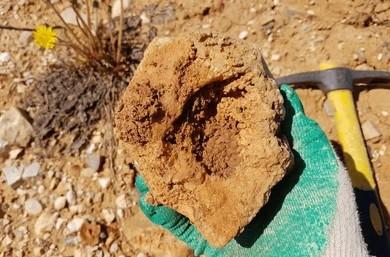
From the outside, a geode often looks like an ordinary, rough rock. But inside, it can hold sparkling quartz, amethyst, calcite, or chalcedony crystals that formed over millions of years. For rockhounds, one of the most exciting moments is finding and having to open a geode for the first time
If you've ever held a geode and wondered, "How do you open this without ruining what's inside?", you're not alone. Opening a geode the wrong way can shatter crystals, destroy crystal faces, or turn a beautiful specimen into gravel.
This guide explains how to open a geode safely, the tools you can use at home, the best methods, and how to avoid the most common mistakes.
Geodes
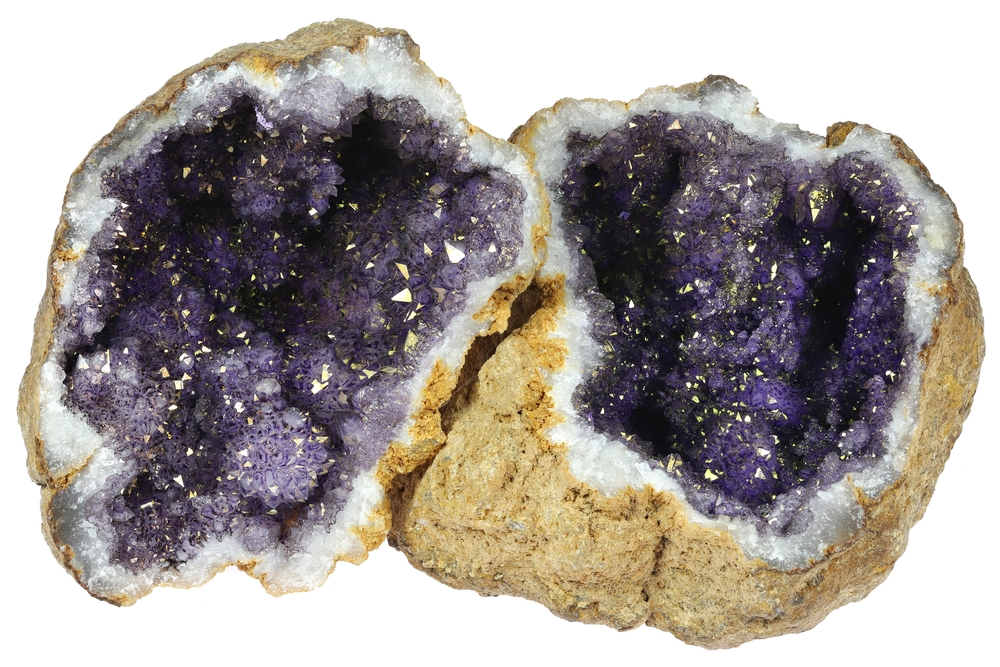
A geode is a hollow rock lined with mineral crystals. Geodes form when gas bubbles or cavities inside volcanic or sedimentary rock slowly fill with mineral-rich water. Over time, minerals crystallize on the inner walls, creating the crystal-lined cavities collectors love.
Common geode crystals include: quartz, amethyst, calcite, and chalcedony. One exciting thing about geodes is that you never know what's inside when you open it; it could be lined with amethyst or quartz. Not every geode contains perfect crystals, but the surprise is part of the appeal.
If you need to confirm if what you found in the field while rockhounding is actually a geode. Geodes are usually rounded or egg-like in shape with a rough, bumpy exterior. You will find that it is heavier than it looks for its size, and you will most likely find it in volcanic regions or limestone areas. Common places in the USA to find Geodes include: Arizona, Utah, Iowa, Missouri, California, and Oregon.
Keep in mind: not all geodes are hollow, and some contain solid quartz instead of crystal cavities.
The Best Ways to Open a Geode

There is no single "right" way to open a geode. The best method depends on your tools, experience level, and whether you want a clean display piece or just want to see what's inside.
Below are the most commonly used methods, ranked from best results to most beginner-friendly.
Method 1: Cutting a Geode With a Rock Saw
This is adjudged the cleanest and safest way to open a geode without damaging the crystals.
This method requires you to use a diamond-blade rock saw to slice the geode cleanly in half, revealing the crystal interior.
This method preserves crystal structure and gives you clean, symmetrical results. Best used when the geode is large and very valuable. The blade should not be too big or too small, but slightly larger than the geode you want to open. Use a vise grip to hold the geode in place. This allows you to be hands-free while making your precise cut
One of the disadvantages of this method is that it requires specialized equipment, and if you do not already have it, it can be expensive to rent or buy.
However, many local rock clubs, lapidary shops, or gem shows offer geode cutting services for a small fee. Look out for such clubs and seek help for this.
Method 2: Tile Saw or Wet Saw
A tile saw, or wet saw, is the most practical option for opening a geode if you will be doing it from home.
How it works: Use a diamond blade and water cooling, and you slowly cut through the geode. Please, cut slowly to avoid cracking the geode into irreparable pieces. Let the blade do the work, and keep water flowing to reduce dust
This method is an affordable alternative to rock saws and gives you good control of the cut. It is also widely available, even though it gives you slow result than if you are using professional equipment
Beginners will find this method useful and relatable.
Method 3: Chisel and Hammer
Using a chisel or hammer means you crack the geode rather than slicing it.
Using this tool allows you to score the geode around its center with a chisel, then apply controlled strikes until it splits. Follow these steps to use a hammer or chisel to crack the geode:
Steps:
- Put on safety glass and a glove.
- Place the geode on a stable surface; you can place it in a sock for more protection.
- Proceed to strike the top center of the geode to give it a cracking force. If the first attempt does not crack, give it more strikes till you fully crack the geode open.
If you are using a Chisel:
- Position the chisel around the center of the geode.
- Strike with a hand-held sledgehammer
- Tap lightly and rotate to create a cracked line
- Increase the force gradually till it fully cracks open.
This method uses simple tools you can find around you; you do not need to spend much, as it is budget-friendly.
This method might give you less predictable results, and you are at risk of shattering the crystals if not done gently. Do not use this method for valuable geodes; it is best for smaller geodes and casual hobbyists.
Watch: The EASIEST Way to Open Geodes with a Hammer!
Method 4: Chain Method
Another method I recommend is the chain method, which uses a metal chain wrapped tightly around the geode. Simply tighten the chain and apply force until the geode splits.
This method requires no cutting, but is most likely to break the geodes if not carefully done. If your hands are not strong enough to handle this method, it's better to leave this method, as you will most likely break your geodes. Also, use this method only on common, low-value geodes.
Method 5: Cast Iron Pipe Snap Cutter
Another effective way to open a geode is by using a cast-iron pipe snap cutter, a tool known for producing clean, symmetrical splits. This method is especially useful if you want to divide a geode into two even halves while preserving its natural structure.
To begin, wrap the cutter's bicycle-style chain securely around the circumference of the geode, ensuring it sits evenly all the way around. The pipe snap cutter works by creating a continuous circle of pressure points along the geode's exterior. As you pull down on the handles, the chain gradually tightens, increasing shear force at each contact point. With repeated compression and tightening, pressure is distributed evenly around the geode's surface. Eventually, the accumulated force causes the geode to crack cleanly along the pressure line, often producing a visible piezoelectric spark at the moment it splits.
To use the tool safely and effectively, feed the chain firmly into the cutter and position it evenly around the geode. Pull the handle downward in a controlled motion to apply equal tension. When done correctly, the geode should crack smoothly and uniformly. This is considered one of the least destructive methods for opening a geode, as it reveals the interior while keeping the stone in a natural, display-worthy form.
Method 6: Use Hot Water
Using hot water is a commonly mentioned method for opening a geode, based on the idea that rocks can crack when exposed to rapid heating followed by rapid cooling. This technique is more often attempted on manufactured or artificially created geodes, rather than natural geodes found in the wild.
To try this method, place the geode in boiling water on a stove for several minutes. Others boil water in a microwave using a heat-safe glass container with the geode inside. However, this approach is not highly recommended, as it rarely produces reliable results. In most cases, the heat alone is not enough to cause a clean split.
In theory, rapidly cooling the geode immediately after heating by exposing it to cold water may increase the chances of cracking. Even then, the break is unlikely to be symmetrical, and you may still need to lightly tap the geode with a hammer to encourage it to open. There is also a risk that the internal mineral structure could be damaged, causing crystals to fracture or break away from their natural matrix instead of remaining intact.
Overall, while the hot water method may work occasionally, it is generally less effective and less predictable than mechanical methods. For most rockhounds, using a hammer and chisel or a pipe snap cutter is a more efficient and controlled way to open a geode without compromising its interior crystals.
Read More: 50 Most Valuable Gemstones and Minerals in the U.S.
How to clean and preserve your Geode
Here is what you should do after opening a geode:
- Rinse with water to remove dust
- Soak in warm water for clay removal
- Use a soft brush for stubborn dirt
- Avoid harsh chemicals unless you know the mineral type.
- Let it dry fully
- Place in indirect light
- Avoid prolonged moisture exposure
Conclusion
Opening a geode is one of the most rewarding experiences in rockhounding. With the right method, patience, and safety precautions, you can reveal stunning crystal formations hidden for millions of years.
Whether you choose to cut, crack, or professionally slice your geode, the key is control, preparation, and respect for the stone. Not every geode will be spectacular, but every one tells a geological story worth discovering.
Read More: How to Find Geodes in Colorado [2026 Guide] - Best Locations & Tips
Frequently Asked Questions
Can you open a geode without special tools?
Yes. A hammer and chisel can work, but the results are less predictable. If you do not have the budget for special tools, simply go for a hammer or a chisel.
What's the safest way to open a geode?
Using a rock saw or tile saw provides the cleanest, safest results.
Why did my geode break into pieces?
This usually happens if you applied too much force, placed the tool improperly, or if it was caused by internal fractures.
Are all geodes hollow?
No. While you cannot predict what is inside a geode, not all geodes are hollow. Some are solid quartz or partially filled.
Can kids open geodes?
Yes, but with adult supervision and proper safety gear.