
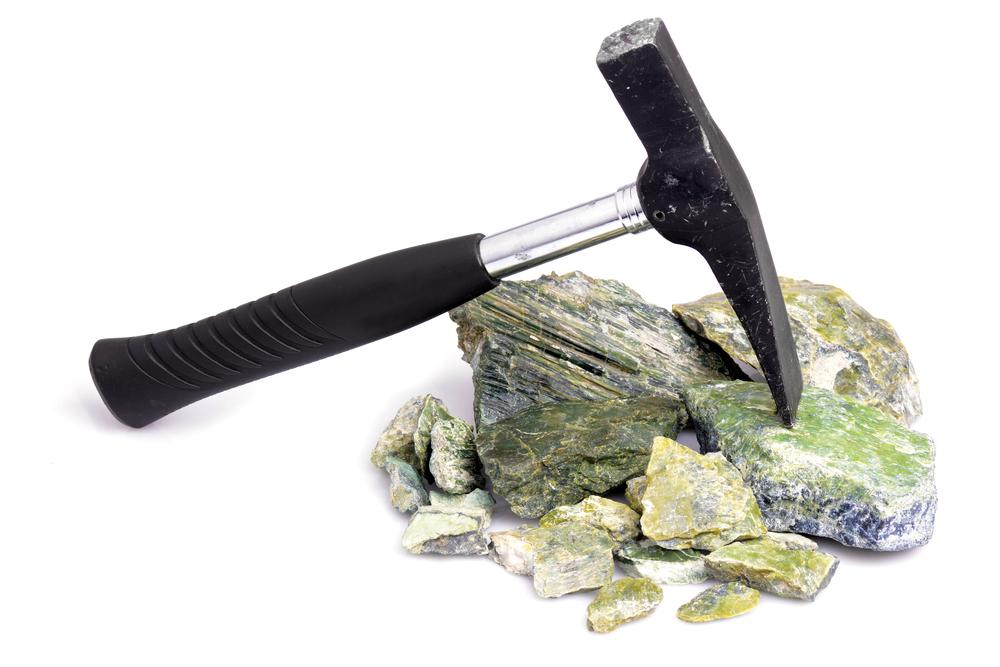
The right tool makes all the difference, and this is especially true when working with rocks. From delicate fossil extraction to heavy-duty demolition, geologists, and rockhounds all rely on specialized rock hammers to get the job done.
Rock hammers are indispensable tools for rockhounds. These specialized tools are not only used for breaking and collecting rock samples but also serve as a badge of honor among enthusiasts. Their importance in geology and rockhounding cannot be overstated, as they allow for the careful collection and examination of geological specimens.
This article explores the various types of rock hammers available, their specific uses, and how to choose the right one for your needs.
The Anatomy of a Rock Hammer
Understanding the anatomy of a rock hammer is crucial for its effective use. The head is the main striking part, designed to deliver force to a small area. The handle acts as a lever, allowing the rockhound to apply a greater force to the head. The material composition often includes steel for the head for its impact resistance and a comfortable material for the handle to absorb vibrations.
Types of Rock Hammers
Geologists and fossil hunters primarily use two types of rock hammers:
-
Geologist's Hammer
This versatile tool comes in two sub-types:
- Rock Pick: This features a pointed steel tip on one end for breaking rock and prying at fractures. The flat face on the other end breaks and trims rock. Drive chisels with a crack hammer instead, never with a rock pick.
- Flat Face Hammer: This version has a flat face on both ends, ideal for striking chisels or gently breaking small rock samples.
-
Masonry Hammer
Often confused with a brick hammer, the masonry hammer boasts a pointed chisel on one side for breaking apart concrete, stones, and bricks. The flat face on the other end allows for light chiseling tasks. Both geologist's hammers and masonry hammers are typically constructed from forged steel for strength and have a medium weight (1-4 lbs) for user control.


