
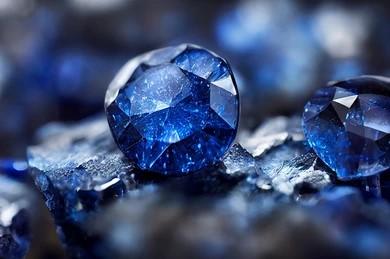
Sapphire is a gem variety of corundum (Al₂O₃) — the second-hardest natural mineral after diamond, with a Mohs hardness of 9. Most people picture deep blue when they think sapphire, but US sapphires come in a full spectrum: pink, yellow, green, orange, colorless, and the color-change "parti" sapphires that shift hue depending on the light source. Blue is simply the default trade name; any corundum that is not red (ruby) gets called sapphire.
The United States has legitimate sapphire deposits — not just tourist attractions. Montana alone has produced millions of carats from three distinct deposit types, and the Montana sapphire has earned a market reputation alongside material from Sri Lanka, Myanmar, and Madagascar. North Carolina, Idaho, and Georgia round out the US sapphire map. Several of these localities offer public collecting, making sapphire one of the few genuine gemstones that recreational collectors can target with a real chance of success.
Sapphire Geology: How Corundum Forms in the US
Corundum crystallizes in aluminum-rich, silica-poor environments. This is critical: if there is too much silica available, the aluminum bonds with silica to form feldspar or mica instead of corundum. That means corundum forms in unusual rock types — nepheline syenites, metamorphosed bauxites, aluminum-rich schists, and certain types of igneous dikes where silica was depleted.
In Montana, sapphires occur in two fundamentally different settings. The Yogo deposit is a primary deposit — sapphires crystallized in place within a lamprophyre dike (a vertical sheet of dark, potassium-rich igneous rock that intruded Paleozoic limestone). The Missouri River and Rock Creek deposits are secondary (alluvial) — sapphires weathered out of their unknown source rock and were transported and concentrated in ancient river gravels. The original source rock for the alluvial Montana sapphires has never been definitively identified, which is one of the more interesting unsolved problems in American economic geology.
In North Carolina, corundum (both sapphire and ruby) occurs in metamorphic rocks — specifically at the contact between ultramafic rocks (dunite, peridotite) and surrounding gneiss in the Blue Ridge Province. Weathering concentrated the corundum in alluvial gravels that feed the Cowee Valley fee-dig operations.
Top Sapphire Collecting Locations in the United States
Montana — Rock Creek / Gem Mountain (Granite County)
Land Status: Private fee-dig operation (Gem Mountain Sapphire Mine).
Location: Approx. 46.280°N, 113.200°W. Near Philipsburg, MT.
Access: Sedan OK. Paved road to the mine. Open seasonally (typically Memorial Day through mid-October).
Fee: Per-bucket pricing. Gravel buckets range from $25 to $200+ depending on grade and quantity.
Specimens: Rock Creek is one of the largest sapphire deposits in the US. Gem Mountain operates a family-friendly fee-dig where you purchase buckets of pre-dug gravel from the deposit and wash/screen them at covered flumes on-site. The sapphires here come in a remarkable range of colors — blue, pink, yellow, green, orange, and bicolored. Most stones are small (under 1 carat rough), but larger gems do turn up. The gravel is from ancient alluvial deposits that concentrated sapphires along with other heavy minerals. Screening equipment and instruction are provided. This is an excellent first sapphire collecting experience — the hit rate is high, and finding a few sapphires per bucket is typical.
What to expect: You sit at a flume (a trough with running water), dump your gravel bucket into a screen, and wash away the fine material. Sapphires are denser than most gravel (specific gravity 3.95–4.1) and tend to concentrate at the bottom of your screen with other heavy minerals. Look for small, translucent, rounded pebbles that are heavier than they look. Tweezers help pick out small stones from the concentrate.
Montana — Missouri River Deposits / Helena Area (Lewis and Clark County)
Land Status: Private fee-dig operations.
Location: Near Helena, MT. Spokane Bar Sapphire Mine: approx. 46.640°N, 111.820°W. El Dorado Bar: approx. 46.630°N, 111.790°W.
Access: Sedan OK to fee-dig sites. Gravel roads in good condition.
Fee: Per-bucket pricing. Similar to Gem Mountain.
Specimens: The Missouri River sapphire deposits are alluvial gravels deposited by ancient river channels near present-day Helena. Spokane Bar Sapphire Mine and El Dorado Sapphire Mine offer fee-based gravel screening similar to Gem Mountain. Missouri River sapphires tend toward pale colors — light blue, green, and colorless — with occasional strong blue or fancy-color stones. Many Montana sapphires respond well to controlled heat treatment (a standard industry practice) that can improve color saturation. The mines provide screening equipment and basic instruction.
Montana — Yogo Gulch (Judith Basin County)
Land Status: Private mine. Not open to public collecting.
Location: Approx. 47.000°N, 110.510°W. South of Utica, MT.
Access: Tours may be available through the current mine operator. Check ahead.
Specimens: Yogo sapphires are the only commercial-grade sapphires in North America that require no heat treatment — they come out of the ground with a cornflower blue color that the market pays a premium for. The deposit is a nearly vertical lamprophyre dike that cuts through Madison Limestone. Sapphires are disseminated throughout the dike rock. Yogo has produced sapphires since 1895 and the total production exceeds 28 million carats. You cannot collect here yourself, but understanding the deposit is important context for anyone interested in American sapphires.
North Carolina — Cowee Valley (Macon County)
Land Status: Private fee-dig operations.
Location: Near Franklin, NC, approx. 35.196°N, 83.384°W.
Access: Sedan OK. Paved roads to mines. Multiple operations open April through October.
Fee: $25+ per bucket. Equipment usually provided.
Specimens: The Cowee Valley has multiple fee-dig mines — Sheffield Mine, Mason Mountain Mine, and others — where visitors screen alluvial gravel for corundum. Sapphires here tend toward lighter colors: pale blue, pink, and white (colorless). The area also produces rubies (red corundum), rhodolite garnet, and other gem minerals. Standard screening equipment (sluice, screen, water) is provided at most sites. The gravel is pre-dug from the alluvial deposit and delivered to the sluice stations.
What to expect: These are family-oriented operations. You wash gravel in a flume, pick through the concentrate, and staff can help identify what you have found. The hit rate varies — some buckets produce several small corundum pieces, others are sparse. Serious collectors buy higher-grade ("enriched") buckets or work the native-dirt buckets that contain only on-site material.
Idaho — Sapphire-Bearing Gravels (Boise & Adams Counties)
Land Status: Mix of National Forest (Boise and Payette NF) and private land.
Location: Central Idaho, general Boise Basin area. Specific sites near Cascade and McCall.
Access: Forest roads. AWD/high-clearance required for most sites. Remote.
Vehicle: AWD/4x4. Some areas require backpacking.
Specimens: Central Idaho gravels contain sapphire in alluvial placer deposits similar to the Montana occurrences. The material is generally pale blue to green and small. These are not developed collecting sites — there are no fee-dig operations or maintained facilities. You are prospecting on your own in backcountry terrain. The sapphire-bearing gravels occur in stream channels and bench gravels at various locations in the Idaho batholith country. Check with the Boise or Payette National Forest for current collecting regulations and road conditions.
Georgia — Track Rock Gap (Union County)
Land Status: Chattahoochee National Forest (USDA Forest Service).
Location: Approx. 34.860°N, 83.920°W. Near Blairsville, GA.
Access: Sedan OK to trailhead area. Short hike to exposures.
Vehicle: Sedan. Paved and gravel roads.
Specimens: Track Rock Gap has historically produced small corundum crystals, including sapphires, in mica schist. The crystals are typically small (under 1 cm), dark blue to gray, and embedded in foliated metamorphic rock. Personal-use collecting on National Forest land is permitted. This is not a productive locality for gem-quality material, but it is worth a stop for collectors in the southern Appalachians who want to find corundum in its original metamorphic host rock rather than in alluvial gravel.
Sapphire Specimen Types
| Deposit Type | Location | Typical Color | Size Range | Access |
|---|---|---|---|---|
| Alluvial gravel (fee-dig) | Rock Creek / Gem Mountain, MT | Full spectrum — blue, pink, yellow, green | 0.1–2+ ct rough | Fee-dig, sedan OK |
| Alluvial gravel (fee-dig) | Missouri River area, MT | Pale blue, green, colorless | 0.1–1 ct rough typical | Fee-dig, sedan OK |
| Primary dike (closed) | Yogo Gulch, MT | Cornflower blue (no treatment) | 0.2–3 ct finished | Private mine — tours only |
| Alluvial gravel (fee-dig) | Cowee Valley, NC | Pale blue, pink, white | 0.1–1 ct rough | Fee-dig, sedan OK |
| Alluvial placer (backcountry) | Central Idaho | Pale blue to green | Small | 4x4 + hiking required |
| Metamorphic schist | Track Rock Gap, GA | Dark blue to gray | Small crystals in matrix | National Forest, sedan OK |
How to Identify Raw Sapphire in the Field
| Property | Sapphire (Corundum) | Look-Alike: Cordierite (Iolite) | Look-Alike: Blue Quartz |
|---|---|---|---|
| Hardness | 9 — scratches everything except diamond | 7–7.5 — scratched by corundum | 7 — scratched by corundum |
| Specific Gravity | 3.95–4.1 — noticeably heavy | 2.6 — much lighter | 2.65 — much lighter |
| Crystal Shape | Barrel-shaped or hexagonal prism | Short prismatic, rectangular | Hexagonal prism (like all quartz) |
| Luster | Adamantine to vitreous | Vitreous | Vitreous |
| Streak | White | White | White |
| Key Test | Scratches quartz and topaz; feels heavy | Pleochroism (3 colors when rotated) | Lighter weight; conchoidal fracture |
Raw sapphires look nothing like the faceted gems you see in jewelry. In gravel, they appear as small, dull, rounded pebbles — often barrel-shaped or stubby hexagonal. They may be coated with dirt or iron staining that masks their color. The two most reliable field tests are hardness and heft.
Hardness: sapphire scratches everything except diamond. Carry a piece of quartz (hardness 7) and a piece of topaz (hardness 8) as reference materials. If a suspect pebble scratches both, you likely have corundum. No common gravel mineral other than corundum and chrysoberyl will scratch topaz.
Heft: corundum has a specific gravity of about 4.0, making it nearly twice as dense as quartz. Sapphire pebbles feel noticeably heavier than same-size quartz or feldspar gravel. In a screen full of washed concentrate, sapphires tend to settle to the bottom with other heavy minerals.
Use a 10x hand lens to look for hexagonal growth lines on crystal faces and parting planes (flat, parallel fractures characteristic of corundum). These features are diagnostic.
Tools and Equipment for Sapphire Collecting
- Classifying screens (1/4" and 1/8") — the primary tool for separating sapphires from gravel. Fee-dig operations usually provide these, but bring your own for a backup.
- Tweezers (fine-point) — sapphires in gravel concentrate are small. Tweezers beat fumbling with wet fingers.
- 10x hand lens — examine crystal form, growth lines, and parting planes. Essential for confirming corundum identity.
- Small glass vials with screw caps — sapphires are tiny and easy to lose. Drop each find into a labeled vial immediately.
- Reference minerals — carry quartz (H=7) and topaz (H=8) for scratch testing suspect stones.
- Spray bottle — wetting a rough stone reveals color and transparency more accurately than examining it dry.
- Bucket and snuffer bottle — for collecting and picking up very small stones from concentrate trays.
- Sun protection — fee-dig flume stations are often in direct sun. Hat, sunscreen, and sunglasses.
Legal Information and Collecting Rules
Montana fee-dig operations are private businesses on mining claims. You pay the fee and keep what you find under the operator's terms. Most operations are open seasonally — call or check websites before traveling.
North Carolina fee-dig mines follow the same model. Hours, seasons, and pricing vary by operation. Some mines sell only "native" (on-site) material while others sell "enriched" buckets with added material — ask which you are buying if it matters to you.
On National Forest land (Georgia, Idaho), personal-use collecting with hand tools is permitted under 36 CFR 228.62. "Personal use" means you are not collecting for commercial sale. Reasonable quantities — a handful of small specimens — are appropriate. No mechanized equipment. Always check with the local Ranger District for any site-specific restrictions.
The Yogo Gulch deposit is a private mine. Entering private mining claims without permission is trespassing. The same applies to any active mining claim in Montana — check the BLM LR2000 database before collecting in mining districts.
Interactive Sapphire Location Map
Use our interactive sapphire location map to find collecting sites near you with GPS coordinates, land status, and reported specimens. You can also browse all specimen maps or search by state.