
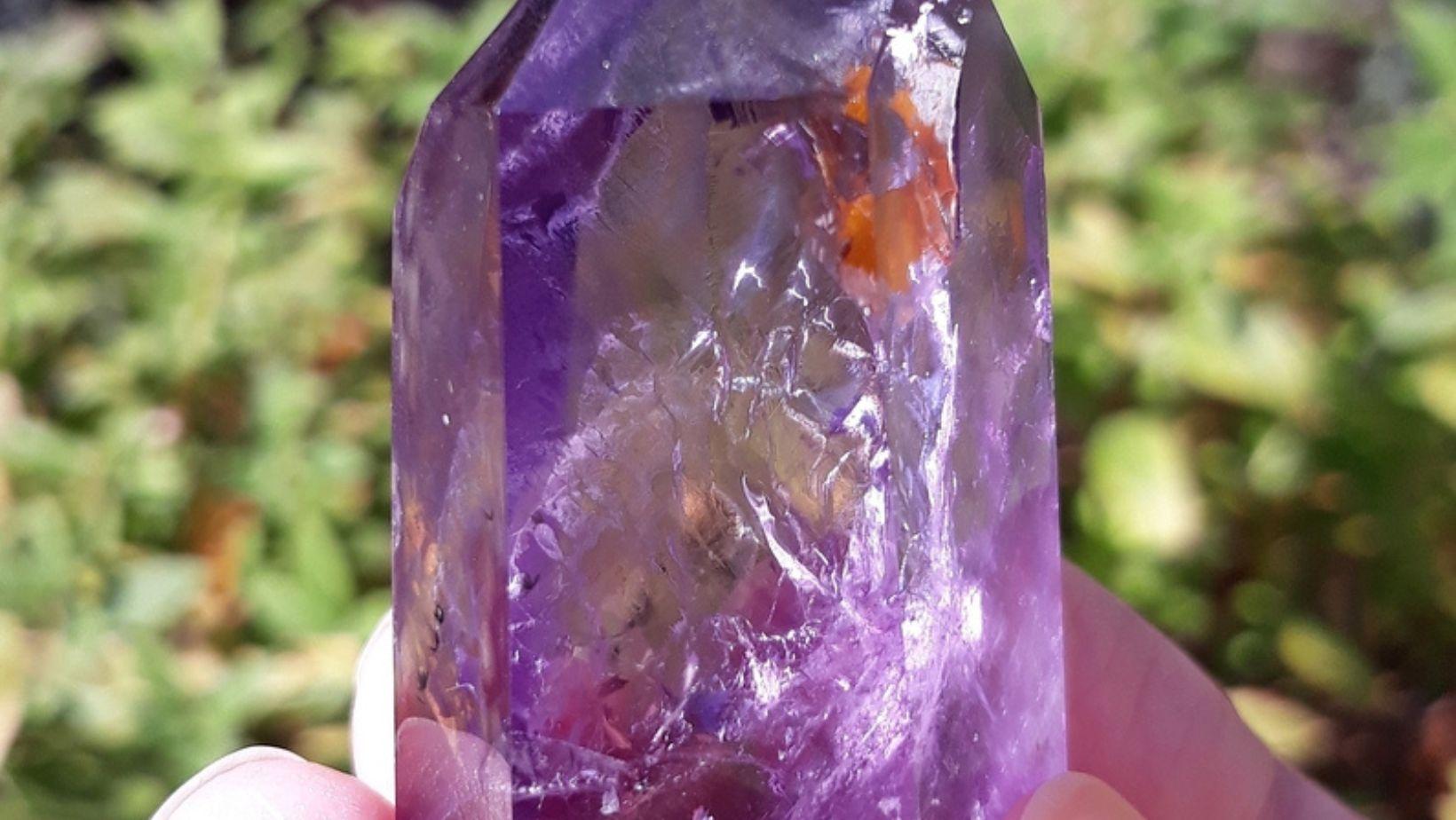
Amethyst (SiO₂) is a purple variety of quartz colored by iron impurities and natural gamma irradiation. It forms in volcanic gas cavities (geodes), hydrothermal veins, and pegmatite pockets. The United States has amethyst-producing localities in at least 15 states — from high-desert volcanic fields in Arizona to glacial till deposits in the Upper Midwest. Below is a state-by-state breakdown of collecting sites with land status, access details, and what to expect in the field.
Top Amethyst Collecting Locations by State
Arizona — Four Peaks Amethyst Mine (Maricopa County)
Land Status: Tonto National Forest (USDA Forest Service). Private mining claim on public land.
Location: Mazatzal Mountains, approx. 33.720°N, 111.470°W. Elevation ~6,000 ft.
Access: High-clearance 4x4 required. Last 4 miles are rocky, steep, and unmaintained. Then a 1.5-mile hike to the deposit. No cell service. Not recommended for inexperienced off-road drivers.
Collecting: The mine claim itself is privately operated and not open for public collecting. However, loose amethyst can occasionally be found in the surrounding washes, talus slopes, and drainages on National Forest land below the mine. Surface collecting on NF land is permitted for personal-use quantities under 36 CFR 261.9(a). No digging into veins or removing material from the claim.
Specimens: Four Peaks produces some of the finest amethyst in the Western Hemisphere. The color ranges from light lavender to deep reddish-purple ("Siberian" grade). Crystals form in quartz veins within Precambrian rhyolite. Most loose material in washes is small (thumbnail to fist-size), but the color can be exceptional.
Danger note: Summer temps exceed 110°F at lower elevations. Carry 1 gallon of water per person per day. Rattlesnakes are common. This is a serious backcountry trip — not a casual day hike.
Georgia — Jackson's Crossroads (Wilkes County)
Land Status: Private fee-dig sites.
Location: Near intersection of GA-44 and GA-17, approx. 33.820°N, 82.820°W.
Access: Paved and dirt roads. Sedan OK to parking areas. Open seasonally — check with operators for current hours and dates.
Fee: Varies by operator, typically $10–$25/day.
Specimens: Amethyst crystals occur in clay pockets within weathered granite. The crystals are distinctive — many form scepter shapes (a flat cap crystal perched on a narrow stem). Colors tend toward light lavender. Most crystals are 1–3 inches. The clay matrix is soft, so digging tools are simple: shovel, bucket, screen, and garden trowel.
What to expect: You dig into red-orange clay looking for pockets of crystals. When you hit a pocket, slow down and use hand tools to avoid breaking crystal points. Spray bottles help clean clay off specimens in the field. This site is one of the most productive amethyst dig-your-own locations in the eastern US.
South Carolina — Due West (Abbeville County)
Land Status: Private land. Permission required.
Location: Near Due West, approx. 34.330°N, 82.390°W.
Access: Contact the South Carolina Geological Survey or local rock clubs (Augusta Gem & Mineral Society, Upstate SC Gem & Mineral Club) for current access to collecting spots.
Specimens: Dark purple amethyst occurs in pegmatite veins cutting through gneiss and schist. Some of the deepest-colored amethyst in the eastern US has come from this area. Crystals can be doubly terminated and exceptionally clear. Pegmatite mining requires harder tools — rock hammer, chisels, and pry bar.
Maine — Deer Hill (Oxford County)
Land Status: White Mountain National Forest (USDA Forest Service). Open to public collecting.
Location: Stow, ME, approx. 44.233°N, 70.983°W.
Access: AWD recommended for the forest road. Moderate hike (~1 mile) to exposures. Open year-round (road may be impassable in mud season, April–May).
Fee: Free. No permit needed for personal-use quantities on National Forest land.
Specimens: Amethyst, smoky quartz, aquamarine, beryl, garnet, and tourmaline in pegmatite exposures. The amethyst tends toward pale purple. Crystals are found in vugs within pegmatite or as loose float in the soil below outcrops. Bring a rock hammer and cold chisel for working pegmatite.
Montana — Crystal Park Recreation Area (Beaverhead County)
Land Status: Beaverhead-Deerlodge National Forest (USDA Forest Service).
Location: Near Wise River, approx. 45.694°N, 112.748°W.
Access: Forest road. AWD recommended. Open late June–September (snow closes the road in winter). Free admission. No motorized digging.
Vehicle: AWD/4x4. Gravel road with seasonal ruts.
Specimens: Amethyst and smoky quartz crystals in decomposed granite. The crystals formed in pockets within a granitic intrusion and are now loose in the soil. Collecting is by surface picking and light hand digging — no hard-rock mining needed. This is one of the best family-friendly crystal collecting sites in the western US. Crystals range from small thumbnail specimens to occasional 3-inch points. Bring a small garden trowel, screen, and knee pad.
Virginia — Amelia Courthouse (Amelia County)
Land Status: Private claims. The Morefield Gem Mine is a fee-dig operation.
Location: Amelia, VA, approx. 37.340°N, 78.760°W.
Access: Paved road. Open seasonally (typically April–November).
Fee: ~$20–$30/day.
Specimens: Morefield Mine is primarily a pegmatite locality known for amazonite (green feldspar), topaz, and garnet, but amethyst occurs here as well. The amethyst tends to be pale but well-formed. The mine provides material from the dump pile for screening and sluicing.
North Carolina — Cowee Valley (Macon County)
Land Status: Private fee-dig mines.
Location: Near Franklin, NC, approx. 35.196°N, 83.384°W.
Access: Sedan OK. Multiple mines open April–October.
Fee: $25+ per bucket.
Specimens: Amethyst occurs alongside ruby, sapphire, and garnet in the Cowee Valley alluvial deposits. The amethyst is typically small and pale, secondary to the corundum that this area is famous for. See our full North Carolina gem hunting guide for details on specific mines.
Michigan — Upper Peninsula (Keweenaw County)
Land Status: Mix of state land, private land, and Lake Superior shoreline.
Location: Lake Superior shoreline near Copper Harbor, approx. 47.470°N, 87.880°W.
Access: Sedan OK to beach areas. No fee for beach collecting.
Specimens: Amethyst occurs in geodes and vugs within ancient basalt flows along the Keweenaw Peninsula. The Lake Superior basalts (1.1 billion year old Midcontinent Rift volcanics) produced the famous native copper deposits and also formed amethyst-bearing agates. Beach collecting after storms can yield tumbled amethyst-bearing agates and loose amethyst crystals. Inland sites on private land require permission.
Pennsylvania — Chester County
Land Status: Private land. Contact local rock clubs for access.
Location: French Creek area, approx. 40.190°N, 75.780°W.
Specimens: The French Creek iron mines historically produced amethyst crystals in hydrothermal veins associated with magnetite ore bodies. Most sites are now closed, but local mineral clubs occasionally arrange field trips to accessible areas.
Colorado — Lake George (Park County)
Land Status: Mix of private claims and Pike National Forest.
Location: Near Lake George, approx. 38.960°N, 105.330°W.
Access: AWD recommended for forest roads. The annual Lake George Gem & Mineral Show includes guided collecting trips.
Specimens: Smoky quartz, amazonite, and amethyst occur in Pikes Peak granite pegmatite pockets. The amethyst is typically secondary to the famous amazonite and smoky quartz of this area. Pegmatite mining requires rock hammer and chisels.
Additional States with Amethyst Localities
| State | Area | Land Status | Notes |
|---|---|---|---|
| Minnesota | Grand Marais / North Shore | State land / private | Amethyst in Thunder Bay agates. Beach collecting on Lake Superior. |
| Nevada | Various mining districts | BLM | Small amethyst in volcanic geodes on BLM land in central Nevada. |
| New Hampshire | Grafton County | Private / NF | Pegmatite localities in the White Mountains. |
| Texas | Mason County | Private ranches | Topaz and amethyst in rhyolite. Fee access on some ranches. |
| Idaho | Graveyard Point | BLM | Small amethyst in agate geodes. Surface collecting. |
How to Identify Amethyst in the Field
| Property | Amethyst | Look-Alike: Fluorite | Look-Alike: Lepidolite |
|---|---|---|---|
| Hardness | 7 (Mohs) — scratches glass and steel | 4 — easily scratched by steel knife | 2.5–3 — scratched by fingernail |
| Crystal System | Hexagonal (six-sided prism with point) | Cubic (octahedrons, cubes) | Monoclinic (flaky sheets) |
| Fracture | Conchoidal (curved, glass-like) | Octahedral cleavage | Flaky / micaceous |
| Streak | White | White | White |
| Luster | Vitreous (glassy) | Vitreous to dull | Pearly to vitreous |
| Key Test | Scratches glass, conchoidal fracture | Does NOT scratch glass | Flakes apart in sheets |
The simplest field test: try to scratch a piece of glass with the specimen. Amethyst (hardness 7) scratches glass easily. Purple fluorite (hardness 4) will not. Lepidolite mica is soft and flaky — it crumbles rather than fractures.
Color zoning is common in natural amethyst — look for alternating lighter and darker purple bands within a single crystal. This is a strong indicator of natural origin. Synthetic amethyst is uniformly colored.
Tools and Field Tips
- Rock hammer (2–3 lb) and cold chisels — for extracting crystals from pegmatite or geode host rock. Work carefully around crystal pockets to avoid shattering points.
- Spray bottle — wetting the surface reveals true color. Dry amethyst in clay often looks gray or dull.
- Newspaper or bubble wrap — wrap each specimen individually. Amethyst points are brittle at the tips. One loose crystal rattling in a bucket will chip everything.
- Safety glasses — mandatory when hammering quartz. Conchoidal fracture produces razor-sharp glass-like flakes that can fly at eye level.
- 10x hand lens — examine crystal faces for terminations and inclusions. Well-terminated points are more valuable than broken fragments.
- UV flashlight (365nm) — some amethyst fluoresces under longwave UV. Not diagnostic, but useful for spotting crystals in low-light conditions such as mine dump piles at dusk.
Amethyst Care After Collecting
Amethyst fades with prolonged exposure to direct sunlight. UV radiation breaks the color centers caused by iron impurities. Store and display specimens out of direct sun — a window sill is a bad idea for a prized amethyst. Transport in opaque containers. Clean with water and a soft brush; avoid harsh chemicals that can etch crystal faces.
Interactive Amethyst Location Map
Use our interactive amethyst location map to find collecting sites near you. Each pin includes GPS coordinates, land status, and reported specimens. You can also browse all specimen maps or search by state.