
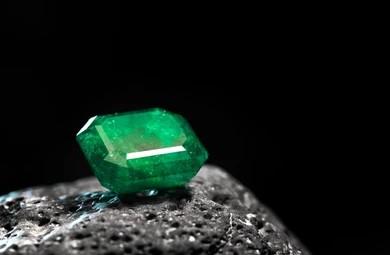
The May birthstone is not just another gemstone but one of the most symbolic stones tied directly to life, growth, and renewal. It has been strongly associated with this month for centuries, long before modern birthstone lists were standardized.
If you're born in May, your birthstone represents beauty, growth, balance, and renewal. In this article, we explore more about the May birthstone and its significance.
What Is the May Birthstone?
The official birthstone for May is emerald. Emerald stands out instantly because of its deep, rich green color. Unlike many gemstones that are admired mainly for brilliance or sparkle, emerald captures something more natural. It reflects the color of thriving forests, fresh leaves, and new beginnings.
Unlike some months that have multiple modern alternatives, emerald has remained the primary and widely accepted birthstone for May across both traditional and modern birthstone charts.
Why Emerald Is the May Birthstone

Emerald's connection to May is built on a combination of season, symbolism, and history. Here is why emerald is connected to May.
Seasonal Connection
May sits at the heart of spring in many parts of the world. It's the time when nature is fully awake. Trees are green, flowers are blooming, and the environment feels alive again. Emerald mirrors this perfectly in its color.
Its green color represents fresh growth, fertility, renewal, and life returning after dormancy. No other gemstone reflects the energy of May as naturally as emerald does.
Historical Significance
Emerald has been valued for thousands of years, far before modern jewelry traditions.
Ancient civilizations saw emerald as a stone of power and life. One of the most famous admirers was Cleopatra, who was known for her deep fascination with emeralds and even claimed ownership of emerald mines in ancient Egypt.
Across cultures, emerald was associated with royalty and wealth. It also signifies divine connection, fertility, and rebirth. These themes align closely with the essence of May.
RELATED READ: Emerald: Formation, Types, History, and Care
History of Emerald as a Birthstone
Emerald's history goes back thousands of years, making it one of the oldest and most valued gemstones in human culture. In ancient Egypt, emeralds were already being mined as early as 330 BC, particularly during the time of Cleopatra, who was known for her fascination with the stone. To the Egyptians, emerald symbolized life, fertility, and eternal youth, which made it more than just a decorative gem but one that carried deep cultural and spiritual meaning.
As trade routes expanded, emeralds made their way into Europe, where they became highly prized among royalty and the elite. Their rich green color was associated with power, renewal, and status. However, the real turning point came when Spanish explorers arrived in South America during the 16th century. There, they discovered vast emerald deposits in Colombia, which are still considered the source of the finest emeralds in the world today.
Over time, the symbolism of emerald remained consistent across cultures. Its connection to growth, renewal, and life made it a natural match for May, a period associated with spring and new beginnings. When modern birthstones were officially standardized by the American National Retail Jewelers Association in 1912, emerald was designated as the birthstone for May, and it has remained unchanged ever since.
Emerald Meaning and Symbolism
Emerald has long held a powerful place in human culture, with meanings that connect both to the natural world and the depths of human experience. Its symbolism spans life, love, wisdom, and protection, making it one of the most meaningful gemstones across history.
Renewal and Growth
At its core, emerald embodies life itself. Its vibrant green hue mirrors the energy of nature, growth, regeneration, and new beginnings. This natural symbolism makes emerald especially suited to May, the height of spring, when the world is at its most lush and alive. Wearing or gifting an emerald reflects this sense of vitality and continuous renewal.
Love and Loyalty
Emerald has also been celebrated as a stone of love and enduring bonds. Beyond romantic relationships, it represents loyalty, trust, and meaningful connections. Ancient beliefs held that emeralds could strengthen relationships, encourage honesty, and foster emotional harmony, making them a symbol of love that endures over time.
Wisdom and Clarity
Emerald is often associated with insight and mental clarity. Across cultures, it was believed to sharpen intuition, enhance clear thinking, and reveal truth. Symbolically, it reminds us to see the world as it is, cutting through emotional bias or confusion, and fostering balanced judgment and self-awareness.
Protection and Healing
In addition to its emotional and intellectual significance, emerald was historically considered protective and healing. It was thought to guard against negative energy, promote physical and emotional recovery, and restore harmony. While these beliefs are rooted in tradition, they contribute to emerald's reputation as a stone of balance, resilience, and overall well-being.
Emerald fits May for clear and practical reasons. The deep green color matches the peak of spring, when nature is at its fullest. Its symbolism of growth, renewal, and life aligns directly with the energy of the month.
Even on a personal level, the traits often associated with May-born individuals—stability, emotional depth, and strong relationships—reflect the same meanings carried by the stone. Together, these layers of symbolism make emerald far more than a beautiful gemstone. It is a stone that connects the cycles of nature with the human quest for growth, insight, and lasting relationships, reinforcing why it remains the cherished birthstone of May.
Where Emeralds Are Found
Emeralds are relatively rare in nature because they require a very specific combination of geological conditions to form—conditions that occur only in a handful of places around the world.
Unlike many gemstones that form near the Earth's surface, emeralds develop deep within metamorphic rocks where beryllium-rich fluids interact with chromium or vanadium-bearing rocks under heat and pressure. This exact mix of chemistry and geology does not happen often, which makes high-quality emeralds uncommon and valuable. Some significant emerald sources include:
- Colombia: Colombia has long been considered the premier source of emeralds, producing stones with rich, vivid green color and high saturation. The Muzo, Coscuez, and Chivor mining districts have supplied the world with emeralds for centuries and remain benchmarks for quality.
- Zambia: Zambian emeralds are known for their deep green hues, often with a slightly bluish tint. Zambia's Kagem Mine is one of the largest emerald producers by volume and has become increasingly important in the global market.
- Brazil: Brazil produces a wide variety of emeralds, ranging from lighter green to intense green stones. Brazilian deposits in states such as Bahia and Minas Gerais have become key contributors to the global emerald supply.
- USA: In the United States, North Carolina is one location where you can find emerald if you go gem hunting.
Because emeralds are difficult to form and recover, they often contain natural inclusions—tiny internal characteristics such as fissures, mineral crystals, or growth patterns. Rather than detracting from the stone, these inclusions are often used as identification features that help gemologists distinguish natural emeralds from synthetics or imitations.
RELATED READ: Real vs Fake Emerald: How to Tell the Difference
May Birthstone Gift Ideas
If you're shopping for someone born in May, emerald offers both meaning and elegance.
- Classic Jewelry: Emerald works beautifully in rings, necklaces, and earrings. These pieces are timeless and suitable for everyday wear or special occasions.
- Personalized Gifts: For something more meaningful, go for birthstone bracelets, engraved pendants, or custom jewelry pieces. These add emotional value beyond the stone itself.
- Experience-Based Gifts: For something more unique, you can visit a gemstone museum, try a gem mining experience, or attend a mineral show. Experiences often create stronger memories than physical gifts.
If emerald is out of the budget, consider alternatives like green tourmaline, peridot, or green quartz. They don't replace emerald, but they offer a similar visual appeal at a lower cost.
Conclusion
Emerald holds a unique place among birthstones because it reflects something deeper than appearance. It represents life at its fullest.
From its rich green color to its long history across civilizations, emerald captures the essence of May—growth, renewal, and connection. It is a stone that mirrors the natural world at its most vibrant stage.
For those born in May, emerald is more than a gemstone. It is a reflection of who they are, and that is what makes it one of the most meaningful birthstones of all.
RELATED READ: June Birthstones: Pearl, Moonstone & Alexandrite Meaning, Colors & Where to Find Them
Frequently Asked Questions
What is the May birthstone?
The May birthstone is emerald, a green gemstone known for its connection to growth, renewal, and love.
What color is the May birthstone?
Emerald is known for its rich green color, ranging from light green to deep, vivid green.
What does emerald symbolize?
Emerald symbolizes renewal, love, wisdom, and emotional balance.
Is there an alternative birthstone for May?
There is no widely accepted modern alternative. However, stones like green tourmaline and peridot are sometimes used as substitutes.
Is emerald expensive?
Yes, high-quality emeralds can be expensive due to their rarity and demand.
Can you find emeralds yourself?
Unlike some gemstones, emeralds are difficult to find casually. Most are mined in controlled locations, though some guided mining experiences exist in places like North Carolina.