
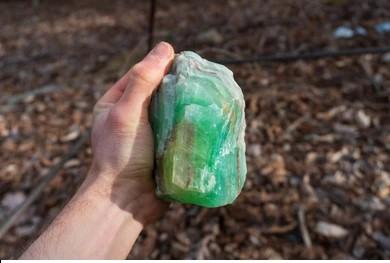
Emeralds are among the most beautiful and valuable gemstones in the world. Their rich green color has fascinated collectors, jewelers, and royalty for centuries. However, because emeralds are so desirable, they are also one of the most frequently faked gemstones on the market.
Many people buy what they believe is a genuine emerald, only to discover later that it's green glass, dyed quartz, or another imitation stone. Learning how to identify a real emerald can help you avoid costly mistakes and become more confident when buying gemstones.
In this guide, you'll learn how to tell the difference between real and fake emeralds, the common materials used to imitate them, and simple tests you can use to check a stone yourself.
What Is a Real Emerald?

A real emerald is a green variety of the mineral beryl, with the chemical formula Be₃Al₂Si₆O₁₈. Its green color comes from trace amounts of chromium or vanadium within the crystal structure. Emeralds are part of the same mineral family as aquamarine and morganite.
What makes emeralds special is their deep, vibrant green color, which ranges from bluish-green to slightly yellowish-green. Real emeralds have several identifiable characteristics:
- Hardness: 7.5 to 8 on the Mohs scale
- Crystal system: Hexagonal
- Color: Rich green to bluish-green
- Transparency: Usually slightly cloudy due to inclusions
- Luster: Vitreous (glass-like)
Unlike many other gemstones, perfect emeralds are extremely rare. Most natural emeralds contain internal features called inclusions.
Why Emeralds Are Often Faked
Emeralds are among the most valuable colored gemstones, which makes them a common target for imitation. Emeralds are frequently faked because they have high market value. They are mostly used for high-end jewelry and as a symbol of wealth and love.
Because of this, the market contains many stones that look like emeralds but are actually imitations or substitutes. Synthetic emeralds are also easier to produce in laboratories. Before buying emeralds, you need to know the different types of fake emeralds that exist:
Simulants: Simulants are materials that look like emerald but have a completely different chemical composition. They include green glass, peridot, green fluorite, and synthetic green spinel, which are all sold as or mistaken for emerald. These fail most physical tests because their properties differ measurably from real beryl.
Synthetic emeralds: Synthetic emeralds are laboratory-grown stones with identical chemical composition, identical hardness, and identical specific gravity to natural emeralds. They are, chemically and physically, emerald. The distinction is natural versus laboratory origin — a distinction that matters enormously for value and that no home test can definitively resolve.
Treated natural emeralds: Treated natural emeralds are genuine natural stones that have been oiled or resin-filled to improve apparent clarity. Over 99% of natural emeralds on the market have received some form of clarity treatment. This is accepted practice when disclosed; the degree of treatment affects value significantly and must be declared by reputable sellers.
Assembled stones: These are usually made by cementing layers of material together, sometimes with a thin slice of genuine green material on top. They pass casual visual inspection but fail if carefully examined.
Read More: Exploring the Differences: Malachite vs Emerald Showdown
Real vs Fake Emerald: Key Differences

Understanding the differences between real and fake emeralds can help you quickly identify suspicious stones. These are what you should look out for to spot the differences.
Color
Natural emeralds display a pure green to slightly bluish-green hue. Colombian emeralds show a vivid, slightly bluish green with what dealers describe as an internal velvety quality or glow. A fake emerald is often extremely bright or artificial-looking green and has a perfectly uniform color throughout the stone.
To determine the color, hold the stone in natural daylight and examine the hue carefully. Pure green to blue-green is consistent with emerald. Overly vivid, saturated green with no natural depth or variation is a common characteristic of glass imitations.
Dichroism is the second color test and requires either a dichroscope or careful observation at different viewing angles. Emerald is doubly refractive and shows different colors from different viewing directions: blue-green from one axis, yellow-green from another. This effect is observable under a loupe when you rotate the stone slowly.
Natural emeralds usually show subtle color variations, while fake stones tend to look unnaturally consistent.
Inclusions
One of the easiest ways to identify a real emerald is by examining its inclusions. Real emeralds often contain natural internal features known as "jardin," a French word meaning garden.
The inclusions form during crystal growth as the growing emerald crystal incorporates surrounding minerals, trapped fluid pockets, and growth interruptions into its structure. They may look like small fractures with wispy internal patterns. Fake emeralds made of glass, on the other hand, may contain air bubbles, which are rarely seen in natural gemstones.
Clarity
Real emeralds have visible internal imperfections. Completely flawless emeralds are extremely rare and very expensive. Fake emeralds often appear clear, too clean inside, and completely free of inclusions.
If a stone looks too perfect, it may not be natural.
Hardness
Emerald has a Mohs hardness of 7.5–8. A genuine emerald scratches glass without effort and cannot be scratched by a steel file or knife blade (approximately Mohs 6.5). Most green simulants are softer — green fluorite is Mohs 4 and can be scratched by a fingernail.
Emerald, despite its hardness, is naturally brittle due to its heavy inclusion content and internal fractures. This means it chips and cleaves more readily than its hardness number suggests. A stone that cannot scratch glass is not an emerald. Soft facet edges under magnification suggest a simulant softer than emerald.
For unset or rough specimens, draw a sharp edge or corner of the stone firmly across a glass surface. A genuine emerald will leave a clear, permanent scratch, but glass imitations scratch more easily than real emeralds.
Simple Tests to Tell If an Emerald Is Real
While professional gemologists use advanced equipment, there are a few simple observations you can make at home.
Use a Magnifying Glass or Loupe: A 10× jeweler's loupe is one of the best tools for gemstone identification. When examining a real emerald, look for natural inclusions, tiny fractures, or mineral particles trapped inside the stone. Glass imitations often show round air bubbles rather than natural inclusions.
Check the Color Carefully: Real emeralds rarely have perfectly even color. Instead, they may show slight color zoning, subtle differences in shade, and areas of lighter or darker green. Fake emeralds often appear uniform and overly bright.
Look for Bubbles: If you see perfectly round bubbles inside the stone, it is likely glass. Natural emeralds seldom contain air bubbles.
Observe the Stone in Natural Light: Hold the stone up to a light source or sunlight. Real emeralds will always display natural inclusions and slightly uneven transparency. Glass stones usually appear too clear or overly smooth inside.
Read More: Pay-to-Dig Gem Mines in the US: Complete Guide by State (2026)
Tips for Buying Real Emeralds
If you plan to purchase an emerald, follow these guidelines to reduce the risk of buying a fake.
Buy From Reputable Sellers: Always purchase gemstones from trusted jewelers or gemstone dealers. Request a laboratory report for any stone above a few hundred dollars. GIA, AGL, Gübelin, and SSEF reports are the accepted standard in the gem trade. A report specifies natural versus synthetic, treatment type, degree, and often geographic origin.
Ask for Certification: A professional gemstone certificate from organizations like GIA or IGI can confirm a stone's authenticity. Buy from dealers with documented provenance and years of presence in the collector community.
Inspect the Stone: Handle the stone before buying whenever possible. The temperature test, loupe examination, and fire observation resolve most simulant questions within two minutes at a gem show counter. A 10x loupe and a Chelsea filter together cost less than $50 and fit in a pocket. Use these to look for natural inclusions and color variations.
Compare Prices: If the price seems unusually low for a large emerald, it may not be genuine. Geographic origin matters for emerald — Colombian, Zambian, Brazilian, and Afghan emeralds have distinct characteristics that experienced buyers recognize and command higher prices. A dealer who can discuss origin with specificity knows what they are selling.
Conclusion
Emeralds are beautiful gemstones with a long history of admiration and value. Because of their popularity, many imitations exist on the market, ranging from green glass to dyed quartz. Learning the key differences between real and fake emeralds can help you make smarter decisions when buying gemstones.
Pay attention to the stone's color, inclusions, clarity, and overall appearance. Real emeralds usually show natural imperfections, subtle color variations, and internal features that glass imitations lack. If you're ever unsure about a stone's authenticity, consulting a professional gemologist or purchasing gemstones with certification is the safest option.
Frequently Asked Questions
What is the most common fake emerald on the market?
In market stalls, tourist shops, and online mass retail, green glass is the dominant imitation. At mid-price points in jewelry, chrome diopside and green tourmaline are frequently sold as emerald, sometimes with apparent ignorance rather than deliberate fraud.
Does oiling make an emerald fake?
No. Oiling natural emeralds has been standard practice for centuries and is accepted throughout the gem trade. A lightly oiled natural emerald is still a natural emerald — the treatment improves appearance without altering the stone's nature or origin.
How can you tell if an emerald is real at home?
You can examine the stone with a magnifying glass and look for natural inclusions. Real emeralds usually contain internal features called "jardin," while glass imitations often contain air bubbles.
Do real emeralds have bubbles?
No. Real emeralds rarely contain air bubbles. Bubbles are usually a sign that the stone is made of glass.
Are synthetic emeralds real?
Yes. Synthetic emeralds are chemically identical to natural emeralds, but they are grown in laboratories rather than formed inside the Earth.
What color should a real emerald be?
A real emerald typically has a rich green to bluish-green color. Extremely bright or neon green stones may be imitations.
Are flawless emeralds real?
Completely flawless emeralds are extremely rare. Most natural emeralds contain inclusions, which are considered part of the stone's character.