
Gemstones have fascinated people for thousands of years, adorning crowns, rings, and necklaces with vibrant color and timeless beauty. But beyond their sparkle, gemstones carry unique qualities: hardness, rarity, clarity, symbolism, and geological origin, all of which determine how they're valued and used in jewelry.
Whether you're a jewelry enthusiast, a beginner gemstone collector, or a rockhound cracking open agates in an Arizona wash, the excitement lies in turning raw mineral finds into dazzling, wearable art. This guide walks you through everything you need to know about gemstones for jewelry, from formation and types to quality grading and durability.
What Are Gemstones?
Gemstones are naturally occurring mineral crystals that, when cut and polished, are used in jewelry and decorative objects. They are chosen for their beauty, durability, and rarity.
Most gemstones form deep within the Earth's crust or mantle under intense heat and pressure over millions of years. After mining, the rough stones are sent to lapidaries, where they are cut and polished to reveal their brilliance.
Many gemstones contain tiny internal features called inclusions, small traces of other minerals or growth patterns. Geologists and gemologists use these inclusions to determine a gemstone's origin and formation history. Inclusions can also affect clarity, durability, and value.
Precious vs. Semi-Precious Gemstones
Traditionally, gemstones are grouped into precious and semi-precious categories.
Precious Gemstones: These are rare, highly durable, and historically valuable. They are usually assessed based on these criteria: cut, color, clarity, and carat weight, also known as the four C's. They include: Diamond (Mohs 10), Ruby (Mohs 9), Sapphire (Mohs 9), Emerald (Mohs 7.5–8)
Semi-Precious Gemstones: These stones are more widely available and occur in a broad range of colors. Examples include: Amethyst, Topaz, Peridot, Aquamarine, Citrine, Garnet, Tourmaline, and many others. Semi-precious stones are also valuable for other purposes, like the amethyst, which is said to have healing properties.
While "semi-precious" sounds less valuable, many of these stones can be extremely rare and expensive depending on quality.
10 Best Gemstones for Jewelry
Gemstones have fascinated people for centuries, not just for their beauty, but for the thrill of finding them yourself. Across US public lands and pegmatite-rich regions, many gemstones can be collected, polished, and turned into stunning jewelry pieces that feel truly personal. Below are ten of the best gemstones for jewelry:
Diamond

Diamonds remain the king of gemstones, prized for their unmatched brilliance and durability. They are formed deep within the Earth, roughly 90 to 150 miles below the surface, where extreme heat and pressure transform carbon into a crystal. These stones are later carried upward through volcanic kimberlite pipes. With a Mohs hardness of 10, diamonds are the hardest natural gemstone, making them perfect for everyday jewelry, especially rings. As April's birthstone, diamonds symbolize strength, eternal love, and clarity of mind.
In the United States, the Crater of Diamonds State Park in Arkansas is the only public site where visitors can legally search for and keep diamonds. Rockhounds are advised to focus on clay-heavy gravel and sieve carefully, as diamonds often hide in plain sight. Diamonds can also be found in South Africa, Russia, Botswana, and Canada.
Sapphire

Sapphires are varieties of corundum formed through metamorphic processes and often collected from river gravels. They are best known for their deep blue color, though they occur in several shades.
With a hardness of 9, sapphires are durable enough for rings, bracelets, and heirloom jewelry. As September's birthstone, they are associated with wisdom, loyalty, and protection.
In the US, Montana's Yogo Gulch and Gem Mountain are notable sapphire locations, while Sri Lanka, Madagascar, Myanmar, Thailand, and Australia supply much of the world's sapphires. Stream gravels are productive hunting grounds for sapphires, so panning like gold prospectors often yields results.
Ruby
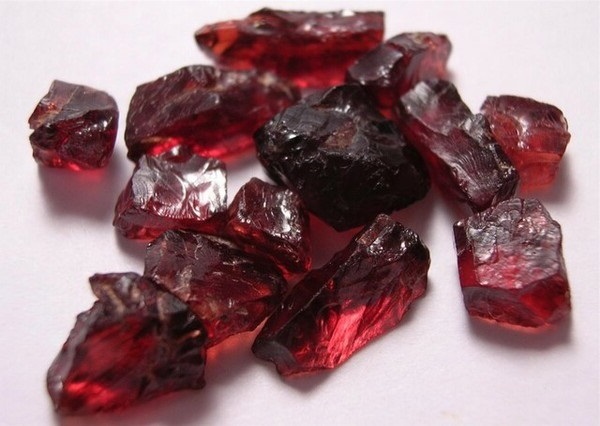
Rubies share the same corundum family as sapphires but gain their red color from chromium. They form under similar metamorphic conditions and are equally durable, ranking 9 on the Mohs scale.
Ruby is regarded as July's birthstone, and symbolizes passion, vitality, and courage, making it a popular choice for bold centerpiece stones and engagement rings.
In the United States, rubies are found in Franklin and Cowee Valley in North Carolina, while major global deposits exist in Myanmar, Mozambique, Sri Lanka, and Thailand. When hunting for rubies, look through schist rock containing magnetite; rubies often reveal themselves under magnification.
Emeralds

Emeralds are beryl crystals formed in hydrothermal veins within pegmatites, and bring a deep, velvety green that has captivated jewelers for centuries. Their natural inclusions give each stone a unique character.
With a hardness of 7.5–8, emeralds are slightly softer than sapphires, and as May's birthstone, they embody renewal, love, and insight, and are best set in protected jewelry like pendants, earrings, or halo rings.
Hiddenite, North Carolina, is the only commercial emerald source in the US. Rockhounds are advised to search black clay pockets within pegmatites and handle crystals gently, as they can be brittle. Globally, emeralds can be found in Colombia, Brazil, Zambia, and Zimbabwe.
Topaz

Topaz appears in vibrant blues, oranges, and clear crystal forms, which grow in volcanic rhyolite cavities. With a hardness of 8, topaz works well for pendants and faceted statement pieces. Frosted-looking crystals often polish clear, and checking them under UV light helps spot internal fractures before cutting.
As November's birthstone, Topaz is associated with creativity, confidence, and clarity. It is often cut into large faceted stones for statement pendants.
Mason County in Texas and Topaz Mountain in Utah are famous collecting spots, where crystals can be found.
Aquamarine

Aquamarines are beryl crystals formed in pegmatite pockets, often hosting long crystal points that are perfect for wire-wrapped pendants or faceted earrings, and come in sea-blue tones making them a favorite for elegant, understated jewelry.
Aquamarine, March's birthstone, symbolizes calm, courage, and communication. With a hardness of 7.5–8, it is favored for elegant rings, earrings, and wire-wrapped pendants.
Notable US locations to find aquamarine include Mount Antero in Colorado and Pala, California. Aquamarine has good hardness but cleaves easily, so careful extraction is key.
Amethyst

Amethyst, the purple variety of quartz, remains one of the most accessible and popular gemstones. It forms in geodes and crystal clusters, perfect for both jewelry and display.
With a Mohs hardness of 7, it's durable enough for most jewelry, like faceted stones and druzy pendants. And is also said to possess healing powers of promoting calmness and clarity, and also holds cultural significance.
Geodes hidden in basalt often contain beautiful amethyst clusters; a gentle shake can sometimes reveal a hollow cavity inside the rock. You can find amethyst in Four Peaks Mine, Arizona, Jackson's Crossroads, Georgia, as well as Wyoming, Pacific Northwest basalt regions.
Citrine

Citrine is a vibrant quartz gemstone that ranges from soft lemon yellow to deep golden tones. While some natural citrine can be found in Oregon and South Dakota, much of the citrine on the market is actually heat-treated amethyst. Natural citrine is rarer and therefore more valuable, with rhyolite-rich areas being promising search zones.
As a variety of quartz, citrine has a hardness of 7, making it durable enough for everyday jewelry like rings, beads, and bold statement pieces. It is also known as November's alternative birthstone and is often associated with prosperity, joy, and confidence. Major sources of citrine include Brazil and Madagascar, alongside smaller deposits in the United States.
Peridot

Peridot is known for its rich olive-green glow, a color that comes from olivine crystals formed in volcanic environments. In the United States, Peridot Mesa in Arizona is one of the most famous collecting sites, where mantle-derived volcanic rocks bring these vibrant crystals to the surface. Some collectors even search at night, as fresh olivine crystals can reflect light with a subtle green shimmer.
As August's birthstone, peridot carries a hardness of about 6.5–7, making it suitable for everyday jewelry such as faceted stones, cabochons, and elegant earrings. Traditionally associated with protection and emotional balance, peridot remains highly prized for its bright green brilliance. Beyond Arizona, major global sources include Pakistan, Myanmar, and Egypt.
Opal

Opal is famous for its dazzling play-of-color, where flashes of red, blue, green, and gold dance across the surface. Some of the most sought-after specimens in the United States come from Virgin Valley, Nevada, known especially for rare black fire opals. Because opals are softer than most gemstones, they are typically cut as cabochons or set as protective doublets to prevent damage. Collectors often dig in the early morning, when cooler temperatures reduce the risk of cracking fragile opal nodules hidden in dry clay seams.
As October's birthstone, opal forms when silica-rich water deposits harden over time into a unique internal structure that creates its signature color play. With a hardness of about 5.5–6.5, opal symbolizes inspiration, imagination, and passion. Beyond Nevada, leading global sources include Australia, Ethiopia, and Mexico, making opal one of the most enchanting and geographically diverse gemstones in the world.
Read More: Public Gem Mining Sites in the U.S. - Where to Legally Dig for Gems and Crystals
How To Identify Quality Gemstones
Knowing how to identify quality gemstones is essential whether you're buying jewelry or evaluating stones collected in the field. Two key factors determine gemstone quality: durability and grading characteristics. Understanding these fundamentals helps you choose stones that not only look beautiful but also last.
Gemstone Durability and the Mohs Hardness Scale
One of the most important factors in choosing gemstones for jewelry is hardness, a gemstone's resistance to scratching and abrasion. Harder stones are more suitable for everyday wear, especially in rings and bracelets.
Hardness is measured using the Mohs Scale, which ranks minerals from 1 (softest) to 10 (hardest).
Mohs Hardness Table for Common Gemstones
Read More: Understanding the Mohs Scale of Hardness: A Comprehensive Guide for Rockhounds and Geologists
Gemstone Grade
Beyond hardness, gemstone quality is evaluated using internationally recognized grading factors. These determine beauty, rarity, and market value. They are known as the four Cs of Gemstone Quality
Color – Evaluated by hue (primary color), tone (lightness or darkness), and saturation (intensity). Rich, vivid color usually increases value.
Clarity – Refers to internal inclusions. Eye-clean stones are more valuable, though some inclusions are expected in natural colored gems.
Cut – Determines how well the gemstone reflects light. A well-cut stone enhances brilliance, color, and symmetry.
Carat Weight – Measures size. Larger gemstones are rarer, and price increases significantly at key weight thresholds.
Unlike diamonds, colored gemstones are rarely cut to standard sizes, since doing so can reduce weight and value.
Read more: Top 10 Gemstone Mines to Visit in the U.S. | Best Gem Mining Destinations
Choosing the Right Gemstone for Jewelry
When selecting gemstones, consider:
- Hardness for intended wear (rings need the hardest stones)
- Color preference
- Budget and rarity
- Setting style (protective settings for softer gems)
Rings demand durable stones like sapphire, ruby, and diamond. Earrings and pendants allow softer stones such as opal and peridot to shine safely.
For rockhounds, gemstones like quartz, agate, topaz, garnet, and tourmaline can often be collected, cut, and polished in a home lapidary setup.
Understanding hardness, clarity, and internal structure helps determine whether a field find is best suited for faceting, cabochon cutting, or display collecting. With the right knowledge, every rough stone holds the potential to become a personal treasure.
Final Thoughts
Gemstones connect us to Earth's deep history, and each crystal, whether it formed in volcanic rock, ancient river gravels, or hydrothermal veins deep underground, carries value. When these stones are cut and set into jewelry, they become more than accessories; they become personal artifacts.
For jewelry lovers, understanding hardness, clarity, and color ensures smarter buying decisions. For rockhounds, learning how gemstones form and where they occur transforms a casual hobby into an informed treasure hunt. Whether you're purchasing a finished piece or polishing a stone you dug yourself, knowledge is what turns a beautiful gem into a lasting investment.
From Arkansas diamonds to Montana sapphires and Arizona peridot, the United States offers some of the best recreational gem-collecting opportunities in the world. With patience, care, and the right tools, today's rough discovery can become tomorrow's heirloom.
Related Read: 50 Most Valuable Gemstones and Minerals in the U.S. | Locations & Values | RockHounding.Org
Frequently Asked Questions
Not all gemstones are equally durable. Jewelers measure hardness using the Mohs Hardness Scale, which ranks stones from 1 (soft) to 10 (hardest). Stones 8–10 are excellent for rings and daily wear, stones 6–7 are better for necklaces or earrings, stones below 6 need gentle handling. For daily-wear jewelry, go for sapphire, ruby, topaz, garnet.
Diamonds, sapphires, and rubies are best due to their high hardness and durability.
Not necessarily. Some semi-precious stones are rarer and more expensive than traditional precious stones.
Yes. Rough stones can be cut and polished into cabochons or faceted gems for custom jewelry.
Professional gem testing or certification is the most reliable method to determine if a gemstone is real.
Opal, turquoise, and fluorite are softer and need careful handling.