
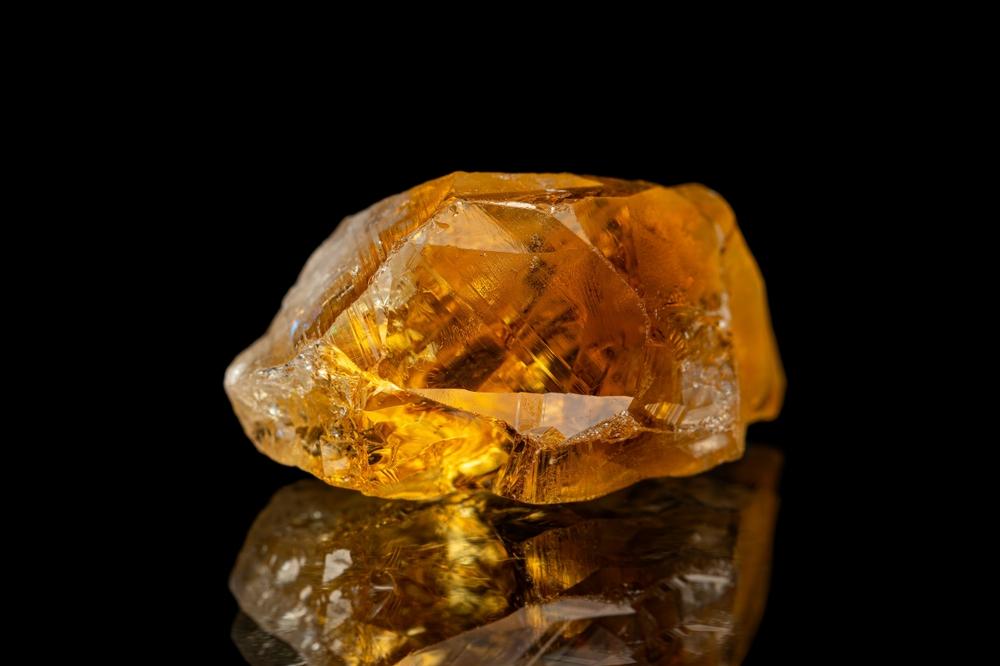
Natural citrine is a yellow to smoky-yellow variety of quartz (SiO₂) colored by trace amounts of iron in the Fe³⁺ oxidation state. It is one of the rarest quartz color varieties in nature — the vast majority of "citrine" sold in crystal shops and online is heat-treated amethyst or smoky quartz turned orange in a kiln at 400–500°C. If you have seen deep orange, uniformly colored "citrine" points for sale, those are almost certainly cooked amethyst from Brazil. Finding genuine, field-collected citrine in the United States is a real accomplishment, and knowing where to look and what to look for separates serious collectors from people holding a piece of baked amethyst.
Natural citrine typically shows a pale yellow to light smoky-yellow color. The color is subtle — think of weak tea or light champagne, not orange juice. It often occurs alongside smoky quartz, and some crystals grade from smoky at the base to yellow at the tip within the same crystal. This color zoning is one of the strongest indicators that you are looking at genuine natural citrine rather than heat-treated material.
Citrine Geology: Why It Is So Rare
The yellow color in natural citrine results from iron substituting for silicon in the quartz crystal lattice, specifically iron in the Fe³⁺ state combined with exposure to natural radiation over geologic time. The conditions needed — just the right iron concentration, the right oxidation state, and sufficient natural irradiation — rarely align. This is why natural citrine is found at only a handful of localities worldwide, and why most of those localities produce it only as an occasional oddity alongside far more abundant smoky quartz, clear quartz, or amethyst.
In the US, citrine occurs primarily in granitic pegmatites — coarse-grained igneous intrusions where slow cooling from magma allows large crystals to develop. The Pikes Peak Batholith in Colorado and the Spruce Pine pegmatite belt in North Carolina are the two most reliable domestic sources. Citrine can also form in volcanic rock cavities (similar to amethyst), but these occurrences are sporadic and unpredictable.
Temperature matters: if a natural amethyst crystal is heated above roughly 300–450°C by geologic processes (burial, nearby intrusions), the Fe⁴⁺ color centers that produce purple convert to Fe³⁺ centers that produce yellow. Some natural citrine may have formed exactly this way — as "nature's heat-treated amethyst." The distinction between natural heat conversion and artificial heat treatment is philosophical at that point, but the color and zoning patterns are different. Geologically heated citrine shows gradual color transitions; kiln-treated amethyst shows an abrupt, uniform orange.
Top Citrine Collecting Locations in the United States
Colorado — Crystal Peak / Pikes Peak Region (Teller County)
Land Status: Mix of private mining claims and Pike National Forest (USDA Forest Service).
Location: Crystal Peak area west of Florissant, approx. 38.940°N, 105.340°W. Elevation 9,000–10,000 ft.
Access: Forest roads. AWD/high-clearance required for most access roads. Some fee-dig claims accessible by sedan.
Vehicle: AWD/4x4 for National Forest roads. Sedan OK for fee-dig sites along main roads.
Season: June through September. Snow closes most forest roads October through May.
Specimens: The Pikes Peak granite batholith hosts hundreds of pegmatite pockets that produce smoky quartz, amazonite (green microcline feldspar), and — occasionally — natural citrine. The citrine here is pale yellow, often with a smoky undertone. Some crystals show a gradual smoky-to-yellow color gradient along the c-axis, which is a strong indicator of natural origin. Citrine is not the primary target mineral at Crystal Peak (that would be amazonite and smoky quartz), but yellow quartz turns up in the same pockets. Fee-dig operations in the area — such as those run periodically by the Pikes Peak Historical Society and the Lake George Gem & Mineral Club — offer access to working pegmatite pockets.
What to expect: You are working hard granite pegmatite. Bring a rock hammer, cold chisels, pry bar, and safety glasses. Pockets are found by chiseling along contacts between the coarse pegmatite and the surrounding granite. When you open a pocket, slow down and use hand tools — citrine crystals are as brittle as any other quartz. Altitude is 9,000+ feet; acclimatize before doing heavy physical work.
North Carolina — Spruce Pine Mining District (Mitchell & Avery Counties)
Land Status: Mix of private claims and fee-dig operations.
Location: Spruce Pine area, approx. 35.910°N, 82.070°W.
Access: Sedan OK to fee-dig sites. Paved and gravel roads.
Fee: Varies by operator. Expect $20–$50/day or per-bucket pricing.
Specimens: The Spruce Pine pegmatite district is one of the largest feldspar- and mica-producing regions in the world, and its pegmatites carry an assortment of quartz varieties including occasional citrine. Fee-dig sites in the Spruce Pine and nearby Franklin areas screen pegmatite gravel for gems and minerals. Citrine here is pale yellow and occurs alongside clear quartz, smoky quartz, aquamarine, garnet, and beryl. It is not a guaranteed find — you may screen dozens of buckets before encountering yellow quartz. The Appalachian pegmatite belt runs from Georgia through New England and has beryl- and quartz-bearing pegmatites at dozens of localities, but citrine is uncommon at all of them.
Arkansas — Mount Ida Area (Montgomery County)
Land Status: Private fee-dig mines.
Location: Near Mount Ida, approx. 34.560°N, 93.630°W.
Access: Sedan OK. Multiple mines operate seasonally.
Fee: Varies. Ron Coleman Mining and Wegner Crystal Mines are the most established operations.
Specimens: The Ouachita Mountain quartz deposits around Mount Ida are famous for large, clear quartz crystals. Most Arkansas quartz is water-clear or milky white, but iron-stained pockets occasionally produce yellow-tinted crystals that qualify as citrine. The color tends to be a surface stain or shallow penetration rather than through-body color, so examine crystals carefully — true citrine has color that extends throughout the crystal, while iron-stained quartz has color concentrated on the surface and in fractures. The fee-dig mines let you work mine tailings piles with shovels, screens, and picks. Ron Coleman Mining and Wegner Crystal Mines are family-friendly operations with established infrastructure.
Important distinction: Iron-stained quartz is not the same as citrine. If the yellow color washes off with oxalic acid, it was surface iron staining, not structural color. True natural citrine retains its color after cleaning.
California — Chuckwalla Mountains / Palo Verde Mountains (Riverside & Imperial Counties)
Land Status: BLM land (Palm Springs-South Coast Field Office / El Centro Field Office).
Location: Chuckwalla Mountains: approx. 33.600°N, 115.300°W. Palo Verde Mountains: approx. 33.400°N, 114.700°W.
Access: Dirt roads. High-clearance 4x4 required.
Vehicle: 4x4. Desert terrain with sandy washes and rocky two-tracks.
Specimens: Desert volcanic rock cavities occasionally produce citrine alongside amethyst, smoky quartz, and other chalcedony varieties. These occurrences are sporadic — citrine is not a reliable find at any specific California locality. You are more likely to find smoky quartz and clear quartz in the same cavities, with perhaps one in fifty pockets showing yellow coloration. San Diego County pegmatites have also produced citrine historically, but most of those sites are now inactive or on private claims.
Colorado — Mount Antero Area (Chaffee County)
Land Status: San Isabel National Forest (USDA Forest Service). Open to personal-use collecting.
Location: Mount Antero, approx. 38.674°N, 106.246°W. Elevation 13,000–14,269 ft.
Access: Strenuous. 4x4 to trailhead at ~11,000 ft, then hiking. High-altitude experience required.
Vehicle: 4x4 mandatory for Baldwin Gulch road.
Specimens: Mount Antero is best known for aquamarine, but the same pegmatite pockets that produce beryl also yield smoky quartz and occasional citrine. Natural citrine from Mount Antero is extremely pale yellow and rare — most collectors targeting this mountain are after aquamarine. But if you are already making the trip for beryl, watch for yellow-tinted quartz in the same pockets. Season is late June through September; this is a serious alpine environment above treeline with lightning, hypothermia, and altitude sickness as real hazards.
New Hampshire — Grafton County Pegmatites
Land Status: Mix of private land and White Mountain National Forest.
Location: General pegmatite belt area, approx. 43.800°N, 71.900°W.
Access: Forest roads. AWD recommended.
Specimens: The New England pegmatite belt stretches from Connecticut through Maine and contains dozens of beryl-bearing pegmatites. Yellow quartz has been reported from several Grafton County localities, though confirmed natural citrine is rare. Most finds are pale and small. These pegmatites also produce smoky quartz, beryl, garnet, and tourmaline. Access to specific quarries and prospects varies — contact the local gem and mineral club for current site status.
Citrine Specimen Types
| Type | Color | Origin | How to Identify |
|---|---|---|---|
| Natural citrine | Pale yellow to smoky-yellow | Fe³⁺ in quartz lattice + natural irradiation | Subtle color; often zoned; grades into smoky |
| Heat-treated amethyst | Deep orange to burnt orange | Amethyst heated to 400–500°C | Uniform intense color; often has white base |
| Heat-treated smoky quartz | Yellow-orange | Smoky quartz heated to 300–400°C | Uniform color; lacks zoning |
| Iron-stained quartz | Yellow to rust-brown on surface | Surface coating from iron-rich groundwater | Color concentrated on surfaces and fractures; washes off with acid |
How to Identify Natural Citrine in the Field
| Property | Natural Citrine | Look-Alike: Heat-Treated Amethyst | Look-Alike: Iron-Stained Quartz |
|---|---|---|---|
| Color | Pale yellow to light smoky-yellow | Deep orange, burnt orange, uniform | Yellow-brown concentrated on surface |
| Color Distribution | Zoned; may grade into smoky or clear | Uniform throughout; white base common | Surface and fracture-controlled |
| Hardness | 7 (Mohs) | 7 (Mohs) — same as quartz | 7 (Mohs) — same as quartz |
| Crystal Habit | Hexagonal prism with six-sided point | Same — it is quartz | Same — it is quartz |
| Streak | White | White | White |
| Key Test | Pale color; zoning; smoky gradation | Too orange; too uniform; white base | Oxalic acid removes the color |
The most important field skill for citrine is color assessment. Natural citrine is pale — if the crystal in your hand is a deep, saturated orange, it is almost certainly heat-treated. Look for color zoning by holding the crystal up to light and rotating it slowly. Natural citrine shows variation: bands of lighter and darker yellow, or a gradual transition from smoky at the root to yellow at the tip. Heat-treated material tends to be uniformly colored with an abrupt transition to a white or milky base.
Iron-stained quartz is the other common source of confusion. The test is simple: if yellow color is concentrated on crystal surfaces and within fractures rather than distributed evenly through the body of the crystal, it is surface iron staining. A soak in oxalic acid (available from lapidary supply stores) will remove the staining and reveal the true color of the quartz underneath.
Tools and Equipment for Citrine Collecting
- Rock hammer (2–3 lb) and cold chisels — pegmatite pockets require careful chiseling along crystal-matrix contacts. Work slowly around crystal clusters to avoid fracturing points.
- Pry bar (18–24") — for leveraging open pegmatite pockets. Some pockets are sealed by feldspar caps that need prying off.
- Safety glasses — mandatory when striking quartz. Conchoidal fracture throws razor-sharp chips.
- Hand lens (10x) — examine color zoning and inclusions. Natural citrine often has wispy phantom inclusions visible under magnification.
- Newspaper or bubble wrap — wrap each crystal individually. Quartz points chip on contact with each other.
- Classifying screens — for fee-dig operations where you screen gravel. 1/4" and 1/8" mesh sizes are standard.
- Water bottle or spray bottle — wet the crystal to evaluate color more accurately. Dry crystals often look lighter than they actually are.
- Altitude gear (for Colorado sites) — warm layers, rain shell, sun protection, and at least 2 liters of water. Acclimatize for 24–48 hours before working at 9,000+ feet.
Legal Information and Collecting Rules
On National Forest land, personal-use mineral collecting with hand tools is permitted under 36 CFR 228.62. No permit is needed for reasonable quantities collected for personal use (not for sale). On BLM land, the standard limit is 25 pounds per day plus one piece, not exceeding 250 pounds per year, under 43 CFR 8365.
Fee-dig mines operate on private claims. You pay a fee and keep what you find under the operator's rules. Always confirm that the operation is currently active — some open and close year to year. Arkansas mines typically operate spring through fall. Colorado fee-digs may operate only a few weekends per summer.
Mining claims on public land are active legal claims — collecting on someone else's claim without permission is theft of mineral resources. Check the BLM LR2000 database or the local BLM/Forest Service office for claim status before collecting in any mining district.
Interactive Citrine Location Map
Use our interactive citrine location map to find collecting sites with GPS coordinates, land status, and reported specimens. You can also browse all specimen maps or search by state.