
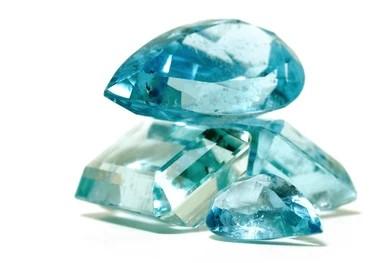
Aquamarine is the blue to blue-green variety of beryl (Be₃Al₂Si₆O₁₈), colored by iron in the Fe²⁺ oxidation state substituting for aluminum in the crystal lattice. It forms in granitic pegmatites — coarse-grained igneous intrusions where slow crystallization from silica-rich magma allows minerals to grow to large sizes. Beryl requires beryllium, which is a rare element concentrated in the late-stage fluids of granitic magma systems. That geological requirement limits aquamarine to specific pegmatite belts, and finding it demands targeting those belts directly.
The United States has produced world-class aquamarine specimens. Mount Antero in Colorado holds the distinction of being the highest gemstone locality in North America at 14,269 feet, and it has yielded aquamarine crystals exceeding 6 inches in length. The New England pegmatite belt (Maine through Connecticut) and the Appalachian pegmatite belt (North Carolina through Virginia) both produce aquamarine alongside tourmaline, garnet, and other pegmatite minerals. Idaho's backcountry pegmatites round out the map. This is not easy collecting — most US aquamarine localities require either serious hiking, hard-rock mining skills, or both.
Aquamarine Geology: Pegmatites and Beryllium Enrichment
Pegmatites form during the final stages of granite crystallization. As the main body of granite solidifies, the remaining melt becomes enriched in water, flux elements (boron, fluorine, lithium), and incompatible elements like beryllium that do not fit easily into common mineral structures. This residual fluid migrates into fractures and voids, where it crystallizes slowly into the coarse-grained rock we call pegmatite. Individual crystals in pegmatites can reach enormous sizes — beryl crystals several feet long are known from some localities.
Beryl crystallizes early in the pegmatite cooling sequence, typically at temperatures between 400–600°C. The blue color of aquamarine comes from Fe²⁺ (ferrous iron) in octahedral coordination sites within the beryl structure. If iron is present in the Fe³⁺ state instead, the color shifts toward yellow (heliodor) or can appear as a yellow-green mixture. Many raw aquamarine crystals have a blue-green or even slightly yellowish-green color; controlled heating to ~400°C drives off the Fe³⁺ component and produces a purer blue. This heat treatment is standard industry practice and is applied to nearly all commercial aquamarine.
In the field, you are looking for pegmatite exposures with beryl potential. The indicator minerals are: coarse feldspar (orthoclase, microcline, albite), large muscovite books, quartz cores, and tourmaline (especially black schorl). If a pegmatite contains these, beryl is a possibility. Not every pegmatite carries beryl — you need one with sufficient beryllium enrichment — but the mineral suite tells you whether the pegmatite is evolved enough to be worth investigating.
Top Aquamarine Collecting Locations in the United States
Colorado — Mount Antero (Chaffee County)
Land Status: San Isabel National Forest (USDA Forest Service). Open to personal-use collecting.
Location: Approx. 38.674°N, 106.246°W. Summit elevation 14,269 ft. Collecting areas above 13,000 ft.
Access: 4x4 required. Baldwin Gulch road to trailhead at ~11,000 ft (rough, rocky, narrow). Then a 4+ mile hike with 3,000+ ft elevation gain to the collecting areas. High-altitude mountaineering experience recommended.
Vehicle: 4x4 mandatory. The Baldwin Gulch road is steep, rocky, and has exposure. Not for inexperienced off-road drivers.
Season: Late June through September. Snow closes the mountain October through May. Weather windows are short even in summer — afternoon thunderstorms with lightning are routine above treeline.
Specimens: Mount Antero produces aquamarine crystals in pegmatite pockets within Tertiary granite on the upper slopes and summit area. The crystals form in miarolitic cavities — gas pockets in the granite where residual fluids crystallized beryl, smoky quartz, phenakite, and bertrandite. Most collecting occurs in the 13,000–14,000 ft elevation band. Crystals range from small thumbnail specimens to occasional pieces exceeding 4–6 inches. The color is typically pale blue to blue-green. Some pockets produce exceptional gem-grade material. Aquamarine here is found both as loose float in the talus (weathered out of the granite) and in place within pegmatite pockets that require chiseling to open.
Danger notes: This is a genuine 14,000-foot alpine environment. Acute mountain sickness affects many people above 12,000 ft. Acclimatize for at least 48 hours in the 8,000–10,000 ft range before climbing. Lightning kills people on fourteeners — be off the summit and exposed ridges by noon. Hypothermia is possible any month. Carry rain shell, warm layers, food, water (2+ liters), headlamp, first aid, and emergency shelter. Tell someone your plan and expected return time. This is not a casual day trip.
Colorado — Mount White (Chaffee County)
Land Status: San Isabel National Forest. Open to personal-use collecting.
Location: Approx. 38.660°N, 106.210°W. Adjacent to Mount Antero.
Access: Same approach as Mount Antero. 4x4 + hiking.
Vehicle: 4x4 mandatory.
Specimens: Mount White is the neighboring peak to Mount Antero and produces aquamarine from the same granitic pegmatite system. It receives less collecting pressure than Antero because it lacks the "fourteener" fame, but the geology is identical. Beryl pockets have been found on the upper slopes. The same altitude precautions and gear requirements apply. Some collectors prefer Mount White because the competition for pockets is less intense.
North Carolina — Spruce Pine Mining District (Mitchell & Avery Counties)
Land Status: Mix of private claims and fee-dig operations.
Location: Spruce Pine area, approx. 35.910°N, 82.070°W.
Access: Sedan OK to fee-dig sites. Paved and gravel roads.
Fee: Varies. $20–$50/day or per-bucket pricing at fee-dig operations.
Specimens: The Spruce Pine pegmatite district is one of the most productive pegmatite regions in the eastern US. These pegmatites formed approximately 380 million years ago during the Acadian orogeny and were further modified during the Alleghenian orogeny. They produce beryl in several colors — aquamarine (blue), emerald (green, from the nearby Hiddenite/Crabtree area), heliodor (yellow), and common white beryl. Aquamarine from Spruce Pine is typically pale blue and occurs as prismatic crystals in coarse pegmatite. Fee-dig operations in the area screen pegmatite gravel and mine dump material. Finding aquamarine here is possible but not guaranteed — beryl is less common than feldspar, quartz, and mica in these pegmatites.
North Carolina — Emerald Hollow Mine / Hiddenite (Alexander County)
Land Status: Private fee-dig operation.
Location: Near Hiddenite, NC, approx. 35.730°N, 81.100°W.
Access: Sedan OK. Paved road to the mine.
Fee: Varies by activity. Sluicing, creek digging, and mine dump digging each priced separately.
Specimens: Emerald Hollow Mine (formerly Crabtree Emerald Mine) is the only emerald mine in the US open to the public, but it also produces aquamarine and other beryl varieties. The pegmatites here intrude mica gneiss and have produced beryl crystals of several colors. Aquamarine tends to be pale. The operation offers multiple collecting methods: sluicing (screening pre-filled buckets), creek digging (searching creek gravel on the property), and mine dump digging (working the waste rock pile). Staff can help identify finds.
Maine — Oxford County Pegmatites
Land Status: Mix of town land, private land, and state land.
Location: Mount Apatite, Auburn: approx. 44.080°N, 70.280°W. Various quarries in Oxford County: general area 44.200°N, 70.600°W.
Access: Varies by site. Mount Apatite is town-owned land open to collecting. Other sites may require permission or club membership.
Vehicle: Sedan to most trailheads. Short hikes to quarry sites.
Specimens: Oxford County contains the densest concentration of gem-bearing pegmatites in New England. The Maine pegmatite belt stretches from Oxford County through Sagadahoc County and has produced tourmaline, beryl (aquamarine and heliodor), garnet, apatite, and dozens of other pegmatite minerals. Mount Apatite in Auburn is a historic locality on town land where public collecting is permitted — it has produced aquamarine alongside tourmaline and other species. The Newry quarry area and other Oxford County pegmatites are private or require club-organized access. Maine aquamarine is typically pale blue and occurs as prismatic hexagonal crystals in coarse pegmatite matrix.
New Hampshire — Grafton County Pegmatites
Land Status: Mix of White Mountain National Forest and private land.
Location: General pegmatite belt: approx. 43.800°N, 71.900°W.
Access: AWD recommended for forest roads. Moderate hikes to some exposures.
Vehicle: AWD. Forest roads may be seasonal.
Specimens: The Grafton County pegmatites are part of the same New England pegmatite belt that runs through Maine. Beryl-bearing pegmatites occur in the White Mountains and surrounding area. The Palermo Mine in North Groton is a historic beryl-producing locality — access varies. Aquamarine here is typically pale and small, secondary to the more abundant smoky quartz and feldspar. Check with the New Hampshire Geological Survey or local mineral clubs for accessible collecting sites.
Idaho — Sawtooth Mountains (Custer County)
Land Status: Sawtooth National Forest / Sawtooth Wilderness (USDA Forest Service).
Location: Grizzly Creek area, approx. 44.030°N, 114.900°W.
Access: Remote. Backpacking or pack-horse access only. Multi-day trips required.
Vehicle: 4x4 to trailhead. Then hiking/backpacking.
Specimens: The Sawtooth Mountains in central Idaho contain pegmatites that have produced gem-quality aquamarine crystals. The Grizzly Creek area is the best-known locality. Access is extremely limited — these are backcountry sites requiring multi-day backpacking trips. The area is rugged, with bear and mountain lion habitat. Check with the Sawtooth National Forest for current collecting regulations — some areas may fall within Wilderness boundaries where collecting is prohibited. If the site is outside designated Wilderness, National Forest personal-use collecting rules apply.
Aquamarine Specimen Types
| Type | Color | Typical Size | US Sources |
|---|---|---|---|
| Gem-quality crystal | Medium blue to blue-green | 1–6+ inches (rare at large sizes) | Mount Antero, CO |
| Pale prismatic crystal | Light blue to greenish-blue | 0.5–2 inches | NC, ME, NH pegmatites |
| Beryl in matrix | Light blue in white pegmatite | Variable | All pegmatite localities |
| Loose float crystal | Pale blue, often etched | Thumbnail to small cab | Mount Antero talus |
| Massive beryl (non-gem) | Greenish-white to pale blue | Large pieces possible | Spruce Pine, NC; Oxford County, ME |
How to Identify Aquamarine in the Field
| Property | Aquamarine (Beryl) | Look-Alike: Blue Topaz | Look-Alike: Blue Apatite |
|---|---|---|---|
| Hardness | 7.5–8 (Mohs) | 8 (Mohs) | 5 (Mohs) — much softer |
| Crystal System | Hexagonal — six-sided prism | Orthorhombic — blocky prism | Hexagonal — six-sided prism |
| Crystal Habit | Elongated hexagonal prism; often striated lengthwise | Stubby, wedge-shaped terminations | Short prismatic or tabular |
| Specific Gravity | 2.68–2.74 | 3.49–3.57 — noticeably heavier | 3.16–3.22 — heavier |
| Fracture | Conchoidal to uneven; basal parting | Perfect basal cleavage (one direction) | Conchoidal to uneven |
| Key Test | Hexagonal cross-section; lighter than topaz | Heavier; perfect cleavage in one direction | Scratched by steel knife (H=5) |
Aquamarine forms as elongated hexagonal prisms — six-sided crystals that are longer than they are wide, often with flat terminations (basal pinacoid faces) rather than pointed tips. The cross-section, when visible, is a hexagon. This distinguishes beryl from topaz, which forms stubby orthorhombic prisms with wedge-shaped terminations.
In pegmatite, look for blue-tinted prismatic crystals exposed in weathered feldspar or embedded in quartz-feldspar matrix. Fresh aquamarine has a vitreous (glassy) luster and may show lengthwise striations (parallel grooves) on the prism faces. The blue color is often subtle in the rough — pale greenish-blue is more common than pure blue in unheated material.
The weight test helps distinguish aquamarine from topaz: beryl (SG ~2.7) is significantly lighter than topaz (SG ~3.5). If you have two similar-size blue crystals and one feels markedly heavier, the heavy one is likely topaz. Apatite (the soft blue look-alike) is easily eliminated by hardness — a steel knife scratches apatite but not beryl.
Aquamarine is harder than quartz (7.5–8 vs. 7) and does not show the conchoidal fracture pattern that quartz does as readily. It tends to fracture along basal planes (flat breaks perpendicular to the c-axis) rather than curving shells.
Tools and Equipment for Aquamarine Collecting
- Rock hammer (2–3 lb) and cold chisels (1/2", 3/4", 1") — pegmatite pocket mining requires chiseling along contacts between mineral zones. Work carefully to avoid shattering crystals.
- Pry bar (18–24") — some pegmatite pockets are sealed by large feldspar blocks that must be levered apart. A short pry bar provides the mechanical advantage needed.
- Safety glasses — mandatory. Chiseling pegmatite throws rock chips at high velocity.
- Wrapping material (newspaper, bubble wrap, cloth) — aquamarine crystals are brittle despite their hardness. A crystal that survived 50 million years in a pocket can break in your pack if not cushioned. Wrap each specimen individually.
- 10x hand lens — examine crystal faces for growth features and check clarity. Well-terminated, transparent crystals are far more valuable than broken or cloudy fragments.
- Altitude and cold-weather gear (for Colorado) — Mount Antero requires full alpine preparation: warm layers (down jacket even in July), rain/wind shell, hat, gloves, sunscreen, sunglasses, 2+ liters of water, food, headlamp, first aid kit, emergency shelter. Lightning protection plan: descend before noon if thunderstorms are building.
- Classifying screens (for fee-dig sites) — 1/4" and 1/8" mesh for screening pegmatite gravel at North Carolina and other fee-dig operations.
- GPS with offline maps — essential for remote Colorado and Idaho sites where cell service is absent.
Legal Information and Collecting Rules
On National Forest land (Colorado, Idaho), personal-use mineral collecting with hand tools is permitted under 36 CFR 228.62. "Personal use" means for your own collection, not for commercial sale. No motorized equipment. On Mount Antero, the Forest Service has historically allowed hand-tool collecting, but check with the Salida Ranger District for any current restrictions or seasonal closures.
Wilderness areas (like parts of the Sawtooth Wilderness in Idaho) prohibit mineral collecting. Verify that your target site is outside wilderness boundaries before you go. The Wilderness Act of 1964 restricts mineral extraction in designated wilderness.
Fee-dig mines in North Carolina are private businesses. You pay the fee and keep your finds under the operator's rules. Season, hours, and pricing vary — confirm before traveling.
Town-owned land (like Mount Apatite in Auburn, ME) typically allows collecting under local ordinances. Check with the town clerk or recreation department for current rules and any seasonal restrictions.
Interactive Aquamarine Location Map
Use our interactive aquamarine location map to find collecting sites with GPS coordinates, land status, and reported specimens. You can also browse all specimen maps or search by state.