
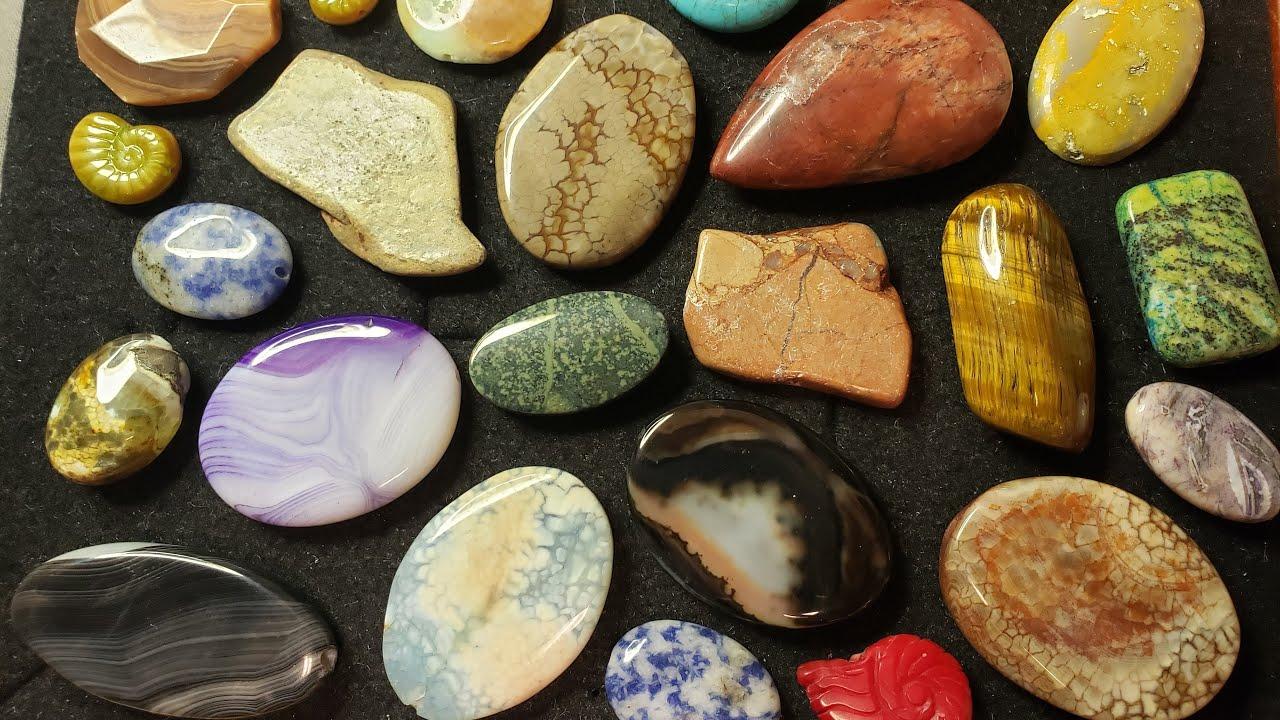
The most valuable rocks on Earth range from a few dollars per carat to over $1 million per gram. Diamond, ruby, sapphire, emerald, and alexandrite sit at the top — but everyday rockhounds regularly find valuable specimens of quartz, agate, garnet, topaz, and even gold. This guide covers what makes a rock worth money, real price ranges for each major mineral, and exactly where you can find them yourself.
What Makes a Rock Valuable?

Six factors determine a rock's market value. Understanding them helps you evaluate any specimen you find:
- Rarity: Minerals that form only under extreme or unusual geological conditions are inherently scarce. Red beryl, for example, requires a specific mix of elements and conditions so unlikely that gem-quality crystals are found in only one location on Earth.
- Color and clarity: Vivid, saturated color and the absence of visible inclusions dramatically increases gem value. A pigeon-blood ruby is worth 10–100x more than a pale, included stone of the same size.
- Hardness and durability: Gems suitable for jewelry must resist everyday wear. Diamonds (Mohs 10), sapphires, and rubies (Mohs 9) are prized partly because they last. Softer minerals like fluorite or calcite have collector value but not jewelry value.
- Size (carat weight): Gem pricing is not linear — value per carat rises steeply with size. A 5-carat ruby is not 5x the value of a 1-carat ruby; it can be 25x or more.
- Origin: Colombian emeralds, Burmese rubies, and Kashmir sapphires command significant premiums. Provenance is verifiable and matters enormously to serious buyers.
- Collector demand: Some minerals are worth money entirely because of collector interest — perfect crystal forms, unusual habits, locality-specific specimens, or scientific significance.
Quick Reference: Valuable Rocks and Price Ranges
These are approximate market prices for quality specimens. Prices vary significantly based on color, clarity, size, and origin. Collector-grade rough and fine cut gems are both included where relevant.
| Rock / Mineral | Price Range | Can You Find It? |
|---|---|---|
| Diamond | $2,000–$60,000+/ct | Yes — Arkansas |
| Ruby (pigeon blood) | $1,000–$100,000+/ct | Yes — NC, Montana |
| Alexandrite | $10,000–$70,000+/ct | Extremely rare |
| Emerald (fine Colombian) | $1,000–$20,000+/ct | Yes — NC |
| Sapphire (fine blue) | $500–$10,000+/ct | Yes — Montana |
| Red Beryl | $2,000–$10,000+/ct | Yes — Utah (very rare) |
| Tanzanite | $200–$1,200/ct | No (Tanzania only) |
| Black Opal | $50–$10,000+/ct | Yes — Nevada |
| Paraíba Tourmaline | $3,000–$50,000+/ct | Limited (Brazil/Africa) |
| Imperial Topaz | $100–$1,000+/ct | Yes — Utah |
| Demantoid Garnet | $500–$3,000/ct | Rare |
| Fine Turquoise | $5–$100+/ct | Yes — AZ, NV |
| Amethyst (fine) | $5–$30/ct; geodes $50–$5,000 | Yes — widely |
| Quartz Crystal (large) | $5–$500+ per cluster | Yes — Arkansas |
| Fire Agate | $5–$200/ct | Yes — AZ, NM |
| Gold (placer) | ~$3,000+/troy oz (spot) | Yes — Western US |
The Most Valuable Rocks and Gemstones
These are the gems that command the highest prices on the global market — where rarity, color, and pedigree push values into the stratosphere.
Diamond — $2,000 to $60,000+ per carat

Diamond is the hardest natural material on Earth (Mohs 10) and the world's most recognized gemstone. Colorless diamonds of high clarity typically sell for $2,000–$15,000 per carat at retail. Fancy colored diamonds — especially red, pink, and blue — are among the most expensive objects on Earth per gram. A 1-carat fancy red diamond can exceed $1 million.
The most famous public diamond-finding site in the world is Crater of Diamonds State Park in Murfreesboro, Arkansas — the only place on Earth where you pay a fee and keep every diamond you find. Visitors have found diamonds worth $20,000–$35,000 in recent years.
- Best color: Colorless (D–F) or fancy vivid (red, blue, pink)
- Where to find in the US: Arkansas (Crater of Diamonds), Colorado (Kelsey Lake, not publicly accessible)
- Key fact: The 40.23-carat "Uncle Sam" diamond — the largest ever found in North America — was discovered in Arkansas in 1924
Ruby — $1,000 to $100,000+ per carat

Fine rubies regularly outsell diamonds of comparable size, making them the most valuable colored gemstone by weight. The benchmark for quality is "pigeon blood" — a pure, vivid red with a slight blue fluorescence — from Myanmar's Mogok Valley. Top-grade Mogok rubies sell for $50,000–$100,000+ per carat at major auction houses.
In the United States, gem-quality rubies have been found in North Carolina (Cowee Valley) and Montana. While most finds are small and included, the thrill of finding a genuine ruby makes these sites popular with rockhounds.
- Best color: Pure vivid red — "pigeon blood" from Myanmar
- Where to find in the US: Franklin and Mason County, NC; Rock Creek, Montana
- Key fact: A 25.59-carat Burmese ruby sold for $30.3 million at Sotheby's in 2015 — one of the highest prices ever paid for a colored gemstone
Alexandrite — $10,000 to $70,000+ per carat

Alexandrite is one of the rarest gemstones in existence and the only one that dramatically changes color — from bluish-green in daylight to purplish-red under incandescent light. Fine specimens from Russia's Ural Mountains command $10,000–$70,000 per carat. Brazilian alexandrite is more available but still exceptional.
Natural alexandrite is so rare that most people have never seen one in person. The color-change effect (called the "alexandrite effect") is caused by the stone's unusual light absorption properties, which straddle the boundary between red and green in the visible spectrum.
- Best color change: Strong change from vivid green to vivid red (100% color change)
- Where to find: Ural Mountains, Russia; Minas Gerais, Brazil; Sri Lanka; very rarely in the US
- Key fact: Originally discovered in Russia's Ural Mountains in 1830 on the birthday of Tsar Alexander II — hence the name
Emerald — $1,000 to $20,000+ per carat

Fine Colombian emeralds are worth more per carat than diamonds of comparable quality. Their distinctive green — caused by trace amounts of chromium and vanadium — is impossible to replicate synthetically at the same depth and tone. Natural inclusions (called "jardin," French for garden) are expected in emeralds and don't necessarily reduce value the way they would in diamonds.
North Carolina is the top US state for finding your own emeralds. The Emerald Hollow Mine in Hiddenite offers fee-dig access to real emerald-bearing rock.
- Best color: Deep, vivid green with moderate saturation — Colombian "Muzo green"
- Where to find in the US: Hiddenite and Spruce Pine, North Carolina
- Key fact: The "Bahia Emerald" — a 840-lb emerald specimen found in Brazil — has been valued at up to $400 million and has been the subject of multiple ownership disputes
Sapphire — $500 to $10,000+ per carat

While blue is the most famous color, sapphires come in virtually every hue except red (red corundum is ruby). The finest "cornflower blue" Kashmir sapphires are among the most sought-after colored gems in existence, fetching $30,000–$60,000 per carat at auction. Montana's Yogo Gulch produces cornflower blue sapphires considered among the finest in the world.
- Best color: Vivid cornflower blue — Kashmir or Yogo Gulch origin
- Where to find in the US: Yogo Gulch and Rock Creek, Montana; various fee-dig sites in North Carolina
- Key fact: The 12-carat blue sapphire in Princess Diana's (now Kate Middleton's) engagement ring is valued at over $400,000
Red Beryl — $2,000 to $10,000+ per carat

Red beryl — also called bixbite or the "red emerald" — is found in gem quality at only one location in the world: Utah's Wah Wah Mountains. Geologists estimate it is 1,000 times rarer than diamond. Most crystals are tiny, making faceted stones over 1 carat extraordinary. Museum-quality specimens sell for $2,000–$10,000 per carat, with exceptional pieces going much higher.
- Where to find: Wah Wah Mountains, Beaver County, Utah (the Violet Claims mine — not publicly accessible, but collector specimens appear regularly at gem shows)
- Key fact: The Utah Geological Survey estimates that for every 150,000 gem-quality diamonds found worldwide, only one gem-quality red beryl crystal is found
Tanzanite — $200 to $1,200 per carat

Tanzanite is found in only one location on Earth — a 4-square-mile area near Mount Kilimanjaro in Tanzania. Geologists believe the geological conditions that created it are so specific they could not be replicated anywhere else. With current mining rates, deposits may be exhausted within 20–30 years, making this a finite-supply gem with strong investment appeal.
- Best color: Deep violetish-blue — often heat-treated to enhance the blue component
- Where to find: Merelani Hills, Tanzania only — not findable in the US
- Key fact: Tanzanite was virtually unknown before Tiffany & Co. began promoting it in 1968; it's now the second most popular blue gemstone after sapphire
Valuable Rocks That Are More Accessible
You don't need to chase the world's rarest gems to find rocks worth real money. These minerals are more attainable and still command solid prices from collectors and jewelers.
Black Opal — $50 to $10,000+ per carat

Black opals — with their dark body tone and vivid play-of-color — are the most valuable opal variety. Top-grade Australian black opals from Lightning Ridge sell for thousands of dollars per carat. In the United States, Virgin Valley in Nevada produces spectacular black opals, though they tend to be fragile and crack when they dry out.
- Common opal price range: $1–$50/ct
- Fine black opal price range: $500–$10,000+/ct
- Where to find in the US: Virgin Valley, Humboldt County, Nevada; Spencer Opal Mines, Idaho
Tourmaline — $50 to $50,000+ per carat

Tourmaline is one of the most color-diverse gemstone families. Common pink and green tourmalines start at $50–$200 per carat. Bi-color and watermelon tourmalines command premiums. Neon Paraíba tourmaline from Brazil and Mozambique — colored by copper — is in a different league entirely, selling for $3,000–$50,000 per carat for fine specimens.
- Where to find in the US: Pala and Ramona districts, San Diego County, California; Oxford County, Maine
- Key fact: Empress Dowager Cixi of China was so obsessed with pink tourmaline from California that she purchased hundreds of pounds of it — it was reportedly buried with her
Imperial Topaz — $100 to $1,000+ per carat

Blue topaz is common and inexpensive ($10–$50/ct). But Imperial topaz — the natural reddish-orange variety from Ouro Preto, Brazil — is a genuine collector's gem at $100–$1,000+ per carat. In the US, Utah's Topaz Mountain produces colorless to pale sherry topaz that collectors prize, and it's one of the most accessible rockhounding destinations in the country.
- Where to find in the US: Topaz Mountain (Thomas Range), Juab County, Utah; Mason County, Texas (blue topaz in pegmatites)
- Key fact: The world's largest cut topaz — the "American Golden Topaz" — is a 22,892-carat stone on display at the Smithsonian
Garnet — $5 to $3,000+ per carat

Most people think of garnet as a cheap dark red stone. And common almandine garnet is inexpensive — $5–$30 per carat. But the garnet family includes some of the rarest and most valuable gems on Earth. Demantoid garnet (vivid green, from Russia) sells for $500–$3,000 per carat. Tsavorite garnet (green, from East Africa) rivals emerald in beauty at $500–$2,000 per carat. Color-change garnets can fetch $500–$3,000 per carat.
- Where to find in the US: Gore Mountain, New York; Idaho City, Idaho; Emerald Creek, Idaho (star garnets — found only here and India)
Turquoise — $1 to $100+ per carat

The turquoise market is complicated by stabilized, dyed, and synthetic material. Natural, untreated turquoise — especially from named American mines like Sleeping Beauty (Arizona), Royston (Nevada), or Bisbee (Arizona) — commands significant premiums from collectors and Native American jewelers. Fine natural turquoise sells for $5–$100+ per carat, while stabilized material may be worth under $1 per carat.
- Where to find in the US: Arizona, Nevada, New Mexico, and Colorado all have turquoise-producing areas
- Key fact: The Sleeping Beauty Mine in Arizona — once the world's largest turquoise producer — closed in 2012, making remaining Sleeping Beauty turquoise increasingly valuable
Valuable Rocks You Can Find Yourself
Quartz Crystals — $5 to $500+ per cluster

Large, well-terminated quartz crystals and clusters are consistently in demand among collectors, healers, and decorators. Common quartz is inexpensive, but museum-grade clusters with perfect crystal points, excellent clarity, and large size sell for hundreds to thousands of dollars. Arkansas is the quartz capital of the world with multiple fee-dig sites.
- Common quartz: $1–$10 per pound rough; $5–$50 per display point
- Amethyst: $5–$30/ct cut; large geodes $50–$5,000+
- Smoky quartz (large): $50–$500+ for fine large crystals
- Where to find: Mount Ida and Hot Springs area, Arkansas (quartz); Thunder Bay, Ontario (amethyst); Pikes Peak region, Colorado (smoky quartz)
Agate — $1 to $200+ per piece

Agates range from common banding patterns worth a few dollars to exceptional specimens worth hundreds. Fire agate — with its iridescent internal layers — is among the most valuable collectible agates, with quality cut pieces selling for $5–$200 per carat. Lake Superior agates and Laguna agates from Mexico are highly sought after. Petrified wood agates with preserved wood grain are also prized.
- Common agate: $1–$10/piece
- Fire agate (fine): $5–$200/ct
- Lake Superior agate: $5–$100/piece depending on size and pattern
- Where to find: Lake Superior shoreline (MN, WI, MI); southeastern Arizona and New Mexico (fire agate); Oregon and Washington coast (various agates)
Obsidian — $1 to $100+ per piece
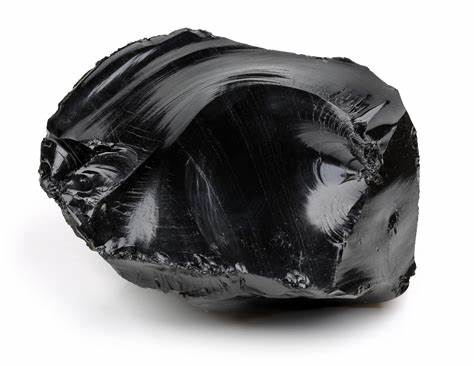
Common black obsidian is inexpensive. But specialty varieties — rainbow obsidian (with iridescent bands), fire obsidian (from Glass Buttes, Oregon), and mahogany obsidian — command collector premiums. Fine fire obsidian pieces from Glass Buttes are rare and sought after, with quality material selling for $10–$100+ per piece.
- Common obsidian: $1–$5/piece
- Fire/rainbow obsidian: $10–$100+ depending on size and iridescence
- Where to find: Glass Buttes, Oregon (fire obsidian — public BLM land); Obsidian Cliffs, California; New Mexico
Jasper — $1 to $50+ per piece

Jasper is an opaque variety of chalcedony found in an extraordinary range of colors and patterns. Common jasper is very affordable, but specialty varieties — picture jasper, ocean jasper, and imperial jasper — command collector prices. Well-patterned slabs suitable for cabochon cutting are consistently in demand from lapidaries.
- Common jasper: $1–$5/piece
- Picture/landscape jasper: $5–$50/lb rough; more cut and polished
- Where to find: Widespread across the Western US — Oregon, Idaho, Wyoming, and Nevada all have productive jasper localities
Gold — ~$3,000+ per troy ounce (spot price)
Placer gold found in streams is real money at current spot prices. Even small flakes add up. Nuggets are worth significantly more than spot price — a well-formed gold nugget can sell for 2–10x its melt value to collectors. California, Colorado, Oregon, Idaho, Montana, and Alaska all have productive gold-bearing streams.
- Where to find: American River tributaries, California; Boise Basin, Idaho; Yukon and Caribou Creeks, Alaska; various streams in Montana and Colorado
How to Assess Whether Your Rock Is Valuable
Found something that might be worth money? Follow these steps before getting excited — or before giving it away:
- Identify it first — use hardness, streak, luster, and crystal form tests to narrow down what you have. A $20 pocket loupe is one of the best investments a rockhound can make.
- Check completed eBay sales — search for similar specimens and filter by "Sold" listings. This shows real market prices, not optimistic asking prices.
- Take it to a gem club — most local gem and mineral clubs hold identification nights where experienced collectors help for free. Find one through the American Federation of Mineralogical Societies (AFMS).
- Get a professional appraisal — for anything potentially valuable, a GIA or AGS certified gemologist can provide a formal appraisal. Worth it for anything that might be worth $500 or more.
- Check with rockhounding forums — r/rockhounds on Reddit has an active and knowledgeable community that identifies specimens from photos daily.
RELATED READ: How to Identify Minerals and Rocks for Rockhounding Enthusiasts
Where to Sell Valuable Rocks and Minerals
- Gem and mineral shows: The best venue for mid-to-high value material. The Tucson Gem Show (February) is the largest in the world. Denver and Springfield shows are also major events.
- eBay: Excellent reach, but competitive. Good photography and accurate descriptions are essential. Check completed sales to price realistically.
- Etsy: Strong for decorative specimens, crystal clusters, and jewelry-grade stones marketed to a lifestyle audience.
- iRocks, Mindat Classifieds, and The Arkenstone: Platforms for serious collector-grade minerals where prices and buyers are both more serious.
- Local rock shops and lapidaries: Convenient but typically pay wholesale (50–60% of retail). Good for quick sales without shipping hassle.
- Auction houses: For genuinely exceptional, high-value specimens — Christie's, Sotheby's, and Heritage Auctions all handle fine minerals and gems.
Frequently Asked Questions
What is the most valuable rock you can find as a regular person?
Diamond at Crater of Diamonds State Park in Arkansas. Visitors have found and kept diamonds later appraised at $20,000–$35,000. Beyond diamonds, sapphires in Montana and emeralds in North Carolina offer real opportunities to find gemstones worth hundreds to thousands of dollars.
How do I know if a rock is worth money?
Start with identification using hardness, streak, and luster tests. Then check completed eBay sales for similar specimens. For anything potentially significant, take it to a local gem club or certified gemologist for a professional opinion.
Is quartz worth anything?
Common tumbled quartz is worth very little. But large, clear, well-terminated Arkansas quartz crystals sell for $20–$200+ per piece. Museum-quality clusters can sell for hundreds to thousands. Specialty varieties — amethyst, smoky quartz, citrine, and rose quartz — command consistent premiums.
Can common rocks be worth money?
Yes — quality matters more than rarity in many cases. An exceptional specimen of a common mineral (perfect crystal form, unusual size, rare color) can be worth far more than a poor example of a rare mineral. Presentation, condition, and locality documentation all affect value.
What rocks should I look for at the beach?
On Lake Superior shores, look for Lake Superior agates — red and orange banded stones. On Pacific coast beaches, search for agates, jasper, petrified wood, and occasionally jade. On Atlantic beaches, shark teeth (in Florida and North Carolina especially) and fossils are the primary finds.