
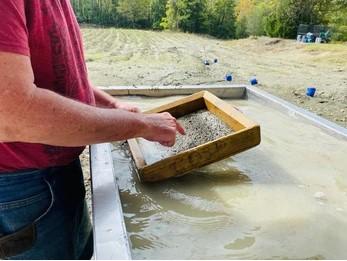
Crater of Diamonds State Park in Murfreesboro, Arkansas, is the only diamond-producing site open to the public anywhere in the world. Visitors find an average of one to two diamonds every single day. Over 75,000 diamonds have been unearthed here since the first discovery in 1906. No experience, special training, or expensive equipment is required. If you find it, it's yours.
This guide covers everything you need to plan a productive trip: the park's geology, exactly how to search, all three search methods explained, what raw diamonds look like in the field, what else you can find, fees, hours, gear, and tips from experienced visitors.
About Crater of Diamonds State Park
Land Status: Arkansas State Park. Open to the public. Finders-keepers policy applies to all minerals found in the search field. No size limits, no value thresholds.
The park is a 911-acre Arkansas state park located in Pike County, near Murfreesboro, in the southwestern part of the state — about two hours southwest of Little Rock. At its center is a 37.5-acre plowed field sitting atop an ancient, eroded lamproite volcanic pipe.
The pipe formed roughly 95 million years ago (Late Cretaceous) when a volcanic eruption forced diamond-bearing material up from deep within the Earth's mantle. Diamonds form under extreme heat and pressure at depths exceeding 93 miles. The eruption brought them up in magma and deposited them in a lamproite pipe. Over millions of years, erosion wore the volcano down to the plowed field visitors search today.
The land was first purchased in 1906 by farmer John Wesley Huddleston, who was searching for gold and found diamonds instead. After decades of private tourist mining operation, the Arkansas Department of Parks and Tourism purchased the site in 1972 and opened it as a state park. Since then, park visitors have registered over 35,000 diamonds — and many finds are taken home without registration.
What Do Diamonds Look Like at the Crater?

Raw, uncut diamonds from the Crater do not look like the stones in a jewelry store. Knowing what to look for is the most important skill you can develop before you arrive.
| Feature | What to Look For |
|---|---|
| Color | White, brown, and yellow are most common. Also gray, green, and rarely pink. Do not assume a diamond is colorless. |
| Surface | Smooth and rounded — not faceted. Millions of years of movement through volcanic rock wore them smooth. The surface has a bright, metallic, or greasy shine. |
| Translucency | Most Crater diamonds are clear enough to see into, but not straight through. Park staff describes it as "the look of a ball of ice." Fully opaque stones are not diamonds. |
| Size | The average find weighs 25 points (one-quarter carat) — roughly the size of a paper matchhead. Most finds are small. |
Do not mistake diamonds for quartz, calcite, barite, jasper, or mica. The key distinguishing features are the smooth, rounded shape, bright metallic shine, and partial translucency.
When in doubt, take it to the Diamond Discovery Center. Park staff provide free identification.
Pro tip: Many of the park's largest diamonds are found directly on the ground surface after rain. Rainfall washes away lighter dirt, leaving heavier diamonds and minerals exposed where they catch sunlight and sparkle. One in every five registered diamonds at the park is found by surface searching.
Famous Diamonds Found at the Crater
The park's record of finds establishes that the field is still producing. These are the headline discoveries:
| Diamond | Year | Details |
|---|---|---|
| The Uncle Sam | 1924 | 40.23 carats rough. Largest diamond ever discovered in the United States. White with a pink cast. Cut to a 12.42-carat emerald shape. Now in the Smithsonian's National Museum of Natural History. |
| The Strawn-Wagner Diamond | 1990 | 3.03 carats rough. Cut to 1.09 carats. Certified by the American Gem Society as a perfect Triple Zero — ideal cut, D color, flawless. On permanent display at the park visitor center. |
| The Amarillo Starlight | 1975 | 16.37 carats. The largest diamond ever found by a visitor since the site became a state park. Found by W.W. Johnson of Amarillo, Texas, while on vacation with his family. |
| The Kahn Canary | — | 4.25-carat vivid yellow diamond, left uncut due to its natural perfection. Worn by Hillary Clinton at both of President Clinton's inaugural galas in 1993 and 1997. |
| The Esperanza | 2015 | 8.52 carats rough. Cut to 4.6 carats, graded colorless and internally flawless. Valued at $500,000. |
| The Carine Diamond | 2024 | 7.46-carat chocolate brown diamond. Found on the surface by Julien Navas of Paris on his first-ever visit. Named after his fiancée. |
| DeCook's Diamond | 2025 | 3.81 carats. The largest find at the park so far in 2025. Rare brown diamond found on the surface by a visitor from Minnesota. |
| Fox-Ballou Diamond | 2025 | 2.30-carat white diamond. Third-largest find of the year. Found by a New York woman after a month-long search, in the West Drain area. |
What Else Can You Find Besides Diamonds?
The field produces approximately 40 different rocks and minerals. The finders-keepers policy covers all of them. Most visitors who do not find a diamond still go home with interesting specimens.
| Mineral | Notes |
|---|---|
| Amethyst | The park is the only site in Arkansas known for amethyst crystals large enough for lapidary work. Concentrated in the southwest corner of the field (Canary Hill). Amethyst runs in veins — find one piece, look nearby for more. |
| Garnet | Small red garnets throughout the field. Among the most common finds for visitors who search carefully. |
| Jasper | Red, yellow, and brown jasper is common across the field. Polishes well. |
| Quartz | Clear and milky quartz crystals are widespread. Also the mineral most often mistaken for a diamond. |
| Lamproite | The volcanic host rock. Gray, dark, and the material that carried diamonds from depth. Geologically significant. |
| Other | Magnetite, hematite, barite, calcite, phlogopite. Concentrations of garnet and magnetite often signal zones where diamonds also accumulate. |
How to Search for Diamonds at Crater of Diamonds

There are three search methods. Most experienced visitors combine all three during a single trip.
Method 1: Surface Searching
Walk slowly across the plowed field and scan the surface for anything that catches your eye. No tools required. No water required.
This method is most productive after rain, which washes away lighter material and leaves heavier rocks and minerals — including diamonds — exposed on top. Move slowly, crouch down, and look for anything with an unusual shine or color against the brown soil.
About one in five registered diamonds is found by surface searching, and this method accounts for a disproportionate number of the largest finds.
Method 2: Dry Sifting
Shovel loose soil into a box screen — a square, fine-mesh screen — and shake it to let smaller particles fall through. Larger rocks and minerals remain on top for inspection.
Dry sifting is less effective than wet sifting for finding smaller diamonds but requires no water and is faster for covering ground. Best when the soil is loose and dry. Use it as a quick first pass before moving to wet sifting.
Method 3: Wet Sifting (Most Effective)
Wet sifting is the most thorough and most productive method. Here is the process:
- Dig a 5-gallon bucket of soil from the field. Target sticky, clay-rich material, or dig between plowed rows where water concentrates heavy minerals. Aim for at least 1–2 feet deep.
- Carry your bucket to one of the two covered wash pavilions in the field, which have water troughs and tables.
- Place your screen set (large-mesh screen stacked on top of small-mesh screen) into the water trough.
- Pour your bucket of soil onto the top screen and agitate it in the water. Dirt and clay wash through the screens, leaving sorted gravel of different sizes on each screen.
- Lift the screens out of the water and examine the gravel. Wet rocks are easier to identify once the dirt is gone. Diamonds and colored minerals stand out. Look for anything with a bright, smooth, metallic shine.
Where to Search in the Field
The entire 37.5-acre field is diamond-bearing, but some areas produce more consistently than others.
| Zone | Why It Produces |
|---|---|
| East and west edges | Natural drainage channels concentrate heavy rocks and minerals along the field edges. Many large recent finds have come from these zones. |
| Between plowed rows | Shallow drainage channels between rows concentrate heavy material as water flows through. Dig here for wet sifting. |
| Freshly plowed areas | The park plows the field approximately once a month (spring through fall, weather permitting). Fresh furrows expose material that hasn't been picked over. Arrive early after a recent plowing. |
| Canary Hill (southwest corner) | Best location for amethyst. Diamonds are also found here. |
| West Drain area | The Fox-Ballou 2.30-carat white diamond was found here in 2025 after a month-long search. |
Park Hours, Fees, and Logistics
| Detail | Information |
|---|---|
| Visitor Center / Diamond Discovery Center | Open 8 AM – 5 PM daily |
| Diamond Search Area | Open 8 AM – 4 PM daily |
| Park Closures | New Year's Day, Thanksgiving, Christmas Eve, Christmas Day. Confirm at arkansasstateparks.com before visiting. |
| Equipment Rental — Basic Kit | $15 rental + $45 refundable deposit. Includes shovel, screen set, 3.5-gallon bucket. Covers up to 3 people. |
| Equipment Rental — Advanced Kit | $20 rental + $70 refundable deposit. Includes basic kit plus saruca resifting screen. Covers up to 4 people. |
| Children under 6 | Free admission. |
| Camping | Reserve in advance at reserve.arkansasstateparks.com, especially for spring break, summer weekends, and fall. |
Equipment rents out on busy days, especially during spring break and summer weekends. If you visit during peak season, bring your own tools.
Park Rules
- No battery-powered or motor-driven mining tools. Hand tools only.
- Fill in any hole you dig before leaving the field for the day.
- Stay within the field's yellow boundary markers.
- Do not dig within 15 feet of any trees or shrubs.
- Dirt may not be removed from the search area.
- Sifted gravel may be taken home — up to 5 gallons per person per day.
- All potential diamonds must be taken to the Diamond Discovery Center for identification and free certification before leaving the park.
What to Bring to Crater of Diamonds
| Item | Notes |
|---|---|
| Shovel | Standard garden shovel or army shovel. Small hand trowels slow you down for serious digging. |
| Sifting screens | Large-mesh and small-mesh screens stacked (for wet sifting), plus a box screen (for dry sifting). You can build a simple screen at home using hardware cloth. |
| 5-gallon bucket | For transporting soil to the wash pavilions. A rolling wagon makes carrying multiple buckets significantly easier. |
| Waterproof boots or shoes | The field is plowed and can be muddy. Sandals and flip-flops are unsuitable. |
| Old clothes | You will get muddy. Dress in layers you don't mind ruining. |
| Sun protection | Sunscreen, wide-brimmed hat, long sleeves. The field has no natural shade. |
| Portable canopy or shade tent | Allowed in the field. Worth bringing for summer visits or full-day sessions. |
| Water and snacks | Bring significantly more water than you think you'll need. The Visitor Center sells drinks, but it is a walk from the field. A cooler with lunch means you don't have to leave mid-session. |
| Knee pads | If you plan a full digging session. |
| Rubber gloves | For wet sifting in cooler months. The water in the troughs gets cold. |
| Small gem containers | To safely store anything that looks promising for identification later. |
| Headlamp | Worn directly on your head during wet sifting, the reflected light makes small gemstones much easier to spot in sifted gravel. |
Best Time to Visit
Spring and fall are the best seasons. Temperatures are manageable, and spring rains expose fresh material on the surface.
Summer temperatures can exceed 100°F. The field has no shade. If you visit in summer, arrive at 8 AM when the search area opens and plan to leave by midday.
Winter is the least productive season for rockhounding — cold, wet conditions make digging difficult, and some facilities may have reduced hours.
Tips for a More Productive Visit
- Arrive early. The parking lot fills fast on busy days. Arriving at 8 AM gives you the full day and first access to any material washed up overnight.
- Watch the park's social media before your trip. The park posts news of recent large finds and plowing schedules on its official channels. A fresh plowing means new material is exposed.
- Watch the Diamond Discovery Center demonstration. Park interpreters offer live diamond-hunting demonstrations. If it is your first visit, spend 15 minutes here before heading to the field. Seeing someone identify a diamond in real time is more useful than any written description.
- Target drainage channels after rain. The east and west drainage channels and the zones between freshly plowed rows concentrate heavy minerals most reliably.
- Set realistic expectations. The park hosts around 200,000 visitors annually. Roughly 500–600 diamonds are found per year. That means about 1 in 350 visitors finds a diamond. Most visitors go home with quartz, jasper, amethyst, or garnet — and a worthwhile experience digging in genuine diamond-bearing earth.
Frequently Asked Questions
The park records roughly 500–600 diamond finds per year from approximately 200,000 visitors. That is about 1 in 350 visitors finding a diamond on any given trip. Your chances improve with good timing (after rain, after plowing), good technique (wet sifting), and persistence. Many people find diamonds on their first visit. Many experienced rockhounders have visited multiple times without a find.
Yes, though most finds are modest in value. The average find weighs about 25 points (one-quarter carat) and is brown or yellow in color. Brown and yellow diamonds are worth less than white, colorless stones, but they are genuine diamonds. A larger white or yellow find in good condition can be worth several thousand dollars. The Esperanza Diamond, found in 2015, was valued at $500,000 after cutting. Park staff at the Diamond Discovery Center can give you an initial sense of what you have. Seek a formal appraisal from a certified gemologist afterward.
Yes. Children under 6 are admitted free. The park is family-friendly, and the treasure hunt format works well for children. Surface searching and dry sifting are accessible for younger kids. Wet sifting involves carrying heavy buckets and standing at water troughs — better suited to older children and adults. Bring a change of clothes and sunscreen for everyone.
No reservation is needed for the diamond search area. You pay at the gate and go. Camping reservations are highly recommended, especially for spring break, summer weekends, and fall. Book campsites in advance at reserve.arkansasstateparks.com.
The park has walking trails, picnic areas, the Diamond Springs Water Park (summer only), the Diamond Discovery Center with educational exhibits and live demonstrations, a visitor center with a gift shop and cafe, and a full campground. The town of Murfreesboro has a classic soda shop, small restaurants, and antique stores. Many visitors plan a two- to three-day trip combining diamond hunting with broader exploration of southwestern Arkansas.
Take it to the Diamond Discovery Center before leaving the park. Park staff will identify it for free and, if confirmed as a diamond, certify it and provide documentation. The certification process is quick and free. After certification, the diamond is yours.