
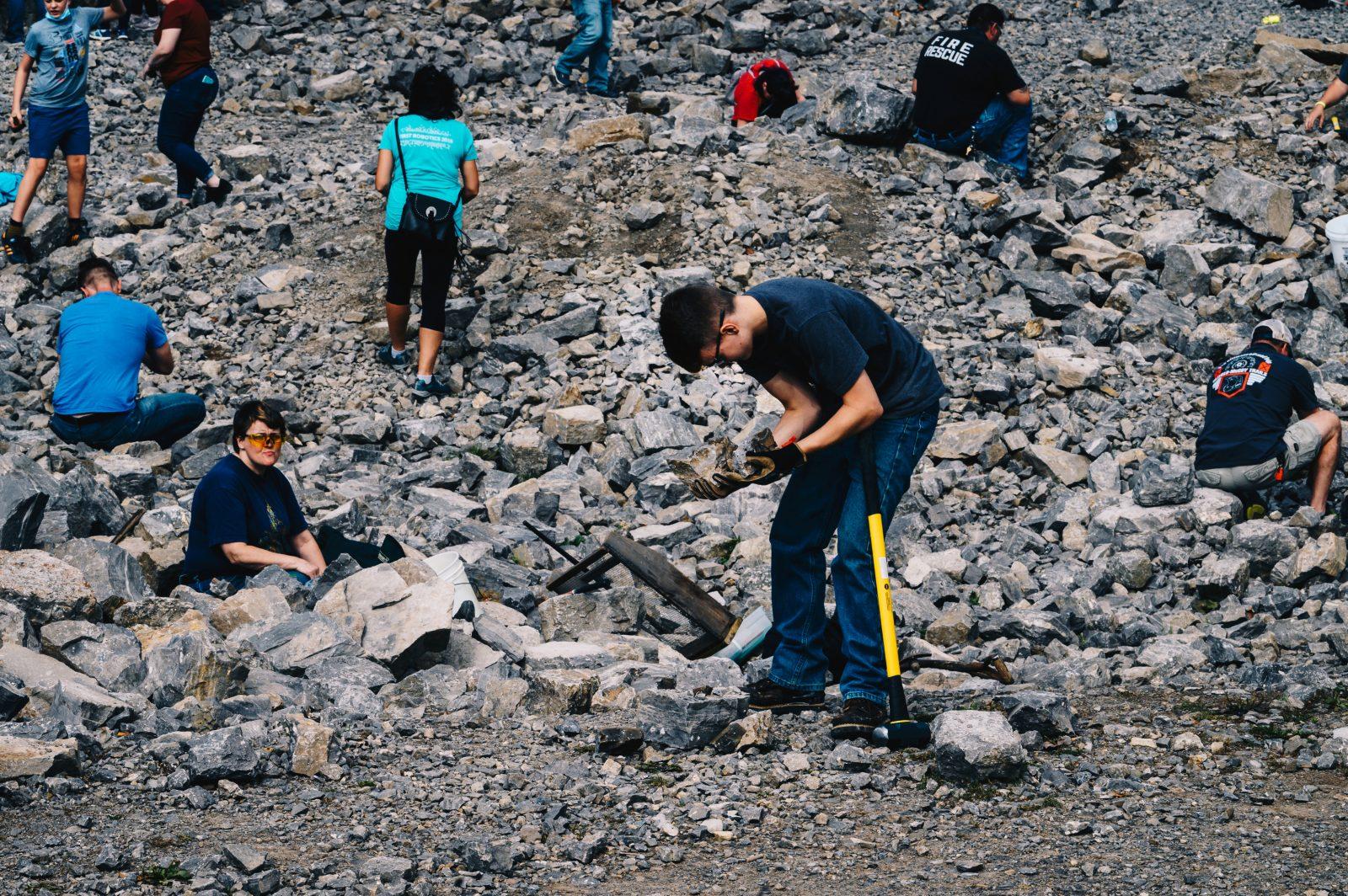
Rockhounding is one of the most rewarding outdoor hobbies you can pick up, and it costs almost nothing to start. All you really need is a pair of comfortable shoes, a curiosity about the natural world, and a willingness to get your hands dirty.
People have been collecting rocks and minerals for thousands of years. Today, millions of Americans rockhound — from kids picking up pretty pebbles on a hike to serious collectors hunting rare gemstones in remote terrain. If you've ever picked up a rock because it looked interesting, you already have the instinct for it. This guide will help you take it further.
What Is Rockhounding?
Rockhounding is the hobby of searching for and collecting rocks, minerals, fossils, and gemstones in their natural environment. It blends outdoor adventure with hands-on science — every outing is part geology lesson, part treasure hunt.
Unlike mining (which is commercial and industrial), rockhounding is recreational. You're not trying to extract tons of material; you're looking for interesting specimens to study, display, or work with. The finds you bring home become a personal collection that tells the story of the places you've explored.
People are drawn to rockhounding for many reasons:
- The thrill of finding something beautiful that's been hidden in the earth for millions of years
- Getting outdoors and exploring landscapes you'd never otherwise visit
- Learning geology, mineralogy, and natural history firsthand
- A hobby the whole family can do together
- Building a collection of unique, natural objects
What Can You Find?

The variety of things rockhounds collect is enormous. Depending on where you live and where you're willing to travel, you might find:
- Crystals and minerals: Quartz, amethyst, calcite, pyrite, selenite, fluorite, garnet
- Gemstones: Sapphires in Montana, emeralds in North Carolina, diamonds in Arkansas, opals in Nevada
- Agates and jasper: Colorful banded stones found in rivers and beaches across the US
- Fossils: Shells, shark teeth, trilobites, plant impressions, and occasionally dinosaur bones
- Petrified wood: Ancient trees replaced by silica over millions of years
- Meteorites: The rarest and most valuable finds — extraterrestrial rocks that survived atmospheric entry
- Gold and silver: Placer gold in streams, particularly in the Western US
Essential Rockhounding Tools for Beginners

You don't need to invest a lot upfront. Start simple and add gear as you learn what you need for your favorite type of collecting.
Must-Have Tools
- Rock hammer: A geologist's pick with a pointed end for prying and a flat end for breaking rocks. The Estwing Rock Pick is the standard recommendation for beginners.
- Safety glasses: Non-negotiable when breaking rocks. Flying shards are sharp and can cause serious eye injuries.
- Sturdy gloves: Protect your hands when digging through sharp material
- Daypack or bucket: For carrying your finds. Rocks are heavy — don't overload yourself.
- Field notebook and pen: Record where you found each specimen. Provenance matters for identification and value.
- Magnifying loupe (10x): Essential for examining crystal structure and fine details
Useful Add-Ons
- Trowel or garden fork for digging in soil
- Spray bottle with water (wet rocks show colors much better)
- Newspaper or bubble wrap for wrapping fragile specimens
- UV flashlight (some minerals fluoresce under ultraviolet light)
- GPS or offline maps app
RELATED READ: Best Rockhounding Tools for Beginners
Where to Go Rockhounding
Location is everything. The right spot can make the difference between coming home empty-handed and finding something spectacular. Here's how to find good sites:
Public Lands (BLM and National Forests)
Bureau of Land Management (BLM) land makes up a huge portion of the American West and is generally open to recreational rock collecting — up to reasonable personal-use limits (usually 25 lbs per day, 250 lbs per year). National Forests have similar rules. Always check current regulations for the specific area you're visiting.
State Parks and Recreation Areas
Rules vary widely by state. Some allow collecting; many prohibit it entirely. Check with the managing agency before collecting anything in a state park. Notable exceptions where collecting is permitted include Crater of Diamonds State Park in Arkansas.
Fee-Dig Sites
These are privately operated mines where you pay a fee to dig and keep everything you find. They're fantastic for beginners — you're almost guaranteed to find something, guides are usually available, and you don't have to worry about land access issues. They exist for quartz, emerald, sapphire, garnet, topaz, and many other minerals across the US.
River Gravel Bars and Beaches
Moving water concentrates and polishes interesting stones. Gravel bars along rivers and rocky shorelines are excellent free collecting areas. Look for agates, jasper, and occasionally fossils.
Road Cuts
Highway road cuts expose fresh bedrock that hasn't weathered on the surface. They can reveal veins of quartz, mineral deposits, and interesting geological formations — but always collect from a safe distance off the road and never on private property.
RELATED READ: Gem Mining 101: Beginner's Guide to Precious Stones
Rules and Ethics Every Rockhound Must Know
The rockhounding community has a strong culture of ethical collecting. Following these principles protects access for everyone:
- Always get permission: Never collect on private land without the owner's explicit permission. Trespassing is illegal and damages the hobby's reputation.
- Know the rules for public land: BLM, National Forest, state park, and tribal lands all have different regulations. Research before you go.
- Take only what you'll use: Don't strip a site. Leave specimens for other collectors and for the site to remain productive.
- Fill your holes: If you dig, backfill. Leave the site looking as you found it.
- No commercial collecting on public land without a permit: Personal-use limits exist for a reason. Don't sell material collected under a recreational permit.
- Respect the environment: Pack out all trash, stay on established trails where required, and don't damage vegetation.
- Never collect from protected sites: National Parks, Monuments, and Wilderness Areas generally prohibit all collecting.
How to Identify What You Find
Half the fun of rockhounding is figuring out what you've found. Basic mineral identification uses a handful of physical properties that you can test at home without any special equipment:
- Hardness: Test by scratching with your fingernail, a coin, or a knife blade
- Streak: Drag the mineral across an unglazed porcelain tile to see the color of the powder
- Luster: Observe how light reflects — metallic, glassy, pearly, dull?
- Color: A starting point, but not always reliable on its own
- Crystal form: What shape are the crystals? Cubic, hexagonal, prismatic?
RELATED READ: How to Identify Minerals at Home: 8 Simple Tests Anyone Can Do
How to Clean and Display Your Finds
Freshly collected rocks often look dull because they're coated in clay, dirt, or mineral staining. Cleaning reveals their true character:
- Soap and water + a stiff brush: Works for most dirt and loose clay
- Soaking in water: Softens stubborn clay coatings
- Oxalic acid: Removes iron staining from quartz and other minerals (use with gloves)
- Vinegar: Dissolves calcite coatings from fossils and other specimens
For display, simple wooden display boxes, museum putty, acrylic stands, and labeled specimen trays are popular options. Always label specimens with the mineral name and where you found it.
RELATED READ: How to Clean Rocks and Minerals at Home
Joining the Rockhounding Community
One of the best moves you can make as a beginner is to connect with experienced collectors. Local gem and mineral clubs are everywhere — most counties have one — and they offer:
- Group field trips to proven collecting sites
- Identification help from experienced members
- Access to club libraries of field guides and maps
- Workshops on lapidary (cutting and polishing) and other skills
- Annual shows where you can buy, sell, and trade specimens
The American Federation of Mineralogical Societies (AFMS) has a club locator on their website. Online communities on Reddit (r/rockhounds) and Facebook groups are also active and welcoming to newcomers.
Beginner-Friendly Rockhounding Destinations
Not sure where to start? These are some of the most beginner-friendly locations in the US:
- Crater of Diamonds State Park, Arkansas: The only public diamond dig in the world. Anyone can find something.
- Herkimer Diamond Mines, New York: Double-terminated quartz crystals that look like faceted gems.
- Emerald Hollow Mine, North Carolina: Fee-dig for emeralds, sapphires, and other gems.
- Topaz Mountain, Utah: Topaz, red beryl, and other minerals in a stunning desert landscape.
- Oregon coast: Agates, jasper, and petrified wood on public beaches.
- Lake Superior shoreline: Famous Lake Superior agates in a beautiful setting.
Frequently Asked Questions
Do I need a license to go rockhounding?
No license is required for recreational rockhounding on most public lands. However, you must follow site-specific rules on collecting limits, and some areas require free permits. Always research the rules for your specific location before you go.
How do I find good rockhounding spots near me?
Use our interactive rockhounding map to find verified locations near you. State rockhounding guides, local gem clubs, and the book Rockhounding [Your State] series are also excellent resources.
Is rockhounding expensive?
It can be as cheap or as involved as you want. You can start with zero equipment and just pick up interesting rocks on a hike. A basic starter kit — rock hammer, safety glasses, and a loupe — costs under $50. Fee-dig sites typically charge $10–$30 per person for a day of digging.
What's the best state for rockhounding?
Montana, Oregon, Arizona, California, North Carolina, and Arkansas are consistently ranked among the best. But every state has something interesting — the variety of US geology means good rockhounding exists almost everywhere.
Can kids go rockhounding?
Absolutely — rockhounding is one of the best outdoor activities for kids. It's educational, active, and immediately rewarding. Just make sure they wear safety glasses when breaking rocks and stay with an adult in the field.