
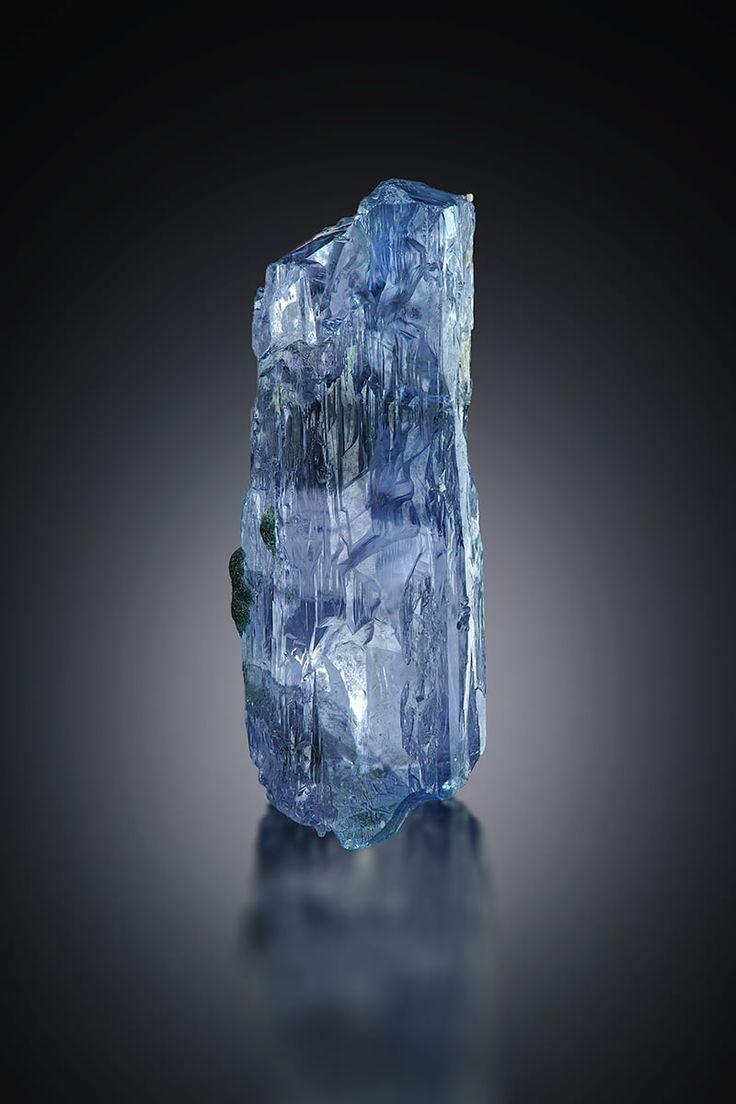
Topaz: Hard, Heavy, and Worth the Dig
Topaz (Al2SiO4(F,OH)2) is an aluminum fluorosilicate mineral that crystallizes in the orthorhombic system. It sits at 8 on the Mohs hardness scale — harder than quartz, harder than feldspar, softer only than corundum and diamond among common minerals. That hardness, combined with its vitreous luster and good crystal form, makes topaz one of the most satisfying minerals to find in the field. A clean topaz crystal, freshly pulled from a rhyolite vug, has a glassy authority that few other minerals match.
Topaz comes in a range of colors: colorless, amber, sherry-brown, pale blue, and rarely pink or orange. Most natural topaz is colorless to pale — the vivid blue topaz sold in jewelry stores is almost always irradiated and heat-treated. Texas designated blue topaz as its state gemstone, and Utah designated topaz as its state gem. Both states have accessible collecting sites where you can find your own crystals on public land.
How Topaz Forms: The Geology
Topaz forms in two primary geological environments in the US: rhyolitic volcanic rocks and granitic pegmatites. In both cases, the key ingredient is fluorine.
In rhyolitic settings, like Topaz Mountain in Utah, topaz crystallizes in gas cavities (vugs) within the rhyolite during or shortly after eruption. Fluorine-rich volcanic gases permeate the cooling lava, and as the temperature drops below roughly 600 degrees Celsius, topaz precipitates from the gas phase directly onto the walls of vesicles and open fractures. The crystals grow inward from the cavity walls, forming the stubby prismatic shapes that collectors know well. Associated minerals include bixbyite (a manganese iron oxide), red beryl (extremely rare), and specularite (platy hematite).
In granitic pegmatites, like those in Colorado's Pikes Peak region or New Hampshire's pegmatite belt, topaz crystallizes from fluorine-enriched residual melt during the final stages of granitic magma cooling. These pegmatites produce topaz alongside quartz, feldspar (often amazonite), mica, and sometimes beryl. The crystals tend to be larger than rhyolite-hosted topaz but are less likely to be loose and weather-free.
In Texas, topaz originally crystallized in granitic pegmatites, but the crystals have been liberated by weathering and transported into stream gravels. Collectors find topaz here by screening alluvial material — a completely different field experience from digging vugs in rhyolite or splitting pegmatite.
Where to Find Topaz in the United States
1. Topaz Mountain, Utah — Thomas Range, Juab County
Topaz Mountain in the Thomas Range is the single most accessible topaz collecting site in the United States. The topaz occurs in rhyolite — a light-colored, fine-grained volcanic rock that erupted roughly 6 to 7 million years ago. The rhyolite contains gas cavities (vugs) lined with topaz crystals, along with bixbyite, red beryl, pseudobrookite, and specularite. Crystals weather out of the soft rhyolite and can be found loose on the ground surface.
- GPS: Approximately 39.72°N, 113.08°W (Topaz Mountain collecting area, Juab County, UT)
- Land Status: BLM land — open to public collecting year-round with no permit or fee required. This is one of the few places in the US where you can collect a gemstone on public land for free.
- Vehicle: Sedan accessible in dry conditions via a graded dirt road from Delta, UT (about 45 miles northwest of Delta). The last few miles are unpaved but usually maintained. Do not attempt after rain — the clay surface becomes extremely slippery.
- What to Expect: Colorless to amber to sherry-colored topaz crystals ranging from pea-sized to several centimeters long. Most crystals are found by breaking open rhyolite to expose vugs, or by picking up loose crystals weathered from the rock surface. Colorless crystals are most common; amber and sherry-colored specimens are more desirable. Some crystals show excellent clarity and can be faceted. Bring your own water — there is no water, shade, or facilities at the site. Nearest services are in Delta.
2. Mason County, Texas — Texas Hill Country
Mason County in the central Texas Hill Country produces blue topaz — the Texas state gemstone — in stream gravels derived from weathered Precambrian granitic pegmatites. The topaz has been released from its original pegmatite host by millions of years of erosion and concentrated in alluvial deposits.
Collecting here is a completely different experience from Topaz Mountain. Instead of hammering rhyolite, you screen stream gravels — similar to panning for gold but looking for glassy, heavy crystals in the concentrate. Several private ranches offer fee-based day-use collecting access.
- GPS: Approximately 30.75°N, 99.23°W (Mason County, TX — general area)
- Land Status: Private ranches with fee-based access. The Seaquist Ranch and other operations allow day-use collecting. Contact individual ranches for current availability, fees, and hours. No public-land topaz collecting in Mason County.
- Vehicle: Sedan accessible to Mason and to ranch headquarters. Ranch roads may require higher clearance in wet conditions.
- What to Expect: Clear to pale blue topaz crystals, typically water-worn and rounded from stream transport. Most are small — under 10 carats — but occasionally larger pieces turn up. The blue color is natural and does not require treatment. Bring classifying screens (1/4 inch and 1/8 inch mesh), a bucket, and patience. This is gravel screening, not hard-rock mining.
3. Crystal Peak Area, Colorado — Teller County (Pikes Peak Region)
The Crystal Peak area near Lake George sits on the Pikes Peak granite, a 1.08-billion-year-old anorogenic granite body. Weathered pockets in the granite produce topaz alongside amazonite (green microcline feldspar), smoky quartz, and fluorite. Several fee-dig claims operate in the area, and National Forest land in the vicinity permits personal-use collecting.
- GPS: Approximately 38.95°N, 105.30°W (Crystal Peak area, Teller County, CO)
- Land Status: Mix of private fee-dig claims and Pike National Forest. Fee-dig operations charge daily rates and provide access to productive pockets. National Forest land permits personal-use collecting — check with the South Park Ranger District for current regulations and open areas.
- Vehicle: High-clearance vehicle recommended. Forest roads in the area are rough, rocky, and may be snowbound through late May or early June. Some fee-dig sites maintain their access roads better than others.
- What to Expect: Colorless to pale blue topaz crystals in pegmatite pockets within weathered granite. Crystals range from small (under 1 cm) to occasionally impressive multi-centimeter specimens. The primary targets at Crystal Peak are amazonite and smoky quartz — topaz is a valued bonus find. Pockets are worked by digging through decomposed granite (grus) with hand tools.
4. Devils Head, Colorado — Douglas County (Pike National Forest)
Devils Head, located southeast of Deckers in the Pike National Forest, is another Pikes Peak granite locality that produces topaz in weathered pegmatite pockets. The area has a long history of mineral collecting and has produced good topaz, smoky quartz, and amazonite specimens.
- GPS: Approximately 39.25°N, 105.10°W (Devils Head area, Douglas County, CO)
- Land Status: Pike National Forest. Personal-use mineral collecting is permitted. Some areas near the Devils Head Lookout may have restrictions. Check with the South Platte Ranger District for current access information.
- Vehicle: High-clearance vehicle recommended for forest roads.
- What to Expect: Similar to Crystal Peak — topaz in weathered granite pockets. The collecting area is spread out across several ridges and drainages. Finding productive pockets requires patience and experience reading the decomposed granite terrain.
5. Tarryall Mountains, Colorado — Park County
The Tarryall Mountains west of Lake George contain additional Pikes Peak granite exposures with pegmatite pockets producing topaz, smoky quartz, and amazonite. Less heavily collected than Crystal Peak, the Tarryall area can produce good specimens for collectors willing to explore.
- GPS: Approximately 39.05°N, 105.50°W (Tarryall area, Park County, CO)
- Land Status: Mix of Pike National Forest and private land. Verify boundaries before collecting.
- Vehicle: High-clearance 4WD recommended.
- What to Expect: Topaz in weathered granite, similar to Crystal Peak but less picked over. More exploration required to find productive areas.
6. Grafton County, New Hampshire — New England Pegmatite Belt
Several pegmatites in Grafton County produce topaz alongside tourmaline, beryl, and other pegmatite minerals. Localities near Wentworth and Groton have reported topaz crystals in classic New England pegmatite settings. The pegmatites here intruded metamorphic rocks during the late stages of the Acadian orogeny.
- GPS: Approximately 43.87°N, 71.90°W (general Grafton County area, NH)
- Land Status: Mix of White Mountain National Forest and private land. National Forest land permits personal-use collecting. Private land requires landowner permission.
- Vehicle: Sedan accessible to most areas via maintained forest and county roads.
- What to Expect: Small topaz crystals, typically colorless, in pegmatite vugs and pockets. The New Hampshire pegmatites are better known for tourmaline and beryl, with topaz as a secondary find.
Topaz Specimen Varieties
| Color Variety | Typical Habit | Size Range | Best US Source | Gem Potential |
|---|---|---|---|---|
| Colorless | Stubby prismatic in rhyolite vugs | 0.5-3 cm | Topaz Mountain, UT | Facetable if clean |
| Amber / sherry | Prismatic, often with terminations | 0.5-2 cm | Topaz Mountain, UT | Good — valued for color |
| Pale blue (natural) | Water-worn pebbles in gravel | 1-10+ ct | Mason County, TX | Good — facetable |
| Colorless to pale blue | Prismatic in pegmatite pockets | 0.5-5+ cm | Crystal Peak, CO | Variable |
| Pink (rare) | Prismatic | Small | Rare in any US locality | High if found |
Field Identification: How to Confirm Topaz and Avoid Confusion with Quartz
| Property | Value |
|---|---|
| Hardness | 8 (Mohs) |
| Color | Colorless, amber, sherry, blue, rarely pink |
| Luster | Vitreous |
| Streak | White |
| Crystal System | Orthorhombic |
| Cleavage | Perfect basal cleavage — one direction perpendicular to the long axis |
| Specific Gravity | 3.49 to 3.57 — noticeably heavier than quartz (2.65) |
The most common field identification problem is distinguishing topaz from quartz. Both are glassy, both can be colorless, and both occur in volcanic and pegmatitic rocks. Here are the reliable differences:
Weight: Pick up a topaz crystal and a quartz crystal of similar size. The topaz feels heavier — its specific gravity (3.5) is about one-third greater than quartz (2.65). This "heft test" becomes second nature after you have handled both minerals.
Crystal shape: Quartz crystals have a hexagonal cross-section (six-sided prism). Topaz crystals have a diamond-shaped or rectangular cross-section (orthorhombic prism with four major faces). Look at the end of the crystal — if it is six-sided, it is quartz. If it is four-sided or diamond-shaped, it is topaz.
Cleavage: Topaz has perfect basal cleavage — it breaks cleanly across the base of the crystal perpendicular to the long axis. Quartz has no cleavage and fractures conchoidally. If you see a flat, mirror-like break surface on the bottom of a crystal, that is topaz cleavage.
Hardness: Topaz (8) scratches quartz (7). In the field, take a crystal you suspect is topaz and try to scratch a piece of known quartz. If it scratches the quartz, it is harder than 7 and is almost certainly topaz.
Common Look-Alikes
- Quartz (rock crystal): Hexagonal prism, conchoidal fracture, lighter weight, no basal cleavage. The most common misidentification.
- Phenakite: Similar to topaz in appearance and hardness, but extremely rare in the US. If you think you have phenakite, you almost certainly have topaz or quartz.
- Danburite: Orthorhombic like topaz, similar luster, but lower specific gravity (3.0) and different crystal habit. Rare in topaz-producing localities.
- Beryl: Hexagonal, like quartz. Hardness 7.5-8. Beryl crystals are typically elongated prisms. Can co-occur with topaz in pegmatites.
Tools and Equipment for Topaz Collecting
- Rock hammer (3 lb): For carefully opening vugs in rhyolite (Utah) or splitting decomposed granite to expose pockets (Colorado).
- Cold chisel and pry bar: For working larger cavities without shattering the crystals inside. Topaz has perfect basal cleavage — a hard blow to a crystal can cleave it in half. Work gently around visible crystals.
- Spray bottle: Wetting a crystal reveals clarity and any internal fractures. Essential for evaluating gem potential in the field.
- Classifying screens: Essential for Mason County, TX, gravel screening. Bring 1/4-inch and 1/8-inch mesh screens.
- Eye protection: Mandatory when hammering rhyolite or granite. Fragments are sharp and dangerous.
- Bucket and shovel: For gravel-screening operations in Texas.
- Newspaper or bubble wrap: Wrap each topaz crystal individually. Crystals rubbing together can produce cleavage breaks.
- Water: Topaz Mountain, UT, has no water. Bring at least 1 gallon per person plus extra for spray-bottle evaluation of specimens.
Legal Considerations
- BLM land (Topaz Mountain, UT): Open to personal-use collecting with no fee or permit. This is as straightforward as mineral collecting gets on public land. Do not take powered equipment or conduct commercial-scale extraction.
- National Forest (Colorado): Personal-use collecting is permitted on Pike National Forest land. Some fee-dig claims operate on patented or unpatented mining claims within the National Forest — pay the fee and follow the operator's rules.
- Private ranches (Mason County, TX): Fee-based access. Follow ranch rules, stay within designated collecting areas, and keep what you find. No trespassing on ranches without permission.
- Private land (New Hampshire): Permission required. Many New England pegmatite sites are on private property.
- Claim status: In Colorado, many productive areas are covered by mining claims. Check claim status with the BLM LR2000 database before collecting on any ground that is not clearly signed as public or fee-dig.
Explore the Interactive Topaz Map
Use our interactive topaz location map to find collecting sites with GPS coordinates, access information, and land status details.