
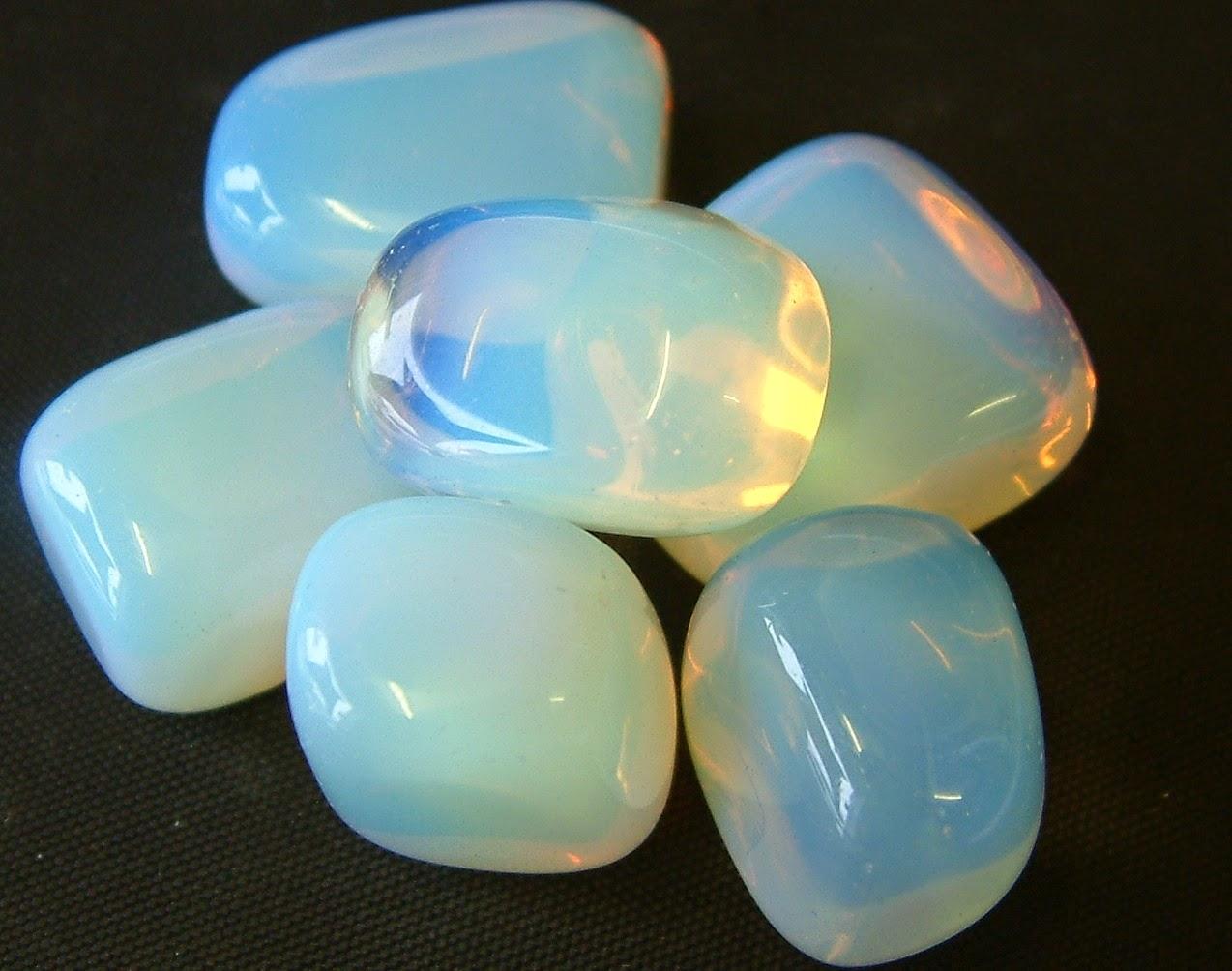
Moonstone: What It Is and Why Collectors Want It
Moonstone is not a single mineral but a trade name applied to feldspar varieties that display adularescence — a soft, billowy light that appears to float just beneath the surface as you tilt the stone. The effect comes from alternating microscopic layers of two feldspar species, typically orthoclase and albite, that formed during slow cooling. As light enters the stone, it scatters between these layers, producing a blue or white glow that moves across the face of the specimen. The thinner and more regular the layers, the bluer and sharper the sheen.
Most US moonstone belongs to the orthoclase or oligoclase feldspar series. It forms in granitic pegmatites — coarse-grained igneous intrusions where large crystals grow from silica-rich melt that cools slowly underground. Pegmatites are the grocery stores of the mineral world: walk into one and you can find a dozen species in a single pocket. Moonstone is just one of the feldspar varieties that come out of these deposits, alongside amazonite, sunstone, labradorite, and ordinary potassium feldspar.
The commercial gem market draws most of its moonstone from Sri Lanka, India, and Madagascar, where thick pegmatite belts produce transparent material with strong blue adularescence. US moonstone is generally smaller and less transparent, but it is collectible, identifiable in the field, and available on public land in several states. If you understand pegmatite geology and know where to look, you can pull moonstone out of the ground yourself.
How Moonstone Forms: The Geology Behind the Glow
Pegmatites form during the final stages of granitic magma crystallization. As the main body of granite solidifies, the remaining melt becomes enriched in water, volatiles, and incompatible elements — lithium, beryllium, boron, fluorine, and rare earths among them. This volatile-rich residual melt intrudes into the surrounding country rock as dikes and sills, cooling slowly enough to grow crystals measured in inches or feet rather than millimeters.
Feldspar is the dominant mineral in most pegmatites, and moonstone forms when the feldspar crystallizes as a homogeneous potassium-sodium solid solution at high temperature. As the pegmatite cools below roughly 600 degrees Celsius, the solid solution unmixes — a process called exsolution — into alternating lamellae of potassium-rich orthoclase and sodium-rich albite. These lamellae are typically 0.5 to 1 micrometer thick, which is the right spacing to scatter visible light and produce the adularescent effect. If the lamellae are thicker or irregular, the stone produces a white sheen rather than a blue one, or no sheen at all.
Not every pegmatite produces moonstone, and not every feldspar crystal from a moonstone-bearing pegmatite will show the effect. You may crack open twenty feldspar chunks before finding one with a clean blue glow. That is normal. The exsolution process is sensitive to cooling rate, bulk composition, and strain history, so moonstone tends to occur in specific zones within a pegmatite rather than uniformly throughout it.
Where to Find Moonstone in the United States
1. Amelia County, Virginia — Morefield Mine and Piedmont Pegmatites
Virginia is the strongest moonstone state in the eastern US. The Piedmont province from Amelia County through parts of Bedford, Pittsylvania, and Campbell Counties contains a dense belt of granitic pegmatites that intruded Precambrian metamorphic rocks during the late stages of Appalachian mountain building.
The Morefield Mine near the town of Amelia is a fee-dig operation that has been open to the public for decades. The pegmatite here is a classic complex pegmatite containing amazonite, topaz, beryl, garnet, and various feldspar varieties including moonstone. Moonstone crystals are typically white to cream colored with a blue or white adularescent sheen. They occur in feldspar-rich zones and pockets within the pegmatite.
- GPS: Approximately 37.35°N, 78.76°W (Amelia County, VA)
- Land Status: Private fee-dig operation. Admission fee required; check current hours and pricing before visiting.
- Vehicle: Sedan accessible. The mine is on maintained roads off Route 628.
- What to Expect: Moonstone here runs white to cream with blue-white sheen. Pieces range from thumbnail to fist-sized, but strong adularescence is uncommon — screen many pieces in direct sunlight to find the best ones.
Other pegmatites in the Virginia Piedmont also produce moonstone. The Rutherford mine area and several prospects in Bedford County have reported feldspar with adularescence. Most of these sites are on private land. Contact the Richmond Gem and Mineral Society or the Virginia Mineral Project for current access information and collecting permission.
2. Petaca Mining District, New Mexico — Rio Arriba County Pegmatites
The Petaca district in northern New Mexico contains a swarm of pegmatites that intruded Precambrian quartzite and mica schist. These pegmatites are part of the broader Tusas Mountains pegmatite field and have produced mica, feldspar, beryl, tantalite, and a variety of other minerals since the early 1900s.
Moonstone occurs in the feldspar-rich cores and intermediate zones of several Petaca pegmatites. The material is typically white to grayish with a white to faintly blue sheen. Quality varies widely, and you will sort through a lot of ordinary feldspar to find pieces with good adularescence.
- GPS: Approximately 36.18°N, 105.95°W (Petaca district, Rio Arriba County, NM)
- Land Status: Mix of BLM land and Carson National Forest. Personal-use mineral collecting is permitted on BLM and National Forest land. Verify current boundaries and any seasonal closures with the Taos BLM Field Office or the Carson National Forest Tres Piedras Ranger District.
- Vehicle: High-clearance vehicle recommended. Access roads are unimproved dirt that can become impassable when wet.
- What to Expect: Old prospect pits and small mine dumps dot the hillsides. Look for white to gray feldspar cleavage fragments on dumps and in exposed pegmatite. Wet each piece and tilt in sunlight to check for sheen.
3. Harding Pegmatite Mine, New Mexico — Taos County
The Harding Mine near Dixon is one of the most mineralogically significant pegmatites in North America. It produced lithium minerals, microlite, beryl, spodumene, and many feldspar varieties during its commercial operation. The University of New Mexico now manages the site as a teaching and research locality.
- GPS: Approximately 36.23°N, 105.74°W (near Dixon, Taos County, NM)
- Land Status: University of New Mexico property. Access requires advance permission from the UNM Department of Earth and Planetary Sciences. Group visits and field trips may be accommodated; casual drop-in collecting is not available.
- Vehicle: High-clearance vehicle recommended for the approach road.
- What to Expect: If access is granted, feldspar varieties including occasional moonstone can be found on the extensive dump material. This is primarily an educational site.
4. Spruce Pine District, North Carolina — Mitchell County Pegmatites
The Spruce Pine mining district in the Blue Ridge Mountains of western North Carolina is one of the largest pegmatite concentrations in the world. Commercial mining here extracts feldspar and quartz for industrial use — the feldspar from Spruce Pine goes into ceramics and glass manufacturing across the country. The pegmatites are enormous, some running hundreds of feet wide.
Moonstone occurrence in the Spruce Pine district is sporadic. The pegmatites produce vast quantities of feldspar, but only a small percentage shows adularescence. Several fee-dig sites in the area allow screening for pegmatite minerals, and moonstone turns up occasionally alongside aquamarine, garnet, and other species.
- GPS: Approximately 35.91°N, 82.07°W (Spruce Pine area, Mitchell County, NC)
- Land Status: Mix of private fee-dig operations and private mines. Several family-run gem mines in the area offer pay-to-dig access.
- Vehicle: Sedan accessible to most fee-dig sites. Mountain roads can be steep but are paved or well-graded.
- What to Expect: Moonstone is an incidental find here, not the primary target. You will screen buckets of pegmatite material and may or may not encounter feldspar with sheen. The area is better known for aquamarine and emerald.
5. Chester County, Pennsylvania — Brandywine Valley Pegmatites
The pegmatite belt of southeastern Pennsylvania runs through Chester and Delaware Counties, cutting through the Wissahickon Schist and other metamorphic rocks of the Piedmont province. These pegmatites have produced moonstone and sunstone feldspar historically, and some collecting opportunities remain.
- GPS: Approximately 39.95°N, 75.70°W (Chester County, PA — general area)
- Land Status: Primarily private land. Permission from landowners is required. Some road cuts and construction exposures provide temporary access, but permanent collecting sites are limited.
- Vehicle: Sedan accessible. The area is suburban to rural with paved roads.
- What to Expect: Small feldspar crystals with white to blue sheen in pegmatite matrix. Contact the Delaware Valley Earth Science Society for current access information and field trip opportunities.
6. Black Hills, South Dakota — Pegmatite Province
The Black Hills of South Dakota contain one of the densest pegmatite fields in the world, with thousands of individual pegmatite bodies exposed across Custer, Pennington, and Lawrence Counties. While the Black Hills are better known for lithium minerals, beryl, and tourmaline, moonstone-quality feldspar has been reported from several pegmatites in the region.
- GPS: Approximately 43.85°N, 103.50°W (general Black Hills pegmatite area)
- Land Status: Mix of Black Hills National Forest, private land, and active mining claims. Collecting on National Forest land is permitted for personal use. Verify claim status before collecting on any specific pegmatite outcrop.
- Vehicle: High-clearance vehicle recommended for forest roads.
- What to Expect: Moonstone is not common here and should be treated as an incidental find while collecting other pegmatite minerals.
Moonstone Specimen Varieties and What to Look For
| Variety | Body Color | Sheen Color | Feldspar Species | Typical US Source |
|---|---|---|---|---|
| Blue Sheen Moonstone | White to colorless | Blue | Orthoclase | Virginia, New Mexico |
| White Sheen Moonstone | White to cream | White / silvery | Orthoclase | All US localities |
| Peach Moonstone | Peach to orange | White | Orthoclase | Virginia (uncommon) |
| Rainbow Moonstone | White (translucent) | Blue with spectral flashes | Labradorite (plagioclase) | Rarely found in US; most is imported |
| Sunstone (related) | Orange to red | Metallic glitter (aventurescence) | Oligoclase or labradorite | Oregon, Pennsylvania |
Note that "rainbow moonstone" sold in the gem trade is actually a variety of labradorite (plagioclase feldspar), not true orthoclase moonstone. The adularescence mechanism is similar but the mineral species is different. True moonstone is orthoclase or sanidine. This distinction matters for proper mineral identification but not much for enjoyment of the optical effect.
Field Identification: How to Spot Moonstone and Avoid Look-Alikes
| Property | Value |
|---|---|
| Hardness | 6 to 6.5 (Mohs) |
| Color | White, cream, gray, peach — with blue or white sheen |
| Luster | Vitreous to pearly on cleavage surfaces |
| Streak | White |
| Crystal System | Monoclinic |
| Cleavage | Two directions at approximately 90 degrees (feldspar cleavage) |
| Specific Gravity | 2.56 to 2.62 |
| Key Diagnostic Feature | Adularescence — a floating glow that moves as the stone is rotated |
In the field, moonstone looks like ordinary white or cream feldspar until you rotate it in direct sunlight. The adularescent glow appears as a blue or white sheen that seems to float beneath the surface and shift position as you tilt the specimen. This is the single most diagnostic field test. Wet the specimen and rotate it slowly in bright sunlight. If you see a soft, mobile light inside the stone, you have moonstone. If the stone is just shiny on the surface without any internal floating glow, it is ordinary feldspar.
Common Look-Alikes and How to Tell Them Apart
- Ordinary orthoclase feldspar: Same hardness, same cleavage, same luster — but no adularescence. Every moonstone-bearing pegmatite produces far more plain feldspar than moonstone. The only difference is the internal glow.
- Milky quartz: Can look similar to white moonstone at first glance, but quartz has no cleavage (conchoidal fracture instead), hardness of 7 rather than 6, and never shows adularescence. Quartz will scratch feldspar.
- Opalite or synthetic moonstone: Manufactured glass sold in rock shops. Perfectly uniform blue glow, no cleavage, and too perfect to be natural. You will not encounter this in the field, but you may see it at gem shows labeled as moonstone.
- Chalcedony: Waxy luster, conchoidal fracture, no cleavage, no adularescence. Completely different mineral group despite occasionally having a faintly milky appearance.
Tools and Equipment for Moonstone Collecting
- Rock hammer (3 lb) and cold chisel: For working pegmatite exposures and splitting feldspar masses to check for adularescence on fresh surfaces.
- Hand lens (10x): To examine internal layering and assess the quality of the adularescent effect.
- Spray bottle with water: Wetting the surface of feldspar dramatically improves visibility of the sheen. Carry at least a pint of water for this purpose.
- Direct sunlight: Adularescence is best evaluated in bright, direct sunlight. Overcast days make it much harder to spot the effect. Plan collecting trips for clear weather.
- Newspaper or bubble wrap: Feldspar cleaves easily. Wrap each specimen individually to prevent damage during transport.
- Marking pen and bags: Label specimens with the location and date found. This information adds value and context to your collection.
- Eye protection: Mandatory when hammering pegmatite. Feldspar and quartz fragments are sharp.
- Gloves: Pegmatite edges can be razor-sharp, especially freshly broken surfaces.
Legal Considerations and Collecting Ethics
Collecting rules vary by location and land status. Here is a general framework, but always verify current regulations with the managing agency before collecting.
- BLM land: Personal-use mineral collecting is generally permitted under the General Mining Law and BLM surface management regulations. You may collect reasonable quantities for personal use without a permit. No commercial collecting without a mining claim.
- National Forest land: The USDA Forest Service permits personal-use mineral collecting on most National Forest land. Some areas may have special restrictions — check with the local Ranger District.
- Fee-dig operations (private): Pay the admission fee, follow the site rules, and keep what you find. These are the simplest sites from a legal standpoint.
- Private land: Always get written permission from the landowner before collecting. Trespass laws are enforced, and many of the best pegmatite exposures in the eastern US are on private property.
- Mining claims: Do not collect on active mining claims without the claim holder's permission. Check the BLM LR2000 database or local county records to verify claim status.
- Leave no trace: Fill holes, pack out trash, and do not damage standing structures or historical features at old mine sites. The condition you leave a site in determines whether it stays open for future collectors.
Explore the Interactive Moonstone Map
Browse our interactive moonstone location map to find mineral collecting sites with GPS coordinates, access information, and land status details, or search by state for all rockhounding locations near you.