
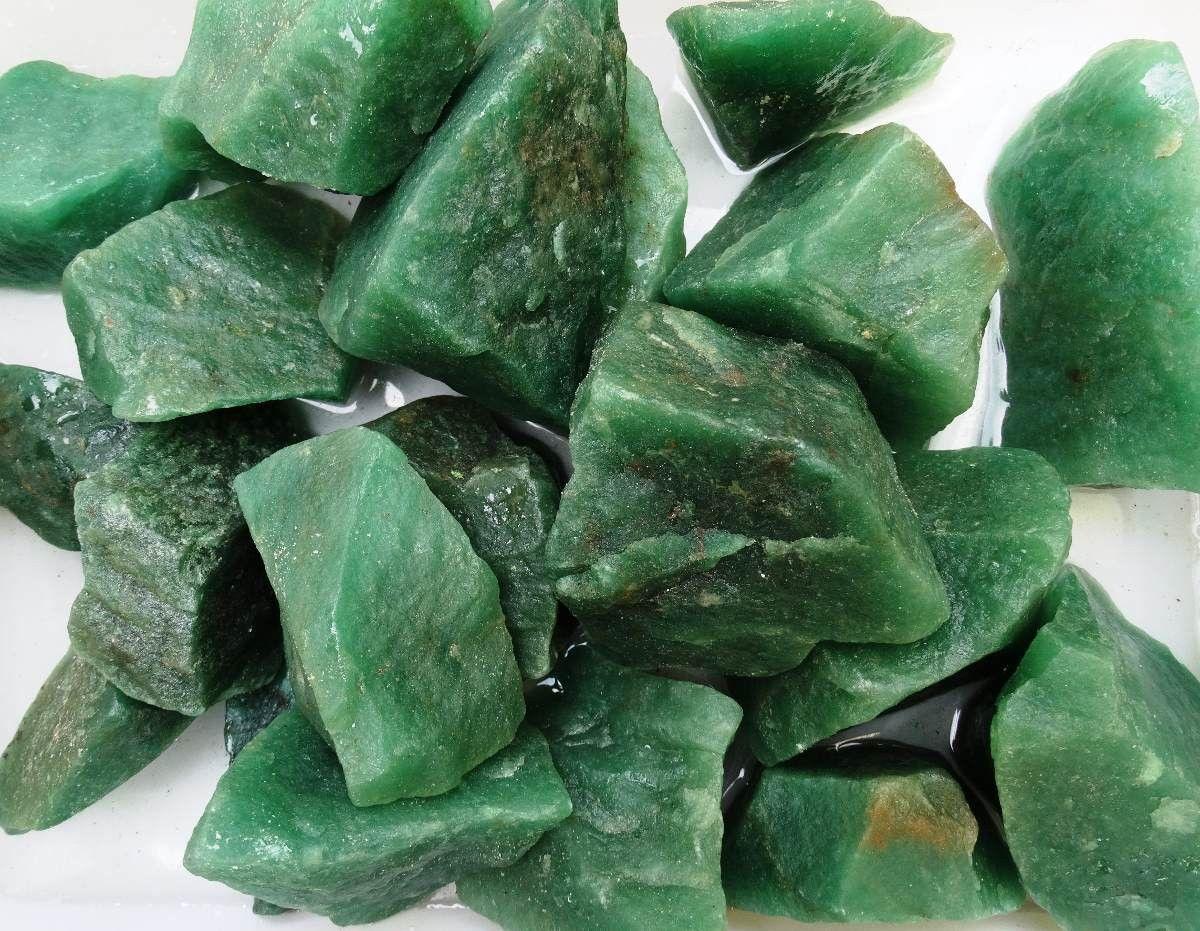
Jade Overview and Geology
Jade is two minerals, not one. Nephrite is a calcium-magnesium iron silicate belonging to the amphibole group (specifically a variety of tremolite-actinolite). Jadeite is a sodium-aluminum silicate belonging to the pyroxene group. Both are tough — extremely tough — because of their interlocking fibrous crystal structure, but they are chemically distinct minerals that form in different geological settings. In the United States, nephrite is the common jade. Jadeite is rare, with only a few confirmed US occurrences.
Nephrite forms through the metasomatic alteration of serpentinite — rock derived from the hydration of oceanic mantle peridotite. When silica-rich fluids interact with serpentinite along fault zones and shear contacts, the result is tremolite-actinolite (nephrite jade). This is why jade is almost always associated with serpentinite belts, which in the US follow ancient plate boundaries: the Pacific coast ranges, the Cascades, and the ophiolite terranes of Wyoming and Alaska.
Jadeite requires high pressure and relatively low temperature to form — conditions found in subduction zones where oceanic crust dives beneath continental crust. This is why jadeite is globally rare. The only confirmed jadeite occurrences in the US are in California, where Franciscan Complex rocks (an ancient subduction melange) contain jadeite in association with other high-pressure minerals like glaucophane and lawsonite.
The toughness of jade is distinct from hardness. Hardness (resistance to scratching) is measured on the Mohs scale — jade is 6-6.5 for nephrite and 6.5-7 for jadeite, which puts it below quartz. But toughness (resistance to breaking) is where jade is exceptional. The interlocking fibrous crystals distribute stress across the entire mass, making jade harder to break than nearly any other rock. You can hammer on jade and it will ring like a bell rather than fracture. This toughness is why jade was prized as a tool material by ancient cultures worldwide — a jade axe blade outlasts a flint blade many times over.
Top US Locations for Jade
1. Jeffrey City / Crooks Gap / Granite Mountains, Wyoming (Fremont County)
GPS: 42.4950° N, 107.8300° W (general Jeffrey City / Crooks Gap area)
Land Status: Primarily BLM land. Surface collecting for personal use is legal under BLM casual-use regulations. Some areas are under mining claims — check claim status with BLM Lander Field Office. Wyoming state land sections may have different rules.
Vehicle: High-clearance 4WD strongly recommended. BLM roads in this area are unimproved and rough. The terrain is sagebrush steppe with no services — carry water, fuel, food, and a spare tire. Cell service is nonexistent in most of the collecting area.
Wyoming is the jade state — nephrite jade is the official state gemstone, and central Wyoming is the most productive jade collecting area in North America. The geology centers on serpentinite bodies within the Precambrian core of the Granite Mountains and associated ranges. These serpentinites — altered oceanic mantle rock caught up in an ancient suture zone — provided the chemical ingredients for jade formation. Metasomatic alteration along shear zones and contacts converted serpentinite to tremolite-actinolite (nephrite) in massive, fine-grained aggregates.
Jade occurs here as rounded boulders and cobbles on the surface, in stream gravels, and as exposed outcrops. The boulders range from fist-sized to multi-ton masses. Colors run from olive green through medium green to dark green — the deeper greens contain more iron (actinolite-rich) while the lighter colors are magnesium-rich (tremolite-rich). Some pieces show attractive veining or color variation within a single stone.
The collecting strategy is surface prospecting — drive BLM roads, park, and walk the sage flats and drainage bottoms scanning for jade boulders. Jade stands out from the surrounding granitic and volcanic rocks because of its green color and rounded shape (its toughness causes it to weather into smooth, rounded forms while surrounding rocks erode to angular rubble). The sage-covered desert terrain gives jade boulders nowhere to hide.
Crooks Gap, specifically, has been the most productive area historically. The Wind River Range and Seminoe Mountains also have nephrite occurrences on BLM and Forest Service land.
2. Jade Cove / Big Sur, California (Monterey County)
GPS: 35.9050° N, 121.4750° W (Jade Cove trailhead along Highway 1)
Land Status: The beach below the high-tide line is public (California Coastal Act). Collecting of jade from the beach and surf zone below the mean high-tide line is legal. Collecting above the tide line is prohibited — the land above the beach is Los Padres National Forest. The trail down to the cove crosses National Forest land — stay on the trail and collect only from the beach and water.
Vehicle: Standard 2WD. Pull off along Highway 1 at the Jade Cove trailhead (limited parking). The trail is steep and rough — about 15 minutes down and 30 minutes back up.
Jade Cove is the most accessible nephrite jade collecting location on the California coast. The source is a serpentinite body in the Franciscan Complex — the same geological unit that produced California's jadeite, though Jade Cove itself produces nephrite, not jadeite. Chunks of nephrite break loose from the sea cliffs and submarine outcrops, tumble in the surf, and wash up on the small rocky beach below the cliffs.
The jade here ranges from dark green to blue-green, with some translucent specimens showing exceptional quality. Pieces are typically rounded by surf action and range from marble-sized to occasionally watermelon-sized. The larger pieces are heavy and require a sturdy pack to haul back up the steep trail. The best collecting is after winter storms, which dislodge fresh material from the submarine outcrops. Low tides give you more beach to search — check tide tables before visiting.
Some collectors dive for jade in the offshore waters — loose pieces sit on the seafloor in 10-30 feet of water. This requires cold-water diving gear and experience with Northern California surf conditions, which are hazardous for inexperienced divers.
3. Clear Creek Management Area, California (San Benito County)
GPS: 36.3750° N, 120.7200° W (Clear Creek Management Area)
Land Status: BLM-managed. Access has been intermittently restricted due to naturally occurring asbestos (chrysotile) in the serpentinite. Check current BLM status before visiting — the area has been closed, partially reopened, and re-closed multiple times. When open, casual mineral collecting is permitted.
Vehicle: High-clearance 4WD required when the area is open. Roads are rough.
The Clear Creek area is the only confirmed jadeite-producing locality in the continental United States. The jadeite occurs in the Franciscan Complex — a subduction melange containing blocks of high-pressure metamorphic rock embedded in a serpentinite matrix. The jadeite formed under the extreme pressures of the ancient Farallon Plate subduction zone and was later exhumed by tectonic uplift.
The jadeite here is typically white to pale green to blue-green. Some pieces are gem-quality. The area also produces nephrite jade, and the two can be difficult to distinguish in the field without specific gravity testing (jadeite is denser: SG 3.3-3.5 vs. nephrite's 2.9-3.1).
The asbestos issue is real. The serpentinite contains chrysotile asbestos fibers that become airborne when the rock is disturbed. The BLM has restricted access during dry, dusty conditions. If the area is open, take precautions: drive slowly to minimize dust, wear an N95 respirator, and do not disturb serpentinite rock more than necessary. Focus on collecting from stream gravels rather than breaking rock.
4. Darrington / Sauk River, Washington (Skagit County)
GPS: 48.2550° N, 121.6000° W (general Darrington area)
Land Status: Public access points along the Sauk and Skagit Rivers. Rivers are public navigable waterways — collecting from gravel bars below ordinary high-water mark is legal. Surrounding land is a mix of National Forest (Mount Baker-Snoqualmie), state forest, and private timber land.
Vehicle: Standard 2WD to most river access points. Some Forest Service roads require high clearance.
The Darrington area sits on the western flank of the North Cascades, where a belt of serpentinite and associated metamorphic rocks (the Darrington-Devils Mountain Fault Zone) provides the source rock for nephrite jade. The jade forms in the serpentinite through the same metasomatic process as in Wyoming. Rivers draining this serpentinite belt — primarily the Sauk River and South Fork Stillaguamish River — carry jade cobbles in their gravel bars.
The jade here is typically dark green to nearly black. The darkest material is actinolite-rich. Some lighter green tremolite-rich pieces also occur. Collecting is straightforward: walk gravel bars on the Sauk River at public access points, scanning for green stones that feel heavier than they should. Jade cobbles are rounded and smooth from river transport, and their green color and waxy-to-greasy luster distinguish them from the gray and brown volcanic cobbles making up most of the gravel.
The scratch test is useful here: jade cannot be scratched by a steel knife blade (hardness 6-6.5 vs. steel's ~5.5). Serpentinite cobbles, which are far more common in these rivers, are easily scratched by a knife (hardness 3-4). Carry a sturdy pocket knife and test any promising green stone before carrying it back.
5. Kobuk River, Alaska (Northwest Arctic Borough)
GPS: 67.0500° N, 156.8800° W (general Kobuk jade area — Shungnak/Kobuk villages)
Land Status: Mix of federal (BLM, NPS — Gates of the Arctic), state, and Native corporation land. Collecting on state and BLM land is permitted. Kobuk Valley National Park — no collecting. Native corporation land requires permission from the respective village corporation. Check land status carefully — the ownership pattern is complex.
Vehicle: None — there are no roads. Access is by bush plane from Fairbanks or Kotzebue to Shungnak or Kobuk, then by boat on the Kobuk River, or by snowmachine in winter.
The Kobuk River jade deposits in northwestern Alaska are among the largest nephrite occurrences in the world. The jade is associated with the Jade Mountains ultramafic complex — serpentinized oceanic mantle rock in a tectonic suture zone between the Brooks Range terranes. The nephrite here ranges from olive green to deep green to nearly black, and occurs as massive boulders — some weighing many tons — in river gravels and on hillsides.
Commercial jade mining has operated in the Kobuk area since the 1940s, and Alaska Jade Company has been a major producer. For the individual collector, this is a logistics challenge, not a geology challenge. There is no road access — you fly in, boat to collecting areas, and pack out what you can carry. The jade is easy to find — boulders sit on gravel bars and hillsides — but the remoteness, cost of access (bush plane charters are not cheap), and short collecting season (June through September) make this an expedition, not a day trip.
If you go, the jade quality is excellent. Large pieces can be shipped by barge from Shungnak during the summer navigation season. Contact the Shungnak or Kobuk village corporations for information on access and logistics.
6. Josephine Creek / Rogue River Area, Oregon (Josephine County)
GPS: 42.2100° N, 123.6400° W (general Josephine Creek area)
Land Status: Mix of BLM land, Rogue River-Siskiyou National Forest, and private land. BLM and Forest Service land permits casual collecting. Josephine Creek itself is a public waterway.
Vehicle: High-clearance 4WD for many Forest Service roads. Standard 2WD to some creek access points on county roads.
Southwestern Oregon's Klamath Mountains contain serpentinite belts associated with Jurassic-age oceanic crust (ophiolite sequences), and nephrite jade occurs in these belts. Josephine Creek, which drains through serpentinite terrain, carries jade cobbles in its gravel bars. The material is typically dark green to black. The Illinois River and its tributaries in this region also produce jade.
The Rogue River area around Grants Pass and Gold Hill occasionally produces jade cobbles as well. The same serpentinite belt extends north into the Blue Mountains of northeastern Oregon, where scattered jade occurrences have been reported on Forest Service and BLM land.
Jade Specimen Types
| Type | Mineral | Color | Key Locations | Collector Notes |
|---|---|---|---|---|
| Wyoming nephrite | Tremolite-actinolite | Olive green to dark green | WY (Jeffrey City, Crooks Gap) | Most productive US source; surface collecting on BLM |
| California nephrite | Tremolite-actinolite | Dark green to blue-green | CA (Jade Cove, Big Sur coast) | Beach collecting below tide line; some translucent specimens |
| California jadeite | Jadeite (pyroxene) | White to pale green to blue-green | CA (Clear Creek, San Benito Co.) | Only US jadeite source; access restricted (asbestos) |
| Washington nephrite | Tremolite-actinolite | Dark green to black | WA (Darrington, Sauk River) | River cobbles; dark color typical |
| Alaska nephrite | Tremolite-actinolite | Olive to deep green | AK (Kobuk River) | Large boulders; remote access (bush plane/boat only) |
| Oregon nephrite | Tremolite-actinolite | Dark green to black | OR (Josephine Creek, Klamath Mtns.) | Creek cobbles from serpentinite terrain |
Field Identification: Jade vs. Look-Alikes
| Property | Nephrite Jade | Serpentinite | Aventurine (green quartz) | Chrysoprase | Vesuvianite (Idocrase) |
|---|---|---|---|---|---|
| Hardness (Mohs) | 6–6.5 | 3–4 | 7 | 6.5–7 | 6.5 |
| Scratch Test (steel knife) | Cannot be scratched | Scratched easily | Cannot be scratched | Cannot be scratched | Cannot be scratched |
| Toughness | Extremely tough — rings when struck | Moderate — breaks with effort | Brittle — conchoidal fracture | Brittle — conchoidal fracture | Moderate |
| Specific Gravity | 2.9–3.1 | 2.5–2.6 | 2.65 | 2.65 | 3.3–3.5 |
| Luster | Waxy to greasy | Greasy to waxy | Vitreous (glassy) | Vitreous to waxy | Vitreous to greasy |
| Light Transmission | Translucent on thin edges | Usually opaque | Translucent with sparkle (mica flakes) | Translucent | Semi-translucent |
The number one field misidentification is jade vs. serpentinite. They look similar — both are green, both are found in the same terrain. But the scratch test separates them instantly. Press a steel knife blade firmly against the stone and try to scratch it. If the knife leaves a mark, it is serpentinite. If the stone resists the blade (and may even scratch the blade back), it could be jade. Serpentinite is far softer (Mohs 3-4) than jade (Mohs 6-6.5) — this is a fast, reliable test.
The heft test is the second check. Pick up the stone and evaluate how heavy it feels for its size. Jade (SG 2.9-3.1) is noticeably denser than serpentinite (SG 2.5-2.6). It feels "heavy for its size" compared to other green rocks. With practice, you can feel the difference immediately.
The ring test: strike the stone against another hard rock. Jade produces a clear, ringing tone — almost musical. Serpentinite, soapstone, and other soft green rocks produce a dull thud. This test works best with larger pieces.
Aventurine (green quartz with mica inclusions) can fool people, but it has a glassy luster and sparkly appearance from the mica flakes. It also breaks with conchoidal fracture — smooth curved surfaces — while jade breaks with a splintery or hackly fracture due to its fibrous structure. Chrysoprase (green chalcedony, colored by nickel) has a similar waxy look but is brittle and fractures conchoidally. Neither aventurine nor chrysoprase shows jade's characteristic toughness.
Tools for Jade Collecting
- Steel knife or file: The essential field test tool. Carry a sturdy fixed-blade knife or a bastard file. Press the blade against every green stone you find and try to scratch it. No scratch = possible jade. Easy scratch = serpentinite.
- Strong flashlight or headlamp: Hold a bright light behind the thin edge of a suspected jade specimen. Nephrite transmits light with a soft, warm glow at thin edges. Serpentinite is typically opaque.
- Spray bottle: Wetting reveals color, surface texture, and any fractures or veining. Dry jade can look dull and unpromising; wet jade shows its true character.
- Sturdy backpack or daypack with padded waist belt: Jade is dense. A fist-sized cobble weighs 2-3 pounds. Several good pieces add up fast. A pack with a waist belt transfers weight to your hips rather than your shoulders.
- GPS device or smartphone with offline maps: Critical in Wyoming (vast BLM land with few landmarks), Alaska (no roads), and California (complex land ownership). Know where you are relative to property boundaries and your vehicle.
- Rock hammer: Rarely needed — jade collecting is mostly picking up loose surface material. If you do need to test a piece by examining a fresh break, jade's toughness means you will work harder than expected to break it.
- Kitchen scale (at home): Specific gravity testing (weighing in air, then weighing in water) is the definitive test for distinguishing nephrite (SG 2.9-3.1) from jadeite (SG 3.3-3.5) and from look-alike minerals.
Legal Considerations
BLM land (Wyoming, California, Oregon): Casual collecting of jade for personal use is permitted on unclaimed BLM land. Reasonable quantities, hand tools only, no commercial sale without a permit or mining claim. In Wyoming, some productive areas are under mining claims — check claim status with the BLM Lander Field Office or online through LR2000.
California coast (Jade Cove): Collecting below the mean high-tide line is legal under the California Coastal Act. Collecting above the tide line (Los Padres National Forest) is not permitted for mineral specimens.
Clear Creek Management Area (California): Access is controlled by BLM due to asbestos concerns. Check the BLM Hollister Field Office website or call before planning a trip. Regulations change based on environmental conditions.
National Parks: No collecting. This includes Kobuk Valley National Park in Alaska and any other NPS unit. The NPS boundary maps are your critical reference in Alaska, where park, state, BLM, and Native corporation lands are interspersed.
Alaska Native corporation land: Contact the relevant village corporation before collecting. In the Kobuk area, this includes NANA Regional Corporation and local village corporations. Native land is private land — treat it as such.
National Forest: Personal-use mineral collecting is generally permitted on unclaimed Forest Service land. Check with the local Ranger District.
Explore the Interactive Jade Map
Use our interactive jade location map to find collecting sites near you with GPS coordinates, land status, access information, and reported specimen quality across the western United States and Alaska.