
Florida's Geological Reality: Why True Geodes Do Not Form Here
If you are searching for classic crystal-lined geodes in Florida, you need to adjust your expectations before you leave home. Florida does not produce true geodes — not now, not in its geological past. Understanding why requires a quick look at what lies beneath the state's surface.
Florida sits on the Florida Platform, a thick carbonate bank that has been accumulating marine sediments since the Mesozoic Era. The bedrock is limestone — Eocene, Oligocene, and Miocene formations — covered by younger Pliocene and Pleistocene sands, clays, and shell beds. There are no igneous rocks. There are no Mississippian-age limestones of the type that produce geodes across the Midwest. There are no volcanic basalts, no metamorphic terranes, and no silica-rich formation waters of the kind that create chalcedony geode shells in Iowa or Indiana.
What Florida does have is a marine fossil record that is among the richest in North America. And within that record are several collectible specimens that fill the geode-hunting niche in ways unique to the state. Agatized coral — fossilized coral colonies replaced by chalcedony and quartz — produces crystal-bearing specimens with small quartz-lined cavities. Calcite crystal-lined fossil clams from the Fort Drum area are the closest thing Florida produces to an actual geode. And the state's rivers and beaches deliver shark teeth, whale bones, and invertebrate fossils in quantities that make Florida one of the best fossil-collecting destinations in the country.
Collectors who come to Florida expecting Kentucky-style geodes will be disappointed. Collectors who come ready to work the rivers and beaches for what Florida actually produces will go home with excellent material.
Where to Collect: Five Productive Sites with Access Details
1. Ballast Point and Tampa Bay Shoreline — Hillsborough County
GPS: 27.8875, -82.4806 (Ballast Point Park)
Land status: Public park, public shoreline below mean high tide
The Tampa Bay shoreline is the classic collecting locality for Florida agatized coral. Erosion of the Oligocene-Miocene Tampa Limestone and Suwannee Limestone formations along the bayshore exposes fossilized coral colonies that have been silicified — their original calcium carbonate replaced by chalcedony and microcrystalline quartz over millions of years. The specimens range from small tumbled fragments to fist-sized coral heads with preserved structure. Some pieces contain small vugs lined with druzy quartz crystals — the closest thing to a geode that Florida produces naturally. Ballast Point Park provides public access to the bayshore. Walk the waterline at low tide and scan the shell hash and gravel for the distinctive translucent, waxy-looking agatized coral. Colors range from white and gray to amber, blue-gray, and occasionally red-brown. Florida designated agatized coral as the official state stone in 1979.
2. Alafia River — Hillsborough County
GPS: 27.8500, -82.2600 (general Lithia Springs area)
Land status: Public waterway; some parks along the river
The Alafia River drains phosphate-mining country south of Tampa. The river gravel contains an eclectic mix of agatized coral, fossil bone, shark teeth, and phosphate nodules. The phosphate mining operations upstream have reworked the Miocene-age Bone Valley Formation, releasing fossils and silicified material into the river system. Agatized coral specimens from the Alafia tend to be more tumbled and rounded than bayshore specimens, having traveled farther in the fluvial system. Some of the best material comes from the gravel bars near Lithia Springs Park and downstream toward Riverview. Canoe or kayak access provides the best reach — you can cover more river and access gravel bars that bank-walkers cannot reach. Expect to find agatized coral mixed with phosphate pebbles, fossil bone fragments, and occasional petrified wood.
3. Peace River — Hardee and DeSoto Counties
GPS: 27.4900, -81.8600 (general Arcadia to Zolfo Springs reach)
Land status: Public waterway; county parks provide access
The Peace River is Florida's premier fossil-collecting waterway. The river cuts through Miocene and Pliocene formations that are loaded with vertebrate fossils — shark teeth (megalodon included), ray dental plates, whale bones, manatee ribs, horse teeth, and dozens of other species. While the Peace River does not produce geodes, it produces agatized coral and silicified fossils that occasionally contain quartz crystal cavities. The river also yields calcite-filled fossil clam shells and gastropod casts that have a geode-like quality when opened. The best collecting is during winter dry season (November through March) when river levels drop and expose broad gravel bars. Rent a canoe or kayak from outfitters in Arcadia or Zolfo Springs, paddle to exposed gravel bars, and screen the bottom gravel through a 1/4-inch mesh sieve. The fossil concentration in Peace River gravel is remarkable — even on a slow day you will find shark teeth.
4. Fort Drum Crystal Mine — Okeechobee County
GPS: 27.5100, -80.9400 (general Fort Drum area)
Land status: Private fee-dig operation (seasonal, check availability before visiting)
The Fort Drum area produces the closest thing to a true geode that Florida has to offer. In the Pliocene-age Tamiami Formation, fossil clam shells (primarily the bivalve genus Mercenaria) have their interior cavities lined with calcite crystals — golden to honey-colored scalenohedral and rhombohedral crystals growing inward from the shell walls. When you crack open one of these calcite-lined clams, the visual effect is strikingly similar to opening a geode. The crystals are attractive, well-formed, and sometimes reach 2–3 cm in length. Fee-dig operations in the Fort Drum area open seasonally, typically during the drier months. Availability varies year to year depending on landowner decisions and water table conditions — call ahead before making the drive. The digging is in soft, sandy matrix, so a shovel and hand tools are all you need. Screen the excavated material through a sieve to catch smaller specimens.
5. Venice Beach — Sarasota County
GPS: 27.0995, -82.4545
Land status: Public beach
Venice Beach is the "Shark Tooth Capital of the World" — and while it does not produce geodes, it belongs on any Florida collecting itinerary because of the sheer volume and quality of fossil material the beach delivers. Shark teeth from Miocene through Pleistocene formations wash onto the beach with every tide cycle. The best collecting is after storms, when wave action churns up fresh material from the offshore fossil-bearing formations. You can collect by walking the waterline and scanning the shell hash, or by using a "Florida snow shovel" — a mesh-bottomed scoop that lets you sift sand and shells to concentrate the heavier teeth at the bottom. The beach also produces fossil bone, ray dental plates, and occasional petrified wood fragments. All collecting is legal on the public beach below the mean high tide line.
Specimens You Can Expect to Find
| Specimen | Location | Typical Size | Notes |
|---|---|---|---|
| Agatized coral (Florida state stone) | Tampa Bay, Alafia River, Peace River | 2–15 cm | Chalcedony-replaced coral; some with druzy quartz vugs |
| Calcite crystal-lined fossil clams | Fort Drum area | 5–15 cm (whole clam) | Golden calcite crystals growing inside clam shell cavity |
| Shark teeth (various species) | Venice Beach, Peace River, Alafia River | 1–10+ cm | Megalodon to modern species; black to brown fossil preservation |
| Fossil bone (whale, horse, mastodon) | Peace River, Alafia River | 2–20 cm fragments | Dense, heavy fragments; often dark brown to black |
| Phosphate nodules | Alafia River, Bone Valley region | 1–5 cm | Black, dense pebbles; sometimes containing micro-fossils |
| Petrified wood | Scattered across river sites | 3–15 cm | Silicified wood fragments; uncommon but present in river gravels |
Tools and Equipment
Florida collecting is water-based — rivers, beaches, and shallow digs in sandy soil. The tool kit is lighter than what hard-rock geode states require, but the environmental gear is more demanding.
- Florida snow shovel (shark tooth scoop): A long-handled scoop with a mesh basket bottom, sold at Venice Beach shops and online. Essential for efficient beach collecting.
- Mesh screen/sieve (1/4-inch): For screening river gravel. A flat-bottomed classifier that sits on top of a 5-gallon bucket is the standard Peace River setup.
- Shovel and hand trowel: For Fort Drum digging and for loosening gravel in river beds.
- Canoe or kayak: River collecting is far more productive from the water than from the bank. Rent from outfitters on the Peace River (Arcadia, Zolfo Springs) or Alafia River (Lithia area).
- Waterproof bag or dry box: For keeping specimens, phone, and car keys dry during river trips.
- Sun protection: Florida sun is severe year-round. Wide-brimmed hat, SPF 50+ sunscreen, long-sleeve lightweight shirt, and polarized sunglasses. Heat exhaustion is a real risk during summer collecting.
- Insect repellent: Mosquitoes, no-see-ums, and sand flies are constant companions on Florida rivers and beaches, especially at dawn and dusk.
- Water shoes: Sturdy water shoes or sport sandals with toe protection for wading in river gravel. Stingray shuffle in shallow water — slide your feet rather than stepping down, to avoid stepping on buried stingrays.
Legal Considerations and Access Rules
- Public beaches: Collecting shells, fossils, and mineral specimens is legal on all public Florida beaches below the mean high tide line. You may not dig or excavate above the tide line without permission.
- Public waterways: Florida law allows wading, swimming, and surface collecting in navigable waterways. You may collect from exposed gravel bars and the river bottom. Do not trespass on private riverbank land to access the water — use public parks, bridges, or boat ramps.
- State parks: Most Florida State Parks prohibit removing natural objects including rocks, fossils, and shells. Check with individual park offices for specific rules.
- Vertebrate fossils: Florida law requires a permit for excavating vertebrate fossils from state-owned submerged lands. Casual surface collecting of loose fossil teeth and bone fragments from rivers and beaches is permitted without a permit, but organized excavation is not. Contact the Florida Museum of Natural History for permit information if you plan significant fossil work.
- Fort Drum: Private fee-dig. Follow all operator rules. Availability is seasonal and not guaranteed — always call ahead.
- Phosphate mines: Active phosphate mining operations in Polk, Hardee, and Hillsborough counties are strictly off-limits without explicit permission from the mining company. These are active industrial sites with heavy equipment and blasting operations.
Planning Your Trip
Florida collecting is a year-round activity, but the dry season — roughly November through April — offers the best conditions. River levels drop, exposing more gravel bars. Temperatures are tolerable. Mosquito pressure decreases. Summer collecting is possible but demands serious attention to hydration, sun protection, and thunderstorm awareness. Florida produces intense afternoon thunderstorms almost daily from June through September — get off the water before they arrive.
For a comprehensive Florida collecting trip, base yourself in the Tampa Bay area. You can reach Ballast Point, the Alafia River, the Peace River, and Venice Beach within 60–90 minutes. Fort Drum is a longer drive — about 2.5 hours from Tampa — but worth a day trip if the fee-dig operation is open. Tampa has full services, including rock shops where you can examine high-quality examples of agatized coral and Fort Drum calcite clams before heading into the field.
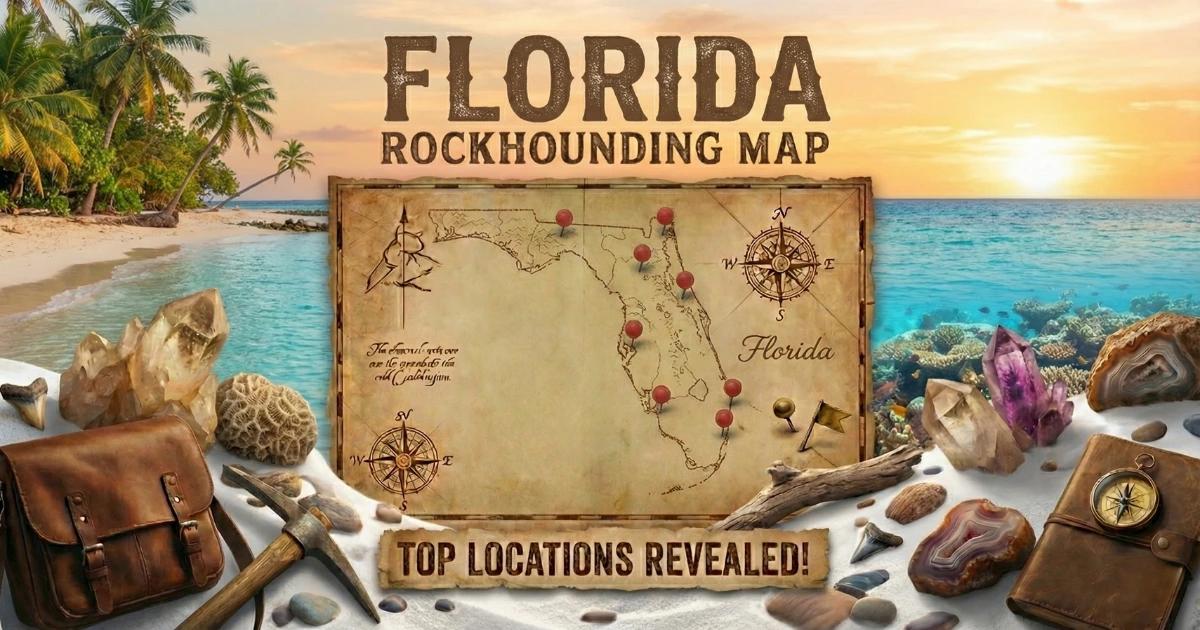
Browse our Florida rockhounding map for all documented collecting locations.